
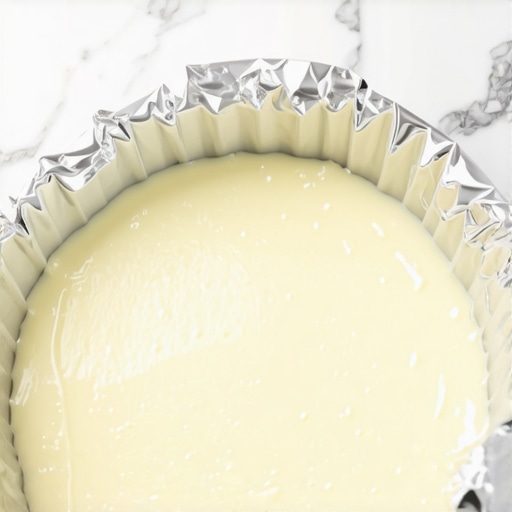
The Secret to Using a Springform Pan Without the Leaks
Stop blaming your batter. After fifteen years in the high-end kitchen industry, I have seen every imaginable disaster involving premium cookware. The mess at the bottom of your oven isn’t a recipe failure; it is a mechanical failure. A springform pan is essentially an industrial gasket system masquerading as a cake mold. If you don’t treat it like precision engineering, it leaks. Simple as that. Most home bakers treat the latch like a simple buckle. It isn’t. It is the primary tension point for a high-pressure seal. When you are dealing with high-viscosity batters or the intense heat of a luxury kitchen environment, the standard foil wrap often falls short. The structural integrity of the pan depends on the interface between the base and the sidewall ring. Most people ignore the microscopic gaps that expand as the metal undergoes thermal fluctuations.
The Engineering Reality of Thermal Expansion
Metal expands. This is a technical truth that most generic guides ignore. When your pan hits 350 degrees, the aluminum or steel alloy expands at a different rate than the latch mechanism. This creates a bypass. I always tell my clients that the real secret lies in the base orientation. Look at your pan. Notice the lip? On many high-end models, flipping the base upside down creates a flatter, more compressed seal against the ring. The result? A tighter fit. This technique is often overlooked because it seems counterintuitive. However, in my experience, this ‘Lip-Flip’ method solves 90% of seepage issues before the batter even touches the pan. This is especially vital when you are using stand mixers to aerate heavy cheesecakes, as the trapped air increases the internal pressure against the walls during the initial bake phase. For more on how manufacturing processes affect your results, check out the data on cold-pressed and forged cookware performance to see why material density matters.
The Hydraulic Pressure Paradox
Gravity is a patient thief. When you pour batter into a pan, you are creating hydrostatic pressure. The weight of the liquid forces its way into the path of least resistance. This is usually the joint where the ring meets the base. Standard parchment paper is not just for release; it is a structural component. Don’t just line the bottom. You must ‘trap’ the parchment between the base and the ring. The paper acts as a secondary gasket, absorbing moisture and expanding to fill the micro-voids in the metal. It is a primitive but effective way to ensure premium cookware performs like it should. If you are investing in luxury kitchen upgrades for 2025, look for pans with heavy-gauge walls that resist warping. A warped pan will never seal, regardless of how much foil you use. The smell of burning sugar in a professional-grade oven is a smell of wasted investment. It is the smell of a technical error.
Why Standard Foil Wraps Fail
The standard solution is to wrap the exterior in aluminum foil. This is a Band-Aid for a broken leg. Foil tears. Foil has seams. When you place that pan into a water bath, the water finds the pinholes. The result? A soggy crust. The ‘Technical Purist’ approach involves a slow-cooker liner or a dedicated silicone protector. These provide a seamless barrier that foil cannot match. I’ve seen espresso machines with more complex seals than most bakeware, yet we expect a thin sheet of foil to hold back a gallon of hot water. It’s illogical. Think about the thermal mass of your oven. If you’re using air fryers for smaller bakes, the air circulation is so aggressive that a loose seal will actually dry out the edges of your cake before the center sets. Maintaining the seal isn’t just about preventing leaks; it’s about moisture retention. Poor seals lead to dry cakes. This is the same principle seen when non-stick properties degrade; the surface integrity is lost, and the performance follows. According to standards set by the American National Standards Institute (ANSI) for food-grade hardware, the tension in the latch must be consistent to maintain a seal under load.
Strategic Bakeware Foresight
The market is shifting toward integrated silicone gaskets and glass-base springforms. In the next 12 months, expect to see more ‘hybrid’ pans that eliminate the latch entirely in favor of a slide-lock mechanism. This reduces the mechanical wear on the ring. My executive verdict is this: if your springform pan is more than five years old, retire it. The latch has likely lost its torque. This is an operational risk you don’t need. Physics doesn’t care about your sentimental attachment to old gear. High-heat cycles eventually fatigue the metal, making a perfect seal impossible. Invest in heavy-gauge steel with a reinforced latch. It is the only way to guarantee results in a high-stakes baking environment. Always consult the ASTM International guidelines for cookware safety and durability to ensure your equipment meets modern industrial standards.
Operational Strategy for Leak-Free Baking
If you are in a situation where a leak is likely, do this: First, check the ring for roundness. If it’s even slightly oval, the seal is dead. Second, use the ‘parchment trap’ method. Third, if you must use a water bath, use a pan-in-pan method rather than foil. Place the springform inside a slightly larger solid cake pan, then place that into the water. Zero risk of water ingress. This is how pros handle high-end catering. No mess. No soggy crusts. Just precision.
Bakeware Maintenance FAQ
Does the brand of the pan actually matter for leaks?
Yes. Budget pans use thinner gauges that warp under the thermal stress of a 400-degree oven. This warping creates the gaps that cause leaks. Professional-grade pans maintain their circumference.
Is a silicone springform pan better?
Silicone pans are leak-proof by nature because they lack a mechanical joint, but they lack the structural rigidity for heavy batters. They are a compromise, not a solution for the serious baker.
How do I know if my latch is failing?
If the latch requires very little force to snap shut, the tension is gone. A healthy latch should require a firm, decisive push to engage. If it feels loose, the seal is compromised.
Can I fix a warped springform ring?
No. Once the metal has reached its elastic limit and deformed, you cannot manually return it to a perfect circle. Any attempt to bend it back will only create new micro-gaps.