
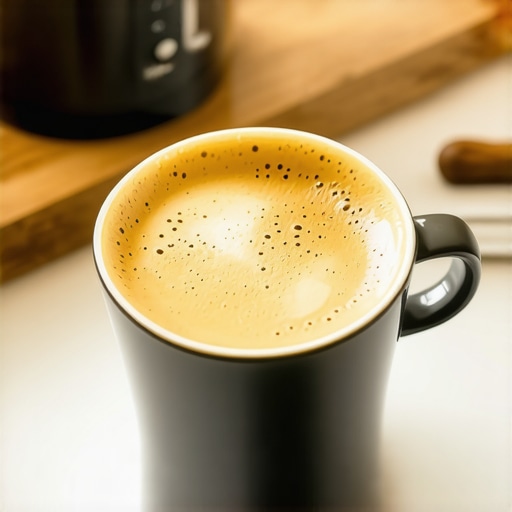
The Secret to Making Professional Espresso Without a $5000 Machine
Price does not equal pressure. Most homeowners walk into a high-end showroom and see a chrome-plated dual-boiler beast and assume it is the only path to a god shot. They are wrong. After running this luxury kitchen firm for 15 years, I have seen more $5000 machines gathering dust or producing bitter, over-extracted swill than I care to count. The truth? The machine is the least important part of the equation. You are paying for the badge, the heat-up speed, and the ability to steam milk while pulling a shot. If you want cafe-quality results at home, you need to stop focusing on the shiny box and start focusing on particle distribution and thermal stability.
The Engineering Reality
The physics of espresso is uncompromising. To extract the volatile oils from a coffee bean, you need exactly 9 bars of pressure and water held between 195 and 205 degrees Fahrenheit. Most entry-level espresso machines use vibratory pumps that spike to 15 bars, obliterating the delicate flavor profiles of light roasts. The fix is not a more expensive machine; it is a specialized tool like a digital scale for consistent espresso shots to ensure your dose is accurate to the tenth of a gram. Once your input is fixed, the burden shifts to the grinder. A $500 machine paired with a $1500 grinder will outperform a $5000 machine paired with a $200 grinder every single time. It is about burr geometry. You need burr alignment that minimizes fines—those tiny dust particles that clog the filter and cause bitterness. Without uniform particles, the water finds the path of least resistance, leading to channeling. The result? Avoidable failure.
[image_placeholder]
Luxury kitchen enthusiasts often overlook the impact of water chemistry. If you are pulling water straight from the tap, you are scaling your internals and dulling the acidity of your beans. Hard water is the silent killer of high-end appliances. According to the Specialty Coffee Association, water should have a neutral pH and a specific mineral count to act as a solvent. If the water lacks magnesium or calcium, it cannot ‘grab’ the flavor. Conversely, too much mineral content leads to the hiss of a leaking gasket and catastrophic pump failure. This is why professional baristas avoid pressurized portafilters; they mask poor technique but also mask the potential of the coffee itself. You want a standard 58mm basket, a solid tamper, and a willingness to learn the ‘dial-in’ process.
Implementation Risks and Operational Realities
Let’s talk about what actually breaks when you try to shortcut this process. I remember a client in a high-rise who insisted on the most expensive built-in system available. Six months later, the grinder chute was jammed with rancid oils because it was impossible to deep clean. The smell of scorched milk and stale beans is the sensory anchor of a failed luxury investment. If you go the semi-automatic route, the risk is ‘thermal drift.’ Cheaper machines lack a PID controller, meaning the temperature fluctuates wildly during the shot. You might start at 200 degrees and end at 185. To fix this, you must ‘temperature surf,’ a manual process of purging the steam wand to force the heater to kick in. It is messy, it is loud, and it requires a level of patience most people lack. Achieving commercial grade microfoam at home is equally difficult without the right boiler pressure, but a $600 machine with a well-designed steam wand can do it if you master the angle of the whirlpool.
Market Corrections Ahead
The industry is shifting. In the next 12 to 24 months, we are going to see a massive move away from ‘appliance-grade’ espresso towards modular, manual lever machines. These devices offer total control over the pressure curve without the electronic failure points of a $5000 super-automatic. The National Sanitation Foundation standards for home equipment are tightening, focusing more on lead-free brass and stainless steel internals. This means the ‘disposable’ $200 machines will eventually disappear, replaced by mid-range gear that is actually repairable. We are seeing a second-order effect where home users are becoming more technically proficient than the average cafe worker. The savvy investor in 2025 is putting their money into a high-end burr grinder and a manual lever press.
The Executive Verdict
If you are looking to upgrade your luxury kitchen workflow, do not default to the highest price tag. Buy a solid, mid-range semi-automatic machine with a PID. Take the $3000 you saved and buy the best flat-burr grinder on the market. This setup is the only way to achieve true professional-grade extraction without the overhead of a commercial unit. If you are currently using a machine with a built-in grinder, sell it. The heat from the boiler is likely cooking your beans before they even hit the water. Moving to a decoupled setup is the single best strategic move you can make for your morning routine. Focus on the variables you can control: grind size, water temperature, and yield. The machine is just a hot water pump; the skill and the grinder are the architects of the flavor.
Frequently Asked Questions
Is a manual lever machine better than a semi-automatic? Only if you value control over convenience. Manual levers allow for pressure profiling, which can save a poorly ground shot, but they have a steeper learning curve.
Why does my espresso taste metallic after cleaning? You likely used a descaling agent that was too aggressive for your boiler material. Always flush with at least three full tanks of water after a chemical clean to remove residual acids.
Does the type of milk matter for microfoam? Yes. High protein content is necessary for the structure of the bubbles. If you use plant-based milks, look for ‘Barista Editions’ which have added stabilizers to prevent curdling at high temperatures.
Can I use a regular blade grinder for espresso? Absolutely not. Blade grinders shatter beans into uneven shards, making it impossible to create the resistance needed for a 9-bar extraction. A burr grinder is non-negotiable.