
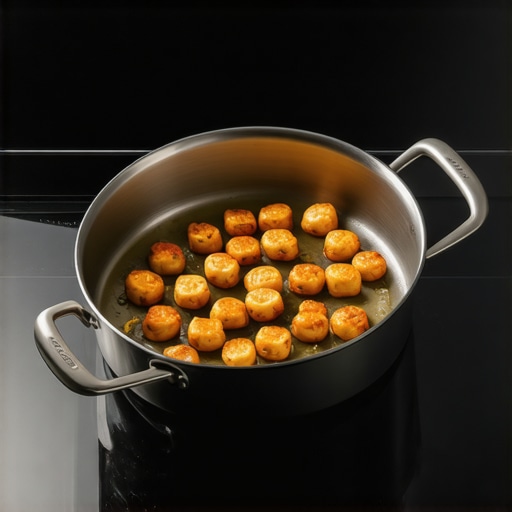
The Secret to Getting Restaurant-Quality Sears on Induction Ranges
Induction technology isn’t just a cleaner alternative to gas; it is a masterclass in electromagnetic efficiency that most luxury kitchen owners fundamentally misunderstand. After fifteen years of designing high-end culinary spaces, I’ve watched clients abandon their $5,000 cooktops for cast-iron gas burners simply because they couldn’t get a ribeye to crust. The failure isn’t the appliance. It is the physics of thermal mass management. Gas heats the air and the pan; induction turns the pan into the heating element itself. This distinction changes everything. If you treat an induction hob like a flame, you will warp your cookware and gray-band your proteins. The result? Avoidable failure.
The Physics of Magnetic Flux and Thermal Density
Success starts with understanding magnetic coupling. Induction works via copper coils creating an oscillating magnetic field that excites electrons in your cookware. Cheap, thin-bottomed pans cannot handle this rapid energy transfer. They vibrate, they buzz, and eventually, they lose their shape. For a true restaurant-grade crust, you need high-density ferrous material. This is where the benefits of hand-forged carbon steel cookware for searing become undeniable. Carbon steel offers the thermal retention of cast iron but responds faster to the precision of induction’s digital controls. Unlike gas, where heat loss to the room is massive, induction delivers nearly 90% of its energy directly to the metal. This means your preheat phase must be calculated, not guessed.
Avoiding the Thermal Shock Trap
The most common operational scar I see in the field is a warped 5-ply pan. Most home chefs crank the power to ‘Boost’ or ‘P’ mode immediately. This creates a localized hot spot in the center of the pan while the edges remain cool, leading to permanent metal fatigue. You must learn how to prevent your expensive stainless steel pans from warping by using a tiered preheating strategy. Start at power level 4, move to 7, and only hit high heat once the entire surface has expanded uniformly. Hear that high-pitched whine? That’s often the pan struggling with the frequency. Understanding why your induction stove makes your pans hum is the first step in diagnosing poor energy coupling. High-quality cookware with a thick, flat base will minimize this resonance and maximize heat distribution.
[IMAGE_PLACEHOLDER]
The Economic Reality of Induction Integration
From a strategic perspective, the shift toward induction is driven by both performance and regulatory momentum. New building codes in luxury markets are increasingly favoring all-electric footprints to meet efficiency standards like those outlined by the American Society of Heating, Refrigerating and Air-Conditioning Engineers (ASHRAE). Investing in a high-wattage induction system increases property resale value because it aligns with the ‘scullery-grade’ performance buyers now expect. However, the hidden cost lies in the electrical infrastructure. You cannot run a pro-sumer level cooktop on a weak circuit; these units require dedicated 40- or 50-amp lines to ensure the Pulse-Width Modulation (PWM) doesn’t cycle off when you have four burners running at once.
Macro Trends and the Future of High-End Cooking
Over the next 24 months, expect to see ‘smart’ induction surfaces that use infrared sensors to measure actual pan temperature rather than just power levels. This will eliminate the guesswork of searing entirely. We are moving away from ‘Low/Medium/High’ toward specific degree-set cooking. For the serious chef, this means the end of charred-outside-raw-inside mistakes. My executive verdict? Buy. But do not skimp on the pan. If the cookware isn’t as engineered as the cooktop, you are driving a Ferrari with wooden wheels. Stick to heavy-gauge carbon steel or 7-ply stainless for the best ROI on your culinary output.
Common Questions Regarding Induction Performance
Why does my induction cooktop click when I’m searing? This is the internal relay or the pulse-width modulation cycling power to maintain a specific temperature. Higher-end units cycle so fast it’s nearly silent.
Can I use a cast iron skillet? Yes, but the rough bottom can scratch the glass. Use a thin parchment paper sheet between the pan and the glass if you’re worried; induction passes through the paper without burning it.
How do I know if my pan is ‘Induction Ready’? The magnet test is the industry standard. If a magnet sticks firmly to the bottom, the pan will work. However, if the magnet is weak, the efficiency will be poor.