
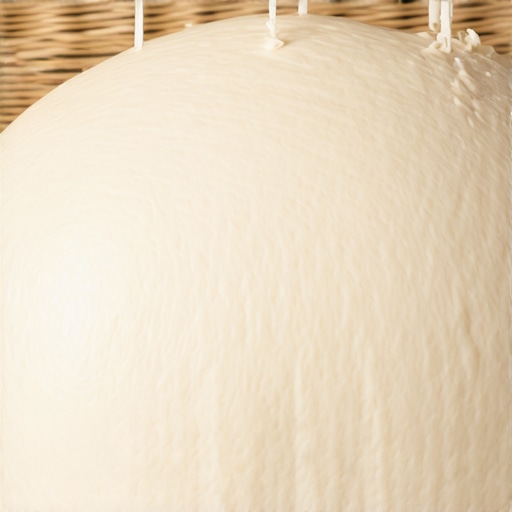
The Reason Your Sourdough Is Sticking to the Proofing Basket
Forget what social media influencers told you about simply throwing more rice flour at the problem. After twenty years of sourcing professional-grade tools for high-end residential bakeries, I can tell you that a sticking loaf is rarely a flour issue. It is a failure of surface tension and an elementary misunderstanding of the capillary action between wet dough and organic wicker. When you invest in premium cookware and top-tier fermentation tools, you expect the equipment to perform. But even the finest hand-woven banneton cannot compensate for a weak gluten matrix or a neglected pellicle.
The Physics of Surface Tension Failure
The primary culprit is usually a lack of structural integrity during the final shaping phase. If your dough lacks sufficient tension, the outer skin—the pellicle—fails to form a dry, protective barrier. Instead, the high-hydration dough behaves like a viscous fluid, seeping into the microscopic crevices of the cane or wood pulp. This creates a mechanical bond. Think of it as a low-grade adhesive curing in the sun. The result? A ruined crust and a basket that requires hours of cleaning. If you are using a high-hydration recipe, ensure your stand mixer provides the necessary torque to develop the gluten fully before the bulk fermentation even begins.
The Moisture Migration Matrix
In a luxury kitchen environment, humidity control is often overlooked. We see clients with dual-fuel ranges and custom marble islands who forget that ambient moisture dictates the success of a long cold proof. When the dough sits in a proofing basket for 12 to 18 hours in the refrigerator, it undergoes moisture migration. The exterior of the dough should lose moisture to the basket, creating a non-stick interface. However, if the basket is not seasoned or the refrigerator humidity is too high, the opposite happens. The wicker becomes saturated, and the dough fuses to the fibers. This is the same reason wood cutting boards warp when they are not properly maintained; organic fibers are dynamic, not static. They react to the water content of your dough.
The Seasoning Deficit and Technical Risks
New bannetons are notoriously sticky. They require a ‘build’—a layer of dried flour and micro-moisture that creates a naturally non-stick surface over time. If you scrub your baskets with soap after every use, you are destroying the very seasoning that prevents sticking. I’ve seen seasoned pros lose entire batches because they over-cleaned their gear. The smell of souring dough in a damp basket is a warning sign of mold risk, but the answer isn’t a deep scrub; it’s better airflow. When the dough sticks, it’s a mess. The weight of the industrial-grade steel in your ovens won’t save a loaf that has already lost its structure to a wicker basket. It’s an avoidable failure that costs time and high-quality ingredients.
Market Trends in Residential Fermentation
The industry is moving toward integrated proofing solutions. In the next 24 months, expect to see more luxury kitchens equipped with dedicated fermentation drawers that control both temperature and precise humidity levels to 1%. We are seeing a shift away from the ‘rustic’ unpredictability of open-air proofing toward a more engineered approach. This mirrors the precision found in commercial bakeries. For the home baker, this means the ‘sticking’ problem will eventually be solved by hardware rather than just technique. According to the American Bakers Association, the demand for artisanal-quality results in home settings has pushed equipment manufacturers to prioritize these environmental controls.
The Professional Recommendation
If you are currently facing a sticking crisis, my verdict is simple: stop using AP flour for dusting. Use a 50/50 blend of white rice flour and bread flour. The rice flour lacks gluten, meaning it cannot form a bond with the dough. It acts like microscopic ball bearings between the loaf and the basket. If the problem persists, check your bowl transition. Sometimes the issue starts earlier; for instance, dough residue on the mixer bowl can indicate a recipe that is simply too wet for your current skill level or environment. Reduce your hydration by 3% and master the tension before pushing the limits again. Technical mastery beats brute force every time.
Frequently Asked Questions
Q: Should I wash my proofing basket?
A: Never use soap. Use a stiff, dry brush to remove excess flour. Only use water if there is a massive sticking event, then dry it immediately in a low-heat oven to prevent warping.
Q: Why is rice flour better than wheat flour for dusting?
A: Rice flour does not develop gluten. It remains a powder even when it comes into contact with the moisture of the dough, preventing the ‘glue’ effect that causes sticking.
Q: Can I use a cloth liner instead?
A: Yes, but it must be linen. Cotton holds too much moisture. Linen is more breathable and, when floured correctly, offers a more consistent release for high-hydration loaves.
Q: How do I know if my dough is over-proofed and will stick?
A: Use the poke test. If the dough doesn’t spring back at all and feels ‘soupy’ or weak, the structure has collapsed. A collapsed structure is almost guaranteed to stick regardless of how much flour you use.