
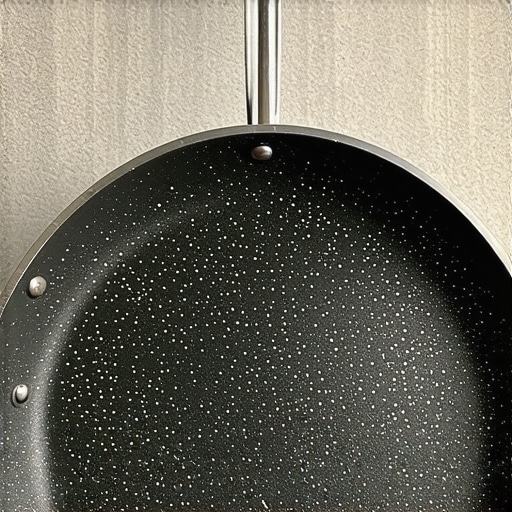
The Non-Stick Pan Move That Ruins the Coating in a Week
Stop treating your premium cookware like an indestructible slab of cast iron. After managing high-end kitchen installations and sourcing industrial-grade tools for fifteen years, I have identified a single, devastating habit that destroys non-stick surfaces faster than any metal spatula or dishwasher cycle ever could. The culprit is the aerosol cooking spray. Most homeowners believe they are adding a layer of protection or reducing calories, but in reality, they are initiating a chemical bond that is virtually impossible to break without stripping the pan to its substrate. The problem lies in soy lecithin. This emulsifier, found in almost every commercial spray, polymerizes at relatively low temperatures. Instead of lubricating the surface, it creates a gummy, carbonized film that fuses to the PTFE or ceramic coating. The result? Permanent failure of the non-stick property.
The Molecular Sabotage of Lecithin Buildup
When you spray a cold pan with an aerosol, the propellant evaporates, leaving a thin, uneven layer of lecithin. As the pan reaches its operating temperature, this lecithin undergoes a rapid chemical change. Unlike traditional fats like butter or avocado oil, which have defined smoke points and predictable degradation patterns, lecithin turns into a plastic-like resin. It fills the microscopic pores of the coating. This is why you often see a sticky, brown ring around the edges of your ceramic pan that refuses to budge. Scrubbing this residue requires abrasives that inevitably mar the finish. In my experience, even the highest-rated premium cookware brands cannot survive this repeated polymerization. The bond between the burnt-on lecithin and the non-stick matrix is stronger than the bond between the coating and the metal. You aren’t just cleaning a pan; you are tearing the coating off at a molecular level.
Thermal Shock and Substrate Expansion
Beyond chemical interference, physical structural integrity is the second casualty of poor management. If you take a pan directly from a high-heat sear and plunge it into a sink of room-temperature water, you are witnessing the coefficient of thermal expansion in its most violent form. The aluminum or stainless steel core of the pan contracts at a different rate than the non-stick coating. This delta creates shear stress. I have stood in luxury kitchens and heard the audible ‘tink’ of a coating microscopicly fracturing. It looks like a spiderweb under a jeweler’s loupe. Once those fractures exist, moisture and fats seep underneath the coating. This leads to the inevitable non-stick pan peeling that frustrates so many home cooks. It is a preventable death for a tool that should last years. Always allow the vessel to reach ambient temperature naturally before introducing cleaning agents or water.
[IMAGE_PLACEHOLDER]
The Hidden Cost of Heat Mismanagement
Non-stick surfaces are designed for medium to low-heat applications. They are the precision instruments of the kitchen, meant for delicate proteins and eggs. However, many users treat them as all-purpose workhorses. Exceeding 500 degrees Fahrenheit doesn’t just ruin the food; it causes the PTFE to off-gas and break down. This is an operational risk that many ignore until they notice the pan’s surface looks dull or ‘dry.’ If you need high-heat searing, you should be using carbon steel or stainless steel. I often recommend the no-stick eggs in stainless steel method for those who want durability without the fragility of polymers. When you force a non-stick pan into high-heat scenarios, you are effectively paying a ‘stupid tax’ on your kitchen equipment. The ROI on a $200 pan drops to zero the moment that coating loses its hydrophobicity.
Industry Shifts and Regulatory Realities
The landscape of cookware is shifting toward PFOA-free and PFAS-free alternatives, driven by both consumer demand and strict environmental regulations. Newer ‘green’ ceramic coatings are touted as more durable, but my field testing suggests they are actually more susceptible to the lecithin trap than old-school PTFE. The porous nature of many ceramic sol-gel coatings means they hold onto polymerized oils even tighter. According to the Cookware Manufacturers Association (CMA), consumer education remains the primary barrier to product longevity. We are seeing a move toward ‘reinforced’ coatings with diamond or titanium particles, but these are marketing band-aids. If the user continues to use aerosol sprays and thermal shock, the base polymer will still fail. Within the next 24 months, I expect to see even more stringent standards from ASTM International regarding the labeling of ‘dishwasher safe’ claims, which are often misleading at best.
The Executive Verdict on Pan Maintenance
My recommendation is a hard ‘Sell’ on aerosol sprays and a ‘Hold’ on high-heat non-stick usage. To preserve your investment, use a high-smoke point liquid oil applied with a brush or a paper towel. Ensure your pan never sees a flame higher than medium. If you have already started to notice stickiness, you may need to learn how to remove burnt-on grease without using steel wool. Use a paste of baking soda and water, and be patient. If the coating is already flaking, discard it. There is no ‘repairing’ a compromised non-stick surface once the bond to the metal is broken. Treat your pans with the same technical respect you give your espresso machines or high-torque stand mixers. Precision requires care.
FAQ
Can I save a pan that has already started to stick?
Only if the sticking is caused by oil buildup and not a scratched surface. A deep clean with a non-abrasive enzymatic cleaner or a baking soda paste can often strip the polymerized oil and restore the non-stick properties.
Why does my pan warp in the middle?
Warping is almost always the result of thermal shock or using a small pan on an oversized high-output burner. This causes the metal to expand unevenly, creating a permanent crown in the center.
Are expensive non-stick pans really worth it?
They are worth it for their superior heat distribution and thicker substrates, which resist warping. However, an expensive pan will die just as fast as a cheap one if you use aerosol sprays.
What is the best oil for non-stick cooking?
Refined avocado oil or light olive oil are ideal. They have high smoke points and do not contain the lecithin additives found in sprays.