The Meat Thermometer Calibration Move You Should Do Every Month
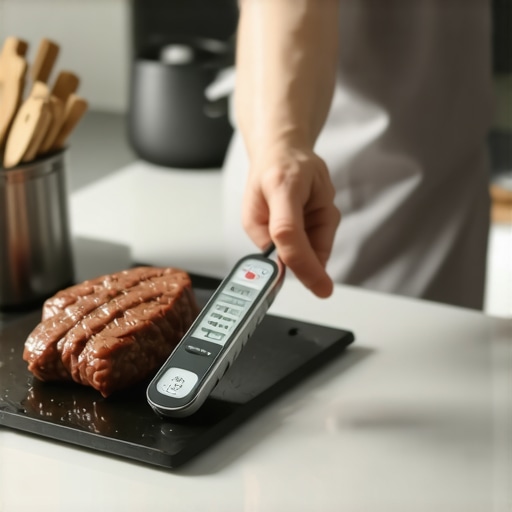
Accuracy is binary. You have it or you do not. In the world of high-performance cooking, a discrepancy of three degrees represents the chasm between a perfect medium-rare ribeye and a dry, over-textured disappointment. Most owners of premium kitchens believe their digital probes are permanent fixtures of precision. They are wrong. After 15 years in the specialized kitchen equipment industry, I have seen more $200 wagyu cuts ruined by uncalibrated sensors than by poor technique. Thermal sensors drift. It is a fundamental reality of electronics exposed to extreme temperature fluctuations. If you are not verifying your baseline every thirty days, you are simply guessing. The stake is not just culinary; it is financial. When you invest in 3-ply and 5-ply premium cookware, you do so for heat control. A faulty thermometer renders that control useless.
The Mechanics of Thermal Equilibrium
Calibration relies on the physical properties of water at its phase change points. The ice-point method is the gold standard because it is nearly impossible to mess up. Unlike the boiling point, which fluctuates based on your altitude and barometric pressure, the freezing point of pure water is a constant 32°F (0°C). Digital thermometers use a thermistor or a thermocouple. These components experience ‘drift’ caused by the expansion and contraction of the probe’s metal housing. Over time, moisture ingress or simple mechanical stress from being shoved into a drawer shifts the electrical resistance. This is exactly why heavy-bottomed pots prevent scorched sauces—they provide thermal mass. Your thermometer needs a similar baseline of reliability. The process requires a tall glass, crushed ice, and distilled water. Fill the glass with ice first, then add water until the gaps are filled but the ice is not floating. This creates a slushy mixture at a perfect, stable 32 degrees.
The Industrial Cost of Margin Errors
A thermometer that reads 35 degrees in a 32-degree ice bath is lying to you. In a professional setting, this probe would be decommissioned or adjusted immediately. At home, you must do the same. This isn’t just about food safety, though the USDA FSIS has strict guidelines on internal temperatures for a reason. It is about the chemistry of protein denaturation. Even heavy carbon steel skillets, which retain massive amounts of heat, cannot compensate for a chef who pulls the meat too late because their probe is lagging. If your probe is off, your carry-over cooking calculations will be wrong. You will end up with gray bands of overcooked meat. The result? Total loss of quality. You wouldn’t tolerate a speedometer in your car that was off by 10 mph. Why tolerate a thermometer that lies about the safety of your family’s dinner?
The Reality of Sensor Decay
I remember a client who called me, furious that her expensive built-in oven was ‘running cold.’ We spent three hours testing the heating elements only to find out her handheld digital thermometer—her reference point—was actually reading 12 degrees high. She had dropped it once, and the shock had slightly shifted the thermocouple alignment. The ‘clank’ of a probe hitting a tile floor isn’t just noise; it’s a signal that the tool’s integrity is compromised. Sensors are sensitive. They are not ‘buy once, forget forever’ tools. According to NIST standards, even high-end lab equipment requires periodic verification. Your kitchen is no different. You might notice the smell of over-rendered fat or the sight of a juice-less chicken breast. These are sensory anchors telling you your tools are failing. Most high-end digital models have a ‘Cal’ button. Use it. If yours doesn’t, you must manually offset the reading in your head, or better yet, replace the probe. Using a broken tool is a choice to fail. It is as frustrating as diagnosing why your espresso puck is soggy when the real issue is a simple grind setting.
Future of Thermal Precision
The industry is moving toward wireless, cloud-synced probes. These devices promise a lot, but they introduce more points of failure, specifically battery heat-resistance and signal latency. In the next 12 to 24 months, expect to see more ‘self-calibrating’ sensors, but treat those claims with skepticism. Physics doesn’t change because of an app update. The physical verification in an ice bath remains the only way to be certain. Regulatory changes in food safety standards are already leaning toward mandatory logging of calibration for commercial ventures; the smart home cook will adopt these habits early. My recommendation is a Buy on high-quality thermistors and a Hold on early-stage wireless tech that lacks a manual calibration override. If you value your ingredients, you will spend ten minutes every first Sunday of the month with a glass of ice water.
Strategic Calibration FAQ
Can I use tap water for calibration?
Distilled water is better. Tap water contains minerals that can slightly depress the freezing point, though for home use, the difference is usually negligible compared to a failing sensor.
What if my thermometer doesn’t have a calibration button?
If it is off by more than two degrees and cannot be adjusted, it belongs in the trash. Precision tools that cannot be tuned are just expensive toys.
Does the boiling water method work?
It is less reliable. Boiling points change with altitude. Unless you are using a barometer to calculate the exact boiling point for your current weather and elevation, stick to the ice bath.
How often should I calibrate a brand new probe?
Check it immediately out of the box. Factory calibration is often done in bulk and can be disturbed during shipping and handling.