
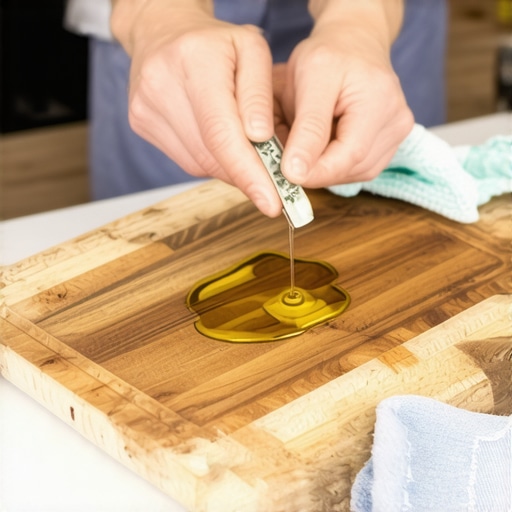
Owning a premium walnut cutting board isn’t just about aesthetics; it is a commitment to material science. After managing high-end kitchen installations for fifteen years, I have seen more $400 boards ruined by vegetable oil than by actual knife work. Walnut is a dense, diffuse-porous hardwood. Its cellular structure is designed to transport water, which means it will absorb moisture from your environment or your sink if not properly sealed. Total failure is the only result of neglect.
The Correct Way to Oil a Walnut Cutting Board
The standard advice of ‘just rub some oil on it’ is insufficient for professional standards. You need a food-grade, USP-certified mineral oil or a specialized fractionated coconut oil. Why? Because kitchen-grade vegetable oils—olive, canola, or sunflower—contain long-chain fatty acids that oxidize. This process, known as rancidity, creates a sticky, foul-smelling film that can harbor bacteria. If you want to understand the long-term impact of wood neglect, the secret to keeping your wood cutting boards from cracking lies in the depth of oil penetration rather than surface-level application.
The Molecular Reality of Wood Fiber
Wood is hygroscopic. It breathes. When humidity drops in a luxury kitchen equipped with high-BTU ranges, the wood fibers contract. Without a non-drying oil to occupy those cellular voids, the internal stress causes checks and splits. I recommend a ‘flood and dwell’ method. You aren’t just wiping the board; you are saturating the matrix. This is similar to the care required for other high-end materials, where the finish is a barrier against environmental entropy. If you are investing in luxury kitchen upgrades, your maintenance routine must match the caliber of your equipment.
Why Standard Methods Fail
The most common error is applying oil to a damp board. Water and oil don’t mix. If moisture is trapped in the grain, the oil won’t penetrate. The result? Surface-level protection that washes off in one cycle. You must allow the walnut to air-dry for at least 24 hours before treatment. I have seen clients treat their boards like carbon steel pans that keep rusting because they ignore the fundamental rule of a dry substrate. The weight of a properly oiled board feels different—it has a substantive, dampened thud rather than a hollow ring.
The Executive Maintenance Protocol
Step one: Clean the surface with a pH-neutral soap. Step two: De-whisker the board. If the grain feels fuzzy, a light pass with 400-grit sandpaper is necessary. Step three: Apply the oil liberally until it pools. Let it sit for six hours. The board will ‘drink’ what it needs. Wipe the excess. According to the American Wood Council, wood’s dimensional stability is directly tied to its moisture content. By replacing water with stable mineral oil, you lock the dimensions in place. For those using heavy-duty equipment like industrial stand mixers or high-pressure espresso machines nearby, the heat and vibration can accelerate wood drying, making this protocol even more vital.
Strategic Market Corrections
The trend in luxury kitchens for 2025 is shifting toward ‘heirloom durability.’ We are moving away from disposable plastic and toward sustainable, heavy-gauge walnut. This shift mirrors the rise in premium air fryers that prioritize stainless steel over non-stick coatings. Buyers now value the ‘operational scars’ of a well-maintained board. Regulatory changes regarding food-safe finishes are also tightening, so stick to products that meet FDA standards for direct food contact.
The Executive Verdict
Treating a walnut board is a high-ROI activity for your kitchen’s longevity. If the wood looks grey or feels ‘thirsty,’ you are already late. My recommendation: Flood the board once a month. Use a beeswax-mineral oil blend for the final coat to create a hydrophobic seal. This prevents juices from protein or acid from citrus from etching the wood fibers.
Frequently Asked Questions
Can I use walnut oil from the grocery store? Only if it is ‘virgin’ and you are prepared for the slight risk of it going rancid over a long period; food-grade mineral oil is safer for longevity. How do I remove garlic smells? Use a coarse salt and lemon scrub before the oiling process to neutralize organic compounds. Is it okay to oil the edges? Absolutely. The end-grain on the edges is the most absorbent part of the board and requires the most oil to prevent cracking.