
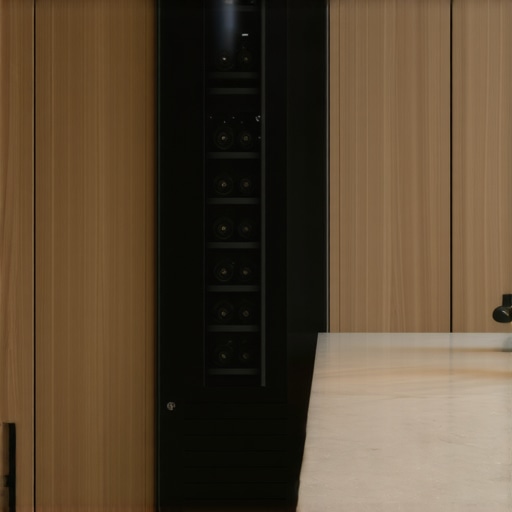
The Best Way to Store Fine Wine in a Modern Kitchen Layout
Modern kitchens serve as the literal furnace of the home, which makes them a hostile environment for long-term wine maturation. The thermal load from professional-grade ranges and the vibrational frequency of high-torque appliances create a volatile micro-climate. After fifteen years of designing high-end culinary spaces, I have witnessed thousands of dollars in vintage Bordeaux ruined by simple placement errors. Most homeowners prioritize aesthetics over thermodynamics. They want a trophy wall. What they often get is an expensive vinegar generator. To avoid these pitfalls, we must analyze the structural reality of the kitchen environment, specifically avoiding the pitfalls that explain why most kitchen renovations fail the triangle rule when aesthetics override logic.
The Physics of Thermal Stability
Wine requires a static temperature of 55°F (13°C) with minimal fluctuation. In a standard luxury kitchen, ambient temperatures can swing from 68°F to 82°F during a single dinner service. This expansion and contraction of the liquid forces oxygen through the cork, accelerating oxidation. A dedicated wine column with a variable-speed compressor is the only solution. Unlike cheap thermoelectric coolers, compressor-based units maintain a tight thermal delta even when the kitchen is under high load. Positioning is everything. Never place a wine unit adjacent to a dishwasher or an oven. The heat transfer through cabinetry—even with high-performance insulation—will force the cooling system into a constant duty cycle. This leads to early compressor failure and mechanical vibration. These vibrations from nearby appliances, much like why your stand mixer motor smells like its burning during high-torque tasks, can agitate sediment and disrupt the delicate chemical balance of aging tannins.
Vibration and UV Filtration Mechanics
Vibration is the silent killer of vintage stock. Constant micro-agitation prevents sediment from settling, which is essential for the slow development of complex esters. High-end storage units utilize vibration-damped shelving and rubberized mounts to isolate the bottles from the home’s structural hum. Then there is the light problem. UV rays, specifically those in the 300 to 400 nm range, degrade organic compounds in wine, leading to ‘light-struck’ aromas. Modern kitchen layouts often feature expansive windows and high-CRI LED lighting. Your storage solution must utilize triple-pane, argon-filled glass treated with a UV-resistant coating. If you can see the labels clearly from across the room under bright sunlight, your wine is at risk. Ensuring flush fits avoids the visual mess and helps understand how to fix the uneven gap in your modern cabinet doors around heavy refrigeration units that require precise leveling.
Integrated vs Standalone Implementation Risks
The trend toward ‘invisible’ kitchens has led to a surge in integrated wine refrigeration. While visually striking, these units present a significant engineering challenge: ventilation. Standard cabinetry does not breathe. If the hot air from the condenser is trapped within the plinth or the carcass, the unit will overheat. I have seen integrated units fail in under three years because the designer forgot to include a dedicated air intake and exhaust path. The result? Avoidable failure. When planning the layout, consider the air exchange requirements of your specific model. Clutter isn’t just about items; the real reason your new kitchen feels cluttered is often the lack of dedicated zones for high-performance equipment. A wine station should be a ‘dead zone’ for heat and movement. According to the Guild of Sommeliers, even minor deviations in humidity can cause corks to dry out or mold to form on labels. Aim for 60% relative humidity to maintain cork elasticity without compromising the aesthetic of the bottle.
Industry Foresight for 2025
The industry is shifting toward localized climate zones. We are moving away from the massive single-zone cellar toward modular, dual-zone units that allow for immediate service temperatures and long-term aging within the same footprint. Expect to see more smart-glass integration that remains opaque until a sensor detects human presence, further protecting the wine from ambient light. Regulatory changes regarding refrigerants (like the transition to R600a) are also forcing manufacturers to redesign cooling loops for higher efficiency. This means future units will be quieter but potentially more sensitive to dust buildup on condenser coils. Regular maintenance is no longer optional.
The Executive Verdict
If you are serious about your collection, do not treat wine storage as an afterthought or a decorative filler for an empty cabinet slot. Hold: Do not buy a unit that lacks a vibration-damped compressor. Buy: Invest in a dual-zone integrated unit only if you have a verified ventilation plan. Sell: Remove any wine stored above a refrigerator or next to a range immediately. The best way to store fine wine in a modern kitchen is to treat the unit like a laboratory-grade environment, isolated from the chaos of the culinary process.
Frequently Asked Questions
Can I use a regular beverage cooler for wine?
No. Beverage coolers are too cold and lack the humidity controls necessary to keep corks from drying out. They also typically lack UV-protected glass.
How do I stop my wine fridge from making a rattling noise?
Check the leveling feet first. Even a slight imbalance can cause the compressor to strike the internal frame. High-end units also require specific clearances to prevent harmonic resonance with the surrounding cabinetry.
Is a 24-inch wine column enough for a growing collection?
A 24-inch column usually holds about 100 bottles. If you buy by the case, you will outgrow this in less than two years. For serious collectors, I recommend a secondary ‘deep storage’ unit in a basement or utility room, keeping only service-ready bottles in the kitchen layout.