
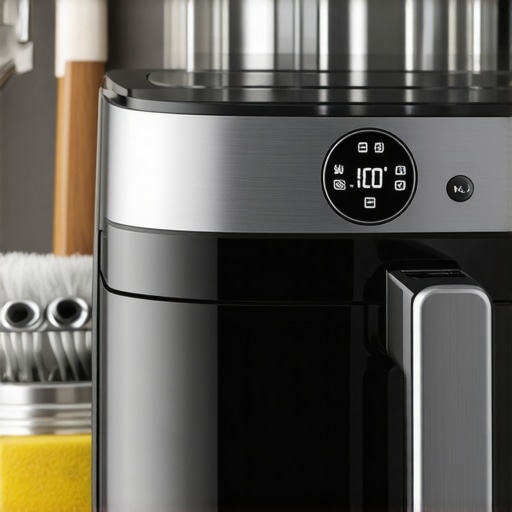
Neglecting the heating element in your high-end air fryer is the fastest way to turn a $300 appliance into a fire hazard. Most owners focus on the basket. They scrub the non-stick coating until it peels but ignore the very component that drives the convection process. After running this company for 15 years, I have seen hundreds of units returned with ‘dead motors’ that were actually just choked by carbonized grease. When fat particles become airborne during a high-heat cycle, they adhere to the heating coil. They bake on. They polymerize. This creates an insulating layer that forces the element to run hotter to achieve the same internal temperature. The result? Thermal runaway or a blown fuse.
The Best Way to Deep Clean an Air Fryer Heating Element
The engineering reality of these devices is simple: they are compact convection ovens with high-velocity fans. When the coil is coated in sludge, the airflow is disrupted. You lose that crispiness you paid for. To fix this, you must adopt a Modern Disruptor’s approach—using precision and minimal moisture. First, unplug the unit. Never work on a live circuit. Flip the entire machine upside down. This provides direct access to the coil and the fan assembly behind it. You will likely see a tacky, brown residue. This is not just ‘dirt.’ It is a chemical bond of lipids and heat. If you use harsh abrasives, you risk damaging the protective sheath of the nichrome wire. Instead, use a soft-bristled nylon brush and a paste of baking soda and water. It is a slow process. It requires patience. But it preserves the integrity of the machine.
The Engineering Reality of Carbonization
Why does this matter? Performance decay is non-linear. A 10% buildup on the coil can lead to a 30% increase in energy consumption and a significant drop in fan efficiency. Grease, once airborne, does not just vanish. It finds the coolest part of the hot zone and stays there. I’ve seen this lead to some units needing a repair to stop your air fryer from blowing a fuse because the resistance became too high. Using a flashlight, inspect the areas where the coil meets the housing. This is the primary failure point. If you see white smoke during operation, that is the ‘Technical Truth’ that the market ignores: your appliance is literally burning its own waste. It is acrid. It ruins the flavor profile of premium ingredients.
Why Standard Soaking Methods Fail
Traditional kitchen wisdom suggests soaking or heavy spraying. That is a mistake. The moisture can seep into the motor housing or the control board. I have seen countless ‘dead’ units where the owner thought they were being thorough but actually caused a short circuit. A better way involves a targeted steam approach. Place a bowl of water and lemon slices in the basket and run the unit at 400 degrees for five minutes. This softens the grime without saturating the electronics. Then, use your brush. You should see the gunk slide off. For stubborn spots, refer to our guide on how to clean greasy air fryer coils without chemicals. It avoids the toxic fumes associated with industrial degreasers which should never be near food surfaces.
The Hidden Risk of Filter Neglect
Many luxury models now include internal filtration systems. These are often the most overlooked part of the maintenance cycle. A clogged hidden air fryer filter restricts the intake. This causes the heating element to glow hotter than its rated specification. The smell of hot metal is a warning. It is the smell of a component reaching its elastic limit. If you ignore this, the structural integrity of the fan blades can warp. I’ve seen high-end plastics melt because the heat couldn’t escape. It’s a mess. A total loss. Maintenance isn’t a chore; it’s an investment in your kitchen’s operational uptime.
Market Corrections and Future Tech
Looking at the next 12 to 24 months, we expect to see more self-cleaning cycles in the air fryer segment, similar to pyrolytic ovens. However, until that tech matures, manual intervention remains the gold standard. According to the Association of Home Appliance Manufacturers, regular maintenance can extend the life of small heating appliances by up to 40%. We are also seeing a shift toward ‘open-coil’ designs that are easier to wipe down. If you are buying a new unit, look for one that allows for easy disassembly of the protective grate. It’s a small feature that saves hours of frustration later. Always ensure your appliance meets UL safety standards to prevent home fires caused by grease ignition on the coils.
Executive Verdict
If your air fryer is more than six months old and you use it daily, it needs a deep clean now. Don’t wait for the smoke. Don’t wait for the acrid smell. My recommendation is a ‘Hold’ on buying new units if your current one just needs a coil scrub. But if you see pitting or corrosion on the metal of the element, it’s a ‘Sell’—replace it immediately. A compromised heating element is a liability. Buy a unit with a removable heating guard next time. That is the winning move for the modern kitchen.
Frequently Asked Questions
Can I use oven cleaner on my air fryer heating element?
Absolutely not. Oven cleaners contain caustic chemicals like sodium hydroxide that can corrode the aluminum or stainless steel components of an air fryer. The fumes are also incredibly difficult to purge from the small internal cavity.
How do I know if my heating element is damaged or just dirty?
A dirty element will be covered in dark, tacky spots. A damaged element will show signs of flaking, deep pitting, or visible cracks in the metal sheath. If the coil is cracked, stop using the device immediately.
How often should I perform this deep clean?
For heavy users (3-5 times a week), a deep inspection and light cleaning of the element should happen every month. A full deep clean with a brush and baking soda should be done quarterly to maintain efficiency.