
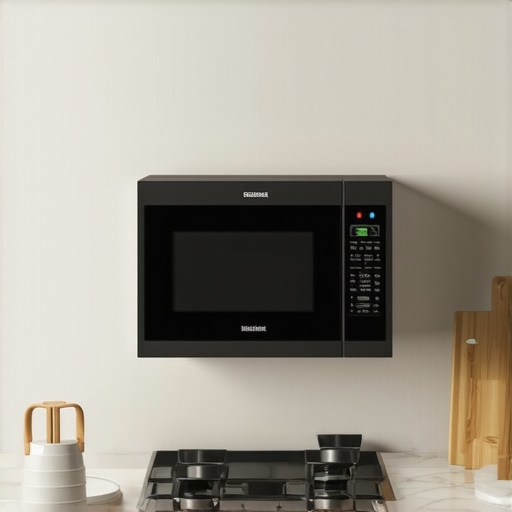
The Best Height for Your Wall-Mounted Microwave
Positioning a microwave in a high-end kitchen isn’t about following a generic manual. It is about technical geometry and the physics of heat management. After 15 years of installing precision appliances in custom cabinetry, I have seen every failure imaginable. Most contractors default to the 18-inch clearance rule without considering the user’s eye level or the thermal output of the surrounding luxury kitchen setup. If the unit sits too high, you risk gravity-assisted burns from hot liquids. Too low, and the ergonomics fail. The goal is a centerline height that aligns with the primary user’s chest height, typically ranging between 48 and 54 inches from the floor.
The Engineering Reality
The structural integrity of your cabinetry must be the first consideration. Wall-mounted units require specific blocking to handle the lateral shear when the door is pulled. Unlike integrated panel appliances, which sit within a frame, wall-mounted microwaves often hang from a bracket that bears the full weight of the chassis and the glass turntable. Standard 1/2-inch drywall will not hold a professional-grade convection microwave. You need 2×4 blocking between the studs. This prevents the unit from sagging over time, a common issue that causes the latch to misalign. When the latch misaligns, the sensor fails. The result? A dead unit and a frustrated client.
The Heat Dissipation Problem
Airflow is the hidden killer of luxury appliances. Most wall-mounted microwaves share air space with other heat-generating equipment. If you place a microwave directly above a high-BTU range without a 30-inch clearance, the electronics will fry within three years. You need to understand how steam behaves. Steam rises and expands. If the microwave is too low, the bottom casing acts as a trap for grease and moisture. This is why many homeowners find that their kitchen hood vent isn’t clearing smoke effectively when the microwave sits too low over the cooktop. The physical obstruction disrupts the laminar flow of the ventilation system.
The Mechanical Stress Test
I once walked into a project where a $3,000 speed oven was falling off the wall. The installer used plastic anchors. The weight of the industrial grade steel was literally pulling the screws out of the wall. You could smell the scorched insulation from the strained wiring. We had to strip the cabinetry back and install a reinforced mounting plate. This isn’t just about aesthetics; it’s about the safety of the household. Beyond the mount, consider the door swing. A microwave door needs a 110-degree opening radius to allow for the removal of wide baking dishes. If the unit is tucked too tightly into a corner, you limit the utility of your premium cookware.
Thermal Bridging and Clearance
When installing near other heating elements like air fryers that blow hot air into the wall, you must maintain a thermal envelope. Heat from one appliance should not reach the sensitive logic boards of the other. The National Kitchen and Bath Association (NKBA) suggests that the bottom of the microwave should be no higher than 54 inches from the floor for safety. However, for a shorter chef, 48 inches is the sweet spot. We use laser levels to find the exact intersection of the user’s reach and the cabinet’s structural points. This precision is what separates a custom kitchen from a big-box store remodel.
Market Corrections and Future Trends
The industry is moving away from the over-the-range microwave. In 2025, we are seeing a shift toward eye-level wall stacks where the microwave sits above a steam oven or a warming drawer. This vertical integration follows the ANSI standards for appliance safety and focuses on the ‘work triangle’ efficiency. The secondary benefit is ventilation. By moving the microwave to a dedicated wall cabinet, you can install a high-performance, dedicated ventilation hood over your range. This ensures your luxury kitchen stays free of grease and odors. Regulatory changes are also pushing for higher-efficiency motors in these units, which means they are becoming heavier and require even more robust mounting solutions.
The Executive Verdict
If you are planning a renovation, do not let your cabinet maker dictate the microwave height based on ‘standard’ fillers. Demand a layout based on your specific height. Use a mounting kit that includes a heavy-duty steel bracket. If the unit is going over a countertop, ensure there is at least 15 inches of landing space directly below or adjacent to the unit. This is a non-negotiable safety requirement for handling hot items. For those using high-capacity convection microwaves, ensure a dedicated 20-amp circuit is pulled to the location to prevent voltage drops that damage the magnetron.
Frequently Asked Questions
Is it safe to mount a microwave at eye level?
Yes, provided the height allows the user to see into the dish without reaching upward. Eye level is generally the safest position for preventing spills of hot liquids.
How much clearance is needed from the bottom of the microwave to the stove?
According to the National Kitchen & Bath Association, a minimum of 30 inches between the top of the range and the bottom of the cabinet is standard, though the microwave itself usually sits 13 to 16 inches above the cooking surface.
Why does my wall-mounted microwave rattle?
Rattling usually indicates a loose mounting bracket or a fan that is hitting the internal housing. This is often caused by the wall not being perfectly flat, which twists the microwave frame when the bolts are tightened.
Can I mount a countertop microwave on the wall?
Only if you use a specific hanging kit designed for that model. Countertop units are not vented for wall enclosures and can overheat if the vents are blocked by cabinetry.