
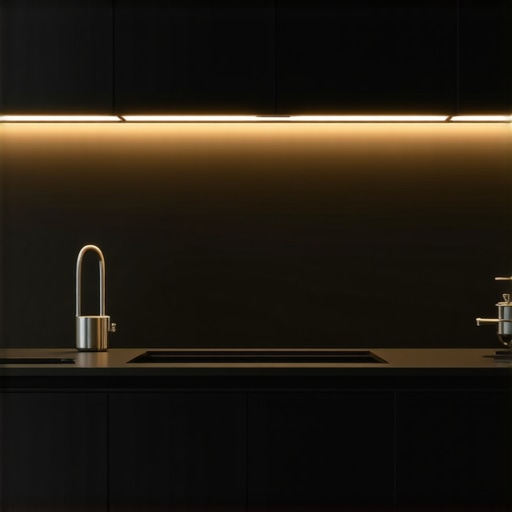
The Benefits of Under-Cabinet LED Lighting in a Modern Kitchen
Lighting is often the most neglected line item in a luxury kitchen budget. Homeowners obsess over the veining of a Calacatta marble slab or the BTU output of a professional range, yet they settle for generic overhead cans that cast harsh shadows exactly where precision is needed most. After consulting on high-end residential builds for nearly twenty years, I can tell you that poor illumination is the fastest way to make a six-figure investment look like a DIY project. Under-cabinet LED lighting is not a decorative flourish. It is a functional requirement that dictates the safety, speed, and perceived value of the culinary space. If your shadows are obscuring your knife work, your kitchen is failing its primary purpose. The stakes involve more than just aesthetics; they encompass ergonomic safety and long-term property appraisal.
Shadow Management and Optical Precision
Traditional overhead lighting creates a physical disconnect. As you lean over a counter to prep vegetables or read a recipe, your body blocks the light source. The result? A dark workspace that increases the risk of injury. Professional-grade under-cabinet LEDs eliminate this localized darkness by placing the light source directly between the user and the task. This is the the under-cabinet lighting trick for better food prep visibility that separates commercial-grade kitchens from standard home setups. By utilizing a continuous run of low-profile diodes, we achieve a uniform wash of light across the entire depth of the countertop. This eliminates the ‘spotlight effect’ where some areas are blindingly bright while corners remain in shadow. We look for a high Color Rendering Index (CRI) of 90 or above. Without it, your fresh ingredients look dull, and your expensive finishes appear muddy.
The Economic Logic of High CRI Diodes
When I analyze the the roi of a high-end kitchen renovation what actually adds value, lighting consistently offers the highest return per dollar spent. High CRI LEDs ensure that the spectral output of the light matches natural sunlight. This is non-negotiable for luxury materials. If you have spent forty thousand dollars on rare stone, a cheap 70 CRI light will make it look like plastic. It is an economic error to save five hundred dollars on lighting only to degrade the visual impact of your entire kitchen. Modern LED systems are also incredibly efficient, drawing minimal wattage while producing high lumens. This reduces the load on your electrical panel, which is particularly important when you are already running heavy appliances like commercial-grade espresso machines or high-draw air fryers on the same circuit. According to the National Kitchen & Bath Association, integrated task lighting is now a top priority for 85% of luxury homebuyers.
Thermal Management and Implementation Risks
The biggest mistake I see in the field is the use of cheap adhesive strips that lack proper heat sinking. LEDs generate heat at the junction point. If this heat isn’t dissipated, the phosphor coating degrades. Your crisp white light turns a sickly blue within six months. The solution? Aluminum channels with frosted diffusers. This setup protects the diodes and acts as a radiator, extending the lifespan of the system to 50,000 hours or more. I recall a client in the local area who insisted on using discount-store puck lights. Within three months, the heat had warped the finish on their custom cherry cabinets. It was a costly lesson in thermal dynamics. Beyond the heat, you must consider voltage drop. Running long lengths of low-voltage tape without a properly sized transformer leads to dimming at the end of the run. It looks amateur. Using the right gauge of wire and high-quality drivers is the only way to avoid the lighting error that makes your quartz countertops look cheap and yellow.
Market Corrections and Future Integration
The industry is moving toward ‘Human-Centric Lighting.’ This involves tunable white LEDs that shift color temperature based on the time of day. In the morning, you want a cool 5000K to wake the senses. By evening, as you relax with a glass of wine, the system should dip to a warm 2700K. This isn’t just a gimmick; it affects the circadian rhythm and the overall mood of the home. We are also seeing a shift toward ‘smart’ integration where under-cabinet lights are tied to motion sensors or voice commands. However, the hardware must remain serviceable. Avoid proprietary systems that lock you into a single manufacturer. If a driver fails in ten years, you should be able to source a replacement without tearing out your backsplash. The the hidden costs of a custom kitchen layout you should know often involve these small, unserviceable components that require major surgery to fix later.
The Executive Verdict
If you are planning a renovation, do not treat lighting as an afterthought. It is the connective tissue of the kitchen. My recommendation: hardwire your under-cabinet system to a dedicated dimmer switch. Avoid battery-operated pucks at all costs. They are landfill fodder. Invest in aluminum channels with high-density LED tape (at least 120 LEDs per meter) to avoid visible dots on your stone. If you have a dark backsplash, increase your lumen output per foot. If you have light quartz, keep it moderate to avoid glare. Lighting is the difference between a kitchen that works and a kitchen that inspires.
What is the ideal color temperature for kitchen task lighting?
For most modern kitchens, a color temperature between 3000K and 4000K is ideal. 3000K provides a warm, inviting glow that suits traditional styles, while 4000K offers a cooler, more clinical light that enhances modern, high-contrast designs.
Should I use 12V or 24V LED systems?
I always recommend 24V systems for kitchen installs. 24V systems experience less voltage drop over long runs, meaning your lights will have consistent brightness from the start of the cabinet run to the end.
Can I install under-cabinet lighting myself?
While DIY kits exist, hardwired professional systems should be installed by a licensed electrician. This ensures the transformers are hidden properly and the system is integrated into your home’s main switching architecture for a cleaner look.
How do I avoid reflections on high-gloss countertops?
Use a frosted or ‘milky’ lens on your aluminum channels. This diffuses the light and eliminates the ‘hot spots’ or individual diode reflections that can be distracting on polished granite or quartz surfaces.