
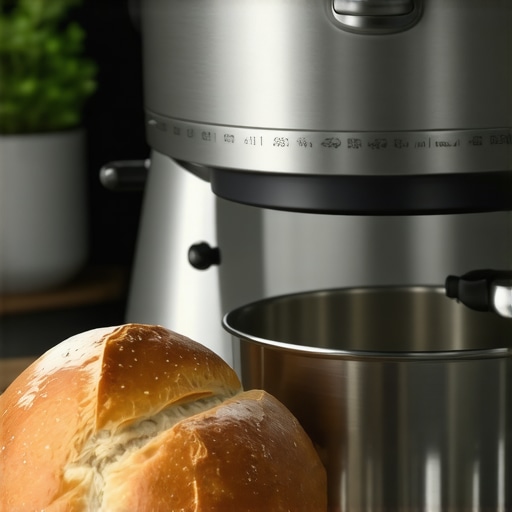
How to Stop Your Stand Mixer From Overheating During Bread Making
Stop treating your stand mixer like a heavy-duty industrial lathe. After fifteen years of diagnosing burnt-out motor armatures and stripped nylon gears, I can tell you the smell of ozone in your kitchen isn’t a sign of hard work; it is the scent of mechanical failure. Most home bakers assume that if a machine costs five hundred dollars, it should handle any dough thrown at it. That assumption is wrong. Overheating is a physics problem, specifically an issue of torque versus resistance. When you push a low-hydration dough through a planetary mixing action at high speed, you are effectively asking the motor to fight itself. The result? Avoidable failure.
The Engineering Reality
The internal architecture of most consumer stand mixers relies on either a universal AC motor or a more efficient DC motor. Universal motors run hot by design, using high RPMs and gear reduction to achieve torque. The heat builds up in the housing, and without proper airflow, the grease on the gears begins to liquefy and migrate away from the friction points. This is why every serious home baker needs a high-torque DC motor if they plan on doing more than just occasional cakes. DC motors maintain constant torque at low speeds, which is the sweet spot for gluten development. If you are using an AC motor, the thermal expansion of the copper windings increases resistance, which draws more current, creating a feedback loop that eventually trips the thermal overload protector—if you are lucky.
The Hydration Friction Matrix
Resistance is not just about the weight of the flour. It is about the hydration levels. A 50% hydration bagel dough exerts three times the stress on a drive shaft compared to a 75% hydration focaccia. I have seen countless machines with snapped shear pins because the baker tried to force a stiff dough to come together too quickly. You have to respect the mechanical limits of the transmission. To prevent the motor from screaming, you should learn the secret to making pizza dough that doesn’t break the mixer, which usually involves a slower autolyse period to let the water do the heavy lifting of gluten alignment before the machine starts spinning.
Implementation Risks and The Smell of Failure
The messy reality of bread making is that things go wrong in the first ten minutes. You hear it first. A rhythmic thumping or a slight change in the motor’s pitch. Then you feel the vibration through the marble countertop. Finally, you smell it—the acrid, sharp scent of burning insulation. I remember a client who insisted on kneading a double batch of high-protein bread on speed four. By the time I got there, the head of the mixer was too hot to touch, and the internal grease had turned into a black, gritty sludge that had leaked into the bowl. This is why using a spiral hook specifically for sourdough or heavy doughs is a necessity; it pushes the dough down instead of climbing the hook and creating vertical tension that wears out the top bearings.
Market Corrections Ahead
The industry is currently shifting away from the ‘all-metal’ marketing fluff toward brushless motor technology. Over the next 24 months, expect to see manufacturers emphasizing thermal management systems and smart sensors that shut the machine down before the gears strip. We are moving away from the era of planned obsolescence where a plastic gear was designed to fail to save the motor. Now, the electronics are becoming the fail-safe. If your current machine is older, you might need to perform some preventative maintenance, such as learning how to deep clean your stand mixer gears without voiding the warranty to ensure old, dried grease isn’t adding unnecessary drag to the system.
The Executive Verdict
If you are a serious bread baker, my recommendation is a hard ‘buy’ on DC-motor-driven machines and a ‘sell’ on using anything above speed two for kneading. Bread is a slow process; the machine should reflect that. For those stuck with AC motors, implement a 10-minute on, 10-minute off cycle for heavy batches. This isn’t a suggestion; it’s a requirement to keep the motor’s internal temperature below the 150-degree mark where permanent damage begins. According to standards by the Association of Home Appliance Manufacturers (AHAM), continuous operation under heavy load is the leading cause of premature motor failure in kitchen appliances. Engineering reports from the IEEE also suggest that heat is the primary killer of small appliance electronics. If the head of your mixer feels like it belongs in an oven, stop the machine immediately. Your dough can wait; your motor cannot.
Stand Mixer Thermal Management FAQ
Why is the top of my mixer hot to the touch?
Heat rises from the motor housing. While some warmth is expected due to friction and electrical resistance, if it is too hot to hold your hand on for five seconds, the motor is over-taxed or the grease has failed.
Is the burning smell normal for a new mixer?
In the first few uses, a slight ‘new motor’ smell is common as factory lubricants settle. However, a sharp, ozone-like smell or smoke indicates a serious electrical fault or an overloaded circuit.
Can I use a higher speed to finish kneading faster?
No. Kneading dough above speed two on most planetary mixers increases the friction and impact force on the gears exponentially. It does not develop gluten faster; it just wears out the machine faster.
What is the maximum time I should run my mixer for bread?
Most consumer manuals recommend a limit of 8 to 10 minutes. If the dough isn’t ready, let the machine rest for at least 10 minutes before continuing to avoid heat soak.