
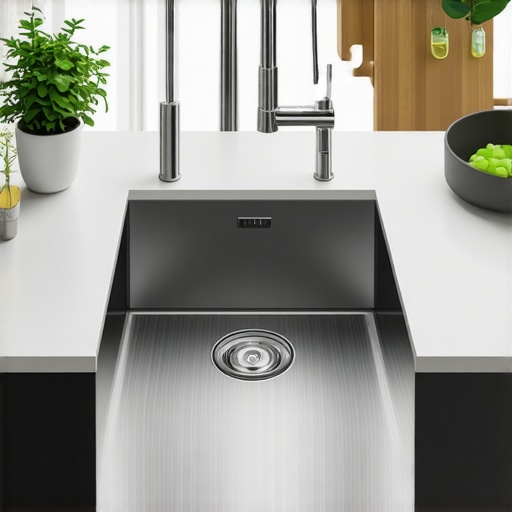
A garbage disposal is not merely a convenience; it is a mechanical stress point in the heart of a luxury kitchen. Most homeowners believe noise is an inevitable byproduct of mastication. They are wrong. Excessive decibel levels are a symptom of harmonic failure or inadequate insulation. In my fifteen years of engineering high-end kitchen installs, I have seen $10,000 countertops vibrate to the point of structural fatigue because a contractor cut corners on the disposal mounting system. The stake here is not just your morning peace. It is the longevity of your plumbing and the acoustic integrity of your home.
How to Silence a Noisy Garbage Disposal in a Modern Sink
Sound in a kitchen environment travels through two mediums: air and structure. A standard 1/2 HP motor creates a violent centrifugal force. If that force isn’t managed, your sink becomes a giant speaker cone. This is particularly prevalent in modern, thin-gauge stainless steel sinks. When the unit kicks on, the metal vibrates, amplifying the mechanical whine into a roar. To achieve near-silent operation, you must address the mounting assembly. The traditional three-bolt mount is a workhorse, but it lacks the vibration isolation found in specialized high-torque systems. If you notice the why your kitchen sink spray is losing pressure over time, you might also be dealing with systemic vibrations that have loosened internal fittings.
The Engineering of Decibel Reduction
The first step is checking the sink flange. In a luxury kitchen, we often use heavy-duty rubber gaskets rather than just plumber’s putty. This creates a thermal and acoustic break between the disposal and the sink deck. Why does this matter? Because metal-on-metal contact is an acoustic disaster. You need a decoupling agent. I recommend looking at the insulation jacket. High-end units use closed-cell foam to wrap the grinding chamber. This absorbs the high-frequency ‘clink’ of silverware or bone fragments hitting the flywheel. If your unit sounds like a jet engine, the insulation has likely degraded or was never installed. This mechanical rattle is similar to the how to fix the grinding noise in your high-end blender; it often comes down to bearing wear or an unbalanced load.
The Stress Test and Messy Realities
Real-world failure looks different than the manual. I remember a client in a high-rise who complained of a ‘deep thrumming’ that shook her premium cookware inside the cabinets. The culprit? A single peach pit had wedged itself under the impellers. This threw the entire flywheel out of balance. The resulting centrifugal force was enough to rattle the cabinet hinges. We had to perform a full extraction and re-balance the motor. Another issue is hard water. Mineral deposits can calcify on the rubber splash guard, turning it from a soft sound-dampener into a stiff, resonant plastic. When you flip the switch, instead of muffled grinding, you get a sharp, metallic echo. Always check the simple fix for a slow-draining luxury kitchen sink first, as a backed-up unit will always run louder due to the density of the water the impellers are fighting.
Future Industrial Shifts
In the next 18 months, we will see a shift toward brushless DC motors in the premium disposal market. These motors operate with significantly lower friction and electromagnetic interference. This isn’t just about noise; it’s about torque efficiency. A brushless system can adjust speed based on load resistance, preventing the ‘stalling whine’ that occurs when grinding fibrous materials. Regulatory bodies like the Plumbing Manufacturers International (PMI) are already pushing for tighter noise standards in multi-family dwellings. Your next disposal will likely be networked, alerting you to harmonic imbalances before they lead to a leak.
The Executive Verdict
If your disposal is older than seven years and sounds like a rock tumbler, do not waste money on ‘quiet covers.’ Replace the unit. Look for an induction motor with a minimum of 3/4 HP and a multi-stage grinding system. The higher torque allows the unit to process waste faster, reducing the duration of noise. Ensure your installer uses a vibration-isolation tailpipe coupler. This prevents the vibration from traveling down your PVC or copper drain lines. If you are designing a new space, specify a 16-gauge sink or a composite granite material. These have higher mass and naturally dampen sound better than the standard 20-gauge steel found in big-box stores.
Frequently Asked Questions
Can I add soundproofing to my existing disposal?
You can wrap the unit in a custom sound jacket, but be careful not to block the motor’s ventilation. Heat buildup is the primary killer of disposal motors.
Why did my disposal suddenly get louder?
Likely a foreign object is caught in the grinding ring or the mounting bolts have vibrated loose. Tighten the three-bolt assembly first.
Does the sink material really affect the noise?
Absolutely. Stainless steel acts as a resonator. Cast iron or composite materials absorb the energy, leading to a much quieter experience.