
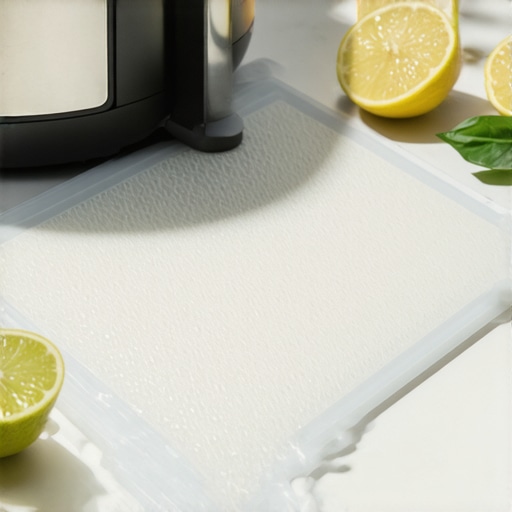
How to Remove Odors From a Silicone Air Fryer Mat
Silicone is a deceptive material. To the untrained eye, it looks like a non-porous, inert barrier. In reality, silicone is an elastomer with a molecular lattice that behaves more like a sponge for lipids and volatile organic compounds (VOCs). If your premium kitchen smells like a fish market despite a deep scrub, you are dealing with a technical failure of the material interface. After fifteen years managing luxury kitchen installations, I’ve seen countless owners throw away expensive accessories because they didn’t understand the chemistry of extraction. The price of this ignorance is more than just the cost of a mat; it is the degradation of every meal you prepare in a high-end machine.
The Molecular Logic of Odor Retention
The problem is lipophilic absorption. Silicone ‘loves’ oil. When you cook at 400 degrees, the heat expands the polymer chains, widening the gaps in the molecular structure. Fats and aromatic compounds migrate into these gaps. As the mat cools, the structure contracts, locking those odors inside. Standard dish soap is designed for surface tension; it cannot reach the ‘trapped’ oils buried within the elastomer. This is why a mat feels clean to the touch but reeks of garlic the moment it hits the heat again. This phenomenon is often linked to why your air fryer smells like burnt plastic, as the interaction between heat and low-grade polymers releases trapped VOCs.
Technical reality dictates that not all silicone is created equal. Most consumer-grade mats are peroxide-cured, a process that leaves behind acid residues and a more open molecular structure. Professional-grade equipment uses platinum-cured silicone, which offers tighter cross-linking and significantly lower odor retention. If you are using a cheap, third-party mat, you are fighting a losing battle against the material’s own engineering. To understand the baseline quality required for high-performance cooking, one must look at the top models that redefine healthy cooking.
High-Temperature Thermal Extraction
The most effective way to purge odors is a process I call ‘The Bake-Out.’ Since heat opened the pores to let the odors in, heat must be used to drive them out. After washing the mat with a high-pH surfactant—think professional-grade degreaser rather than standard dish soap—place the dry mat in a conventional oven at 350°F (177°C) for 40 to 60 minutes. This provides the kinetic energy necessary for the trapped molecules to vibrate out of the polymer matrix. You will likely smell the odor filling your kitchen; this is the smell of the problem leaving the material. This method is far superior to soaking in vinegar, which often lacks the chemical ‘pull’ to extract deep-seated oils. However, be cautious if you have a unit with a plastic interior, as the surrounding environment must handle the outgassing of these odors safely.
The Risk of Chemical Degradation
Many homeowners turn to harsh oxidizers like bleach. This is a strategic error. According to standards set by the Food and Drug Administration, food-grade silicone must maintain its structural integrity under heat. Bleach can cause micro-pitting in the silicone surface, creating even more surface area for bacteria and oils to colonize. The result? A mat that degrades, gets sticky, and eventually fails. I have seen high-end basket coatings peel because users tried to use industrial cleaners to solve an odor issue. The sensory experience of a sticky, ‘sweating’ silicone mat is a sign that the polymer has reached its end-of-life stage.
Strategic Foresight for the Luxury Kitchen
The industry is moving toward hybrid ceramic-silicone materials and platinum-cured surfaces that resist lipid migration. In the next 24 months, expect to see ‘closed-cell’ silicone technologies becoming the standard in the luxury tier. For now, the executive verdict is simple: If your mat still smells after two thermal extraction cycles, the polymer has been compromised by ‘oil saturation.’ In my professional opinion, the ROI on trying to save a $20 mat while using a $500 air fryer is negative. Replace the mat with a platinum-cured alternative. Quality maintenance is about knowing when to clean and when to decommission equipment to protect the integrity of the food.
Frequently Asked Questions
Can I use baking soda paste to remove smells?
Baking soda works as a mild abrasive and an alkaline neutralizer. It is effective for surface odors but rarely penetrates the polymer lattice. Use it for maintenance, not for deep remediation.
Why does my mat feel sticky even after washing?
Stickiness is a sign of polymer degradation or ‘weeping.’ This happens when oils have partially broken down the silicone chains. At this point, the mat should be discarded.
Is the smell from the mat toxic?
While usually not toxic, these odors are volatile organic compounds. They will ghost onto your food, ruining the flavor profile of delicate ingredients like pastries or fish.
How often should I perform a thermal extraction?
For heavy users, a high-heat bake-out should be performed every 15 to 20 cooking cycles to prevent cumulative oil buildup.