
How to Realign the Tension on Your Professional Stand Mixer
A stand mixer is a drivetrain, not a decoration. Most owners treat the head-space adjustment as a set-it-and-forget-it vanity metric. They are wrong. After 15 years tearing down planetary gearboxes and diagnosing drivetrain failures in high-end kitchens, I have seen the same story repeat. A loose pivot pin leads to eccentric rotation. This destroys the sacrificial gear. It costs three figures to fix a problem that takes five minutes to prevent. Precision matters. The weight of the industrial grade steel in a pro-grade unit demands exactness, or it becomes a very expensive paperweight. When the tension slips, the alignment between the beater and the bowl bottom creates a mechanical imbalance. The result? Avoidable failure. If you ignore the metallic rattle during a stiff bread dough cycle, you are effectively sanding down your motor’s lifespan. Realignment is the only path to protecting your investment in luxury kitchen equipment.
The Engineering of Planetary Drives
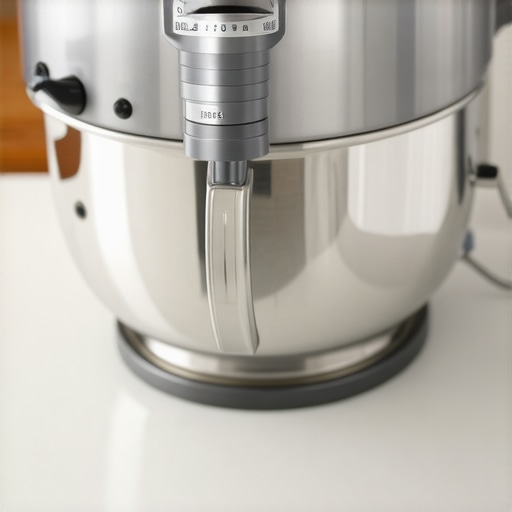
Mechanical tension in a mixer involves the relationship between the worm gear and the follower gear. These components must mesh with micron-level play. If the tension is too tight, the friction generates heat that breaks down the food-grade grease. If it is too loose, the gears skip under load. This is often why the reason your stand mixer whines during dense tasks. I often find that home bakers rely on the ‘Dime Test,’ but that is amateur hour for anyone serious about equipment longevity. True alignment requires checking the clearance at three distinct points of the planetary rotation. You must understand the backlash—the amount of clearance between mated gear teeth. Too much backlash causes a hammering effect on the motor brushes. We are looking for the sweet spot where the motor hums without the sharp, staccato vibration of a misaligned shaft. The internal assembly is a delicate balance of torque and resistance. When you are working with high-torque DC motors, the stakes are even higher. These motors do not stall; they strip gears. [IMAGE_PLACEHOLDER_1]
The Impact of Torque Instability
The messy reality of kitchen hardware is that vibration is the enemy. Over months of use, the vibration from kneading high-hydration doughs naturally backs out the neck screw or the pivot pin. I have walked into commercial bakeries where the mixers were literally shaking themselves apart because a simple tension screw had backed out by a quarter turn. You can smell it before you see it. The scent of scorched lithium grease is an unmistakable warning. If you have been struggling with a unit that walks across the counter, you need to know how to fix a wobbly mixer before the internal housing cracks. There is a cost-benefit reality here. Spending twenty minutes once a quarter on a tension check saves you from a total motor swap. According to the American Gear Manufacturers Association (AGMA), proper lubrication and alignment are the primary factors in gear life extension. Neglect leads to gear pitting. Once pitting starts, the gear is dead. There is no reversing the damage once the steel surface has been compromised. Professional stand mixers require professional-level oversight from their owners.
The Future of Kitchen Motor Standards
We are seeing a massive shift in the industry toward brushless motor technology and electronic torque sensors. In the next 24 months, mechanical tensioning might become a legacy skill as smart sensors take over. However, for the millions of high-end units currently in kitchens, the manual adjustment remains the gold standard. Regulatory changes regarding energy efficiency in small appliances are forcing manufacturers to use lighter materials, which means the margin for error is shrinking. Older, heavier units could handle a bit of slop in the drivetrain. Modern, high-efficiency models cannot. You must learn how to stop your stand mixer from overheating by ensuring the mechanical resistance is minimized through perfect alignment. If the motor has to fight the chassis, it pulls more amperage. More amperage means more heat. More heat means a shorter fuse on your warranty. The engineering reality is simple: friction is a failure of geometry.
The Executive Verdict
If your mixer is clanking, stop the motor. If the head bounces during a knead, adjust the screw. My recommendation is a ‘Buy’ on regular maintenance tools and a ‘Sell’ on the idea that these machines are maintenance-free. If you are in a high-volume baking situation, you should be checking your clearances every fifty hours of operation. Do not wait for the smoke. Actionable strategy: Grab a flathead screwdriver, a feeler gauge, and five minutes this weekend. Your drivetrain will thank you. How often should I check the tension? For casual use, once every six months. For sourdough enthusiasts, every three months. Can I use any grease for the gears? No. Use only NSF-H1 food-grade grease to avoid toxic contamination if a seal fails. Does a loose pivot pin affect the motor? Yes. It causes the motor to work harder to overcome the eccentric load, leading to brush wear and potential burnout. Why does my mixer head jump? Usually, this indicates the neck screw has loosened, allowing the head to lift under the pressure of the dough hook. What if the screw is stuck? Use a penetrating oil safe for food environments, wait ten minutes, and use a manual impact driver to break it loose without stripping the head. Professional equipment requires professional respect.