
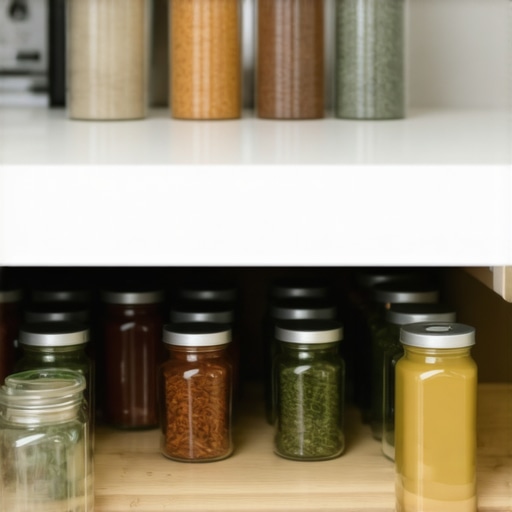
How to Organize Your Spice Drawer for Maximum Efficiency
Most home cooks treat their spice collection like a historical archive rather than a functional toolset. This is a mistake. Efficiency in a high-end kitchen is not about the aesthetic uniformity of glass jars; it is about the preservation of volatile oils and the radical reduction of motion waste during high-pressure service. After 15 years designing custom culinary workflows, I have seen thousands of dollars in premium saffron and hand-harvested peppercorns destroyed by the simple proximity to a range hood’s thermal output. The stake is clear: poor organization leads to chemical degradation of your ingredients and a fragmented cooking rhythm that ruins timing.
The standard methodology of placing a pull-out spice rack near the stove is fundamentally flawed from a technical standpoint. While it satisfies the immediate need for proximity, the thermal bridging from the oven cavity accelerates the oxidation of ground spices. When you smell that ‘spicy’ aroma in your kitchen without a pot on the stove, you aren’t smelling freshness. You are smelling the literal evaporation of the flavor compounds you paid for. True efficiency requires a decoupled approach where frequency of use dictates proximity, but environmental stability dictates location.
The Physics of Flavor Preservation
Every spice is a complex matrix of essential oils and aromatic compounds. Exposure to oxygen and light triggers a steady decline in potency. In a drawer-based system, the primary engineering challenge is the seal integrity of the vessel. Round jars in a square drawer create a 21.5% loss in spatial efficiency—a geometric reality that frustrates high-volume prep. Hexagonal or square glass jars provide a tighter nesting pattern, minimizing the air gap that allows temperature fluctuations to affect the contents. The weight of the industrial grade steel liners in premium cabinetry acts as a thermal heat sink, keeping the drawer interior significantly cooler than the surrounding ambient air.
For those managing a walk-in pantry alongside a primary prep drawer, the workflow must be bifurcated. Bulk storage belongs in the dark, cool recesses of the pantry. Only the ‘active’ inventory should occupy the drawer. This is the difference between a warehouse and a retail floor. A technical truth most homeowners miss: ground spices have a surface area thousands of times greater than whole seeds, making them exponentially more susceptible to humidity-induced clumping. If you find yourself banging a jar against the counter to loosen the contents, your organization system has already failed.
The Ergonometric Layout Logic
Stop alphabetizing. It is a linguistic solution to a physical problem. Instead, organize by ‘Flavor Profiles’ or ‘Frequency of Intervention.’ The front-right quadrant of the drawer should be reserved for your ‘Base Layer’—kosher salt, cracked black pepper, and perhaps a high-quality granulated garlic. These are the items you reach for ten times per meal. The rear-left corner is for the ‘Specialty Accents’—the star anise and the ground sumac that see sunlight once a month. This layout minimizes the physical distance your hand travels over the course of a year. It sounds minor. It isn’t. Seconds saved in the ‘heat of the moment’ prevent overcooking delicate proteins.
Proper visibility is the second pillar of efficiency. Standard flat bottom drawers hide labels. Using a tiered acrylic or wooden insert tilts the jars at a 30-degree angle, exposing the lid or the upper face. This is where under cabinet lighting plays a critical role; if you can’t distinguish between ground cumin and ground coriander in 0.5 seconds, your system is slowing you down. According to the USDA Food Safety and Inspection Service, dry spices generally stay safe, but their quality is entirely dependent on these environmental factors.
Implementation Risks and The Plastic Problem
The smell of fresh adhesive. That is what you encounter when you buy cheap, off-the-shelf plastic dividers. These off-gas VOCs that can, in extreme cases, permeate the seals of low-quality jars. I always recommend TPE-lined dividers or solid hardwood. Plastic jars are a non-starter for the serious enthusiast. They are porous. They absorb odors. If you store high-heat chili flakes in a plastic container and then swap it for delicate dried parsley, the cross-contamination is inevitable. The result? Avoidable failure. I have walked into multi-million dollar renovations where the owner is still using the original supermarket plastic containers. It’s like putting budget tires on a supercar.
There is also the risk of ‘Over-Optimization.’ Do not decant everything just for the sake of the ‘look.’ If you use a specific spice once a year, leave it in the original tin. The process of pouring it into a new jar introduces a massive bolus of oxygen that will sit in the headspace of the jar for the next twelve months. Only decant what you rotate through every 90 days. This keeps the inventory fresh and the labor manageable. We are building a kitchen, not a museum.
The Future of Culinary Inventory
We are moving toward a ‘Smart Inventory’ era where RFID tags on jar bottoms will track weight and expiration dates, syncing with your meal planning software. However, the mechanical fundamentals will not change. You still need a cool, dark, and accessible space. The kitchen triangle rule is evolving to include these micro-zones. We are seeing a shift toward hidden scullery layouts where the heavy lifting of spice prep is done away from the main entertaining island. This keeps the ‘mess’ contained while maintaining the efficiency of the primary cooking zone.
The Executive Verdict
If your spice drawer is currently a chaotic jumble of half-empty plastic bags and expired tins, you are actively degrading your cooking quality. Buy: Uniform square glass jars with airtight silicone gaskets and a tiered drawer insert. Sell: The idea that spices belong on the countertop or near the stove. Hold: On decanting rare, whole spices until your rotation frequency increases. My actionable strategy: Spend 30 minutes tonight purging anything older than two years, then group your remaining inventory by ‘Heat,’ ‘Earthy,’ and ‘Aromatic’ zones. The difference in your next meal will be tangible.
Frequently Asked Questions
Should I store my spices in the refrigerator?
Only for the ‘Red Pepper’ family (paprika, chili powder) to preserve color and flavor in humid climates. For most dry spices, the condensation risk upon opening the jar far outweighs the cooling benefits.
How often should I replace my spices?
Whole spices last 3-4 years. Ground spices lose significant potency after 6-12 months. If the color has faded or the aroma requires a deep inhale to detect, toss it.
Are metal tins better than glass jars?
Metal tins are superior for light exclusion but inferior for identification. If you use a drawer, glass with a top-labeling system is the most efficient balance of protection and speed.
Can I use a spice rack if it’s inside a cabinet?
Yes, as long as the cabinet is not directly above the stove or adjacent to a dishwasher, where steam and heat will penetrate the wood and cook the spices in their containers.