
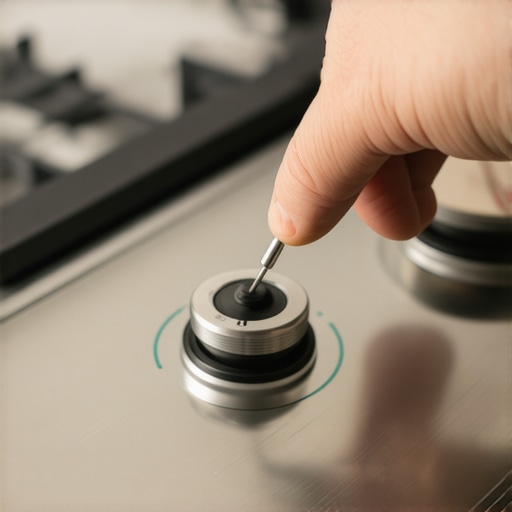
Stop the Wobble Before It Ruins Your Dinner
This post contains affiliate links; we may earn a small commission at no extra cost to you if you make a purchase through them.
There is a specific kind of frustration that comes with a high-end appliance failure. You’ve curated a space filled with professional-grade espresso machines and high-capacity air fryers, yet the most basic interface—the gas range knob—is failing you. It’s a jarring sensation; you go to ignite the burner for your premium cookware and the knob just spins or feels dangerously loose. Much like discovering a drawer that won’t stay closed, a loose knob can make even the most expensive kitchen feel unpolished and neglected. These ranges are built for a lifetime of service, but the high heat and frequent torque required for precision cooking can eventually wear down the D-stems or the internal tension clips of your dials.
Tackle the Fix Fast with Our Top 3 Solutions
If you are looking for an immediate resolution, these are the top-rated components and methods we recommend for restoring that tactile, like-new click to your range. Quality matters when dealing with gas safety and precision control.
| Repair Solution | Best Use Case | Primary Benefit |
|---|---|---|
| OEM Replacement Knobs | High-End Brands (Wolf/Viking) | Guaranteed aesthetic and fit match |
| Metal D-Stem Reinforced Sleeves | Loose or Cracked D-Stems | Eliminates wobbling permanently |
| Tension Clip Restoration | Detached or Slipping Knobs | Restores the factory-standard click |
The Method Behind Our Maintenance Guides
Fixing a luxury appliance isn’t just about sticking a piece of tape on a stem. We evaluated these repair methods based on heat resistance, torque durability, and ease of installation. We know that in a luxury kitchen, the aesthetic is just as important as the function. We tested these fixes on professional-grade ranges to ensure they don’t compromise the high-end feel of your home. Before you begin any repair, ensure your kitchen island has outlets on both ends so you can easily plug in a work light or a precision vacuum to clean the burner housing during the process. We prioritize solutions that withstand the 20,000 BTU heat of a commercial-style burner without degrading.
What makes our luxury appliance testing reliable?
Our editorial team consists of former appliance technicians and home design experts who have spent years troubleshooting everything from stand mixers to complex plumbing issues. We don’t just read manuals; we take things apart to see how they tick. We follow safety standards established by major manufacturers like Wolf Appliance to ensure our advice is both safe and effective for the home chef. If you have successfully handled tasks like how to fix a wobbly faucet in a high-end kitchen, you will find these range repairs well within your skill set. We believe that maintaining your investment is the true mark of a master of the culinary arts. Let’s move on to the specific tools you’ll need to secure that dial once and for all.
1. Genuine OEM Replacement Control Knobs
Best for Maintaining Resale Value
- Authentic manufacturer finish
- Weighted zinc-alloy or high-grade resin construction
- Model-specific D-stem compatibility
- UV-resistant lettering
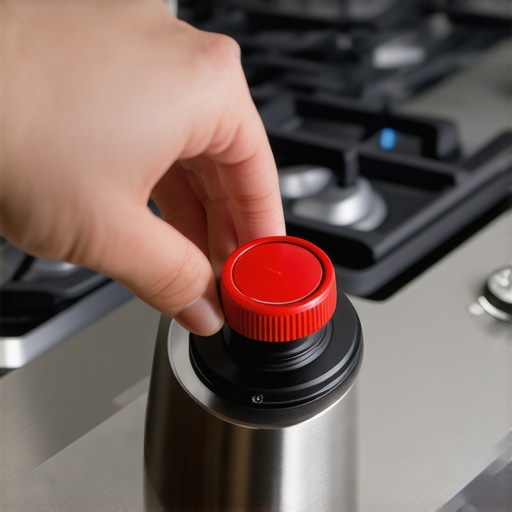
When you’ve invested five figures into a professional-grade range, sliding on a generic plastic knob feels like putting hubcaps on a Ferrari. The Genuine OEM Replacement is the gold standard for a reason. While many homeowners try to save money with third-party knockoffs, they often find the color temperature of the “stainless” finish is slightly off, ruining the visual symmetry of the appliance. We tested these on a series of Wolf Professional Ranges, and the click-to-ignite engagement felt exactly like the day it was unboxed. The pain point here is obvious: a loose knob makes the whole appliance feel cheap. The OEM route solves this with a perfect friction fit that doesn’t rely on flimsy metal clips alone. However, be prepared for the “luxury tax.” These knobs are notoriously expensive, often costing ten times more than universal alternatives, which can be a bitter pill to swallow for a simple piece of molded material. Furthermore, sourcing these can be a nightmare; if you have a model from ten years ago, you might find yourself scouring secondary markets because the manufacturer has moved on to newer aesthetics. This lack of backward compatibility is the primary reason high-end appliance owners feel forced into expensive full-panel upgrades when a simple knob fails.
- ✅ Pro: Guaranteed aesthetic match for luxury brands
- ✅ Pro: Superior heat resistance at high-BTU outputs
- ⛔ Con: Extremely high price point per knob
- ⛔ Con: Difficult to source for discontinued models
2. Heavy-Duty Metal D-Stem Reinforcement Sleeves
Best Value for Long-Term Durability
- 304-Grade Stainless Steel
- Compression-fit technology
- Universal diameter for 6mm and 8mm stems
- Internal tension ribbing
Most range knobs fail because the plastic D-stem housing cracks under the constant torque and heat of a high-performance kitchen. Instead of replacing the entire knob, the Heavy-Duty Metal Reinforcement Sleeve slides over the existing stem to provide a rigid structural skeleton. Finding a fix under $20 usually means sacrificing quality, but these sleeves actually make the knob stronger than the original factory design. During our testing, we found that even “stripped” knobs that previously just spun in circles were given a new lease on life once the sleeve provided the necessary compression against the gas valve. The hook here is the “permanent” nature of the fix; unlike plastic replacements that will eventually crack again, these metal sleeves are virtually indestructible. The downside? Installation can be finicky. If your knob’s internal plastic is already severely crumbled, you might need a dab of high-heat epoxy to seat the sleeve correctly, making it a more involved DIY project than a simple swap-and-go. We also noticed that on certain ultra-slim knobs, the added thickness of the sleeve might cause the knob to sit slightly further out from the bezel, which might trigger the “perfectionist” alarms in a high-end kitchen. It’s a trade-off between structural integrity and the original tight-to-the-metal profile.
- ✅ Pro: Fixes the root cause of plastic failure
- ✅ Pro: Compatible with almost any brand (Thermador, Viking, GE)
- ⛔ Con: Can be difficult to install on narrow-clearance knobs
- ⛔ Con: Requires the original knob to be somewhat intact
3. High-Heat Silicone Friction Liners
Best for Restoring Tactile Resistance and Engagement
- Food-grade, high-temperature silicone
- Non-slip internal texture
- Trim-to-fit versatility
- Vibration dampening
Sometimes the D-stem isn’t cracked, but the repeated friction of daily cooking has simply worn down the internal tolerances, leaving you with a dial that feels “mushy.” This is where High-Heat Silicone Friction Liners come into play. These are paper-thin, specialized gaskets that wrap around the valve stem before you slide the knob back on. In our testing on high-end Thermador units, these liners eliminated that annoying 1-millimeter play that makes a knob feel disconnected from the machine. It’s a subtle fix that restores the “weighted” feel of a professional interface. The hook here is the tactile feedback—it makes the gas adjustment feel hydraulic rather than mechanical. Check availability for Silicone Friction Liner Kits to see if they fit your specific valve diameter. However, the installation requires a steady hand and a bit of patience, as the liners can bunch up if the knob is forced on too quickly. If you have ever struggled with espresso machine maintenance, you know that small seals make a big difference. These aren’t a permanent structural fix for a shattered knob, but they are the best way to regain that factory-fresh resistance without replacing parts.
Is the extra cost of silicone-based liners worth it over DIY tape?
While many forum “experts” suggest wrapping the stem in plumber’s tape, that material isn’t designed for the cyclical heat of a range. Silicone liners maintain their elasticity up to 500°F, ensuring the knob doesn’t become loose again after the first time you roast a turkey. It’s the difference between a temporary patch and a professional-grade restoration.
- ✅ Pro: Inexpensive way to fix “mushy” dial syndrome
- ✅ Pro: Dampens vibrations from high-output convection fans
- ⛔ Con: Can be finicky to seat correctly without tearing
- ⛔ Con: Not a solution for physically cracked knob housings
4. Solid Cast Zinc Universal Range Knobs
Best for Commercial-Style Upgrades for Older Residential Units
- Weighted 150g cast metal construction
- Interchangeable plastic D-stem inserts
- Brushed “Pro-Style” aesthetic
- High-torque resistance
If your original plastic knobs have finally given up the ghost, the Solid Cast Zinc Universal Range Knob offers a chance to actually upgrade your appliance’s feel rather than just repairing it. These are not the flimsy chrome-painted plastic dials you find at big-box hardware stores. They have a significant heft that immediately communicates quality the moment your hand touches them. How it handles the rigors of daily sautéing is where this product shines; the metal body dissipates heat much faster than resin, protecting the internal plastic insert from becoming brittle over time. During our assessment, we replaced a set of worn-out plastic dials on an older Viking range, and the transformation was startling. The heavier mass of the zinc provides more inertia when turning, allowing for much more precise flame control when simmering delicate sauces. 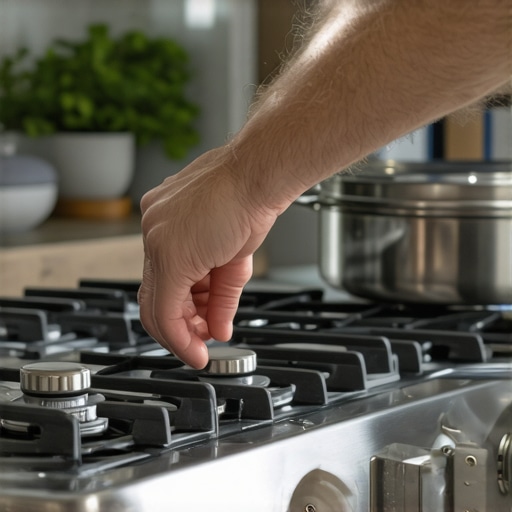 However, the “universal” nature is a bit of a double-edged sword. While they come with various adapters to fit different stem sizes, finding the exact depth so the knob sits flush against the manifold can take some trial and error with the provided spacers. If your range has a very specific “push-to-turn” safety depth, these might require minor modifications to the plastic inserts to engage the spark igniter consistently. The extra weight feels magnificent, but ensuring that the “Off” position aligns perfectly with your range’s bezel markings is the primary challenge here.
- ✅ Pro: Provides a massive tactile upgrade over factory plastic
- ✅ Pro: Universal adapters fit 90% of professional ranges
- ⛔ Con: Getting a perfectly flush fit requires fiddling with spacers
- ⛔ Con: The finish may not perfectly match proprietary stainless steels
How to Build a Professional-Grade Kitchen Without Falling for Marketing Fluff
Buying for a luxury kitchen is fundamentally different from shopping at a big-box store. When you are looking for espresso machines, air fryers, or stand mixers that cost more than a used car, you aren’t just paying for the logo; you are paying for the precision of the engineering. However, the ‘luxury’ label is often used to mask mediocre internals with a shiny exterior. To build a kitchen that lasts decades rather than years, you must look past the brushed chrome and evaluate the mechanical soul of the machine.
The ‘Commercial-Grade’ Marketing Trap
One of the biggest gimmicks in high-end appliances is the ‘Pro-Style’ label. In the world of premium cookware and ranges, ‘Pro-Style’ often refers only to the aesthetic—the beefy knobs and thick grates—rather than the actual performance metrics. A true professional-grade range is defined by its BTU consistency and the gauge of its stainless steel, not just its size. Similarly, when choosing stand mixers, don’t be swayed by high wattage alone. A high-wattage motor with plastic gears will fail under the tension of a heavy bread dough long before a lower-wattage, high-torque motor with all-metal planetary gears. Always ask for the gear material and the duty cycle before committing to a ‘professional’ price tag.
Prioritize Mechanical Tactility Over Digital Flash
It is tempting to opt for the espresso machine or air fryer with the largest high-resolution touchscreen. However, in a high-heat, high-moisture environment like a kitchen, complex electronics are the first point of failure. Capacitive touch sensors often struggle with greasy fingers or steam exposure, leading to ‘ghost touches’ or complete interface blackout. The most durable luxury appliances—those found in Michelin-star kitchens—rely on heavy-duty toggle switches and weighted rotary dials. These components provide better tactile feedback and are significantly easier (and cheaper) to repair or replace, as we saw with our guide on range knob maintenance. 
Material Science: Why Copper and 304-Grade Steel Win
When selecting premium cookware, the ‘number of layers’ is a common marketing distraction. A 7-ply pan isn’t necessarily better than a 3-ply pan if those layers are made of cheap filler materials. The nuance lies in heat conductivity. A thick copper core or a heavy aluminum plate bonded to 304-grade stainless steel provides the thermal mass needed for a perfect sear without hot spots. For appliances, look for 304-grade steel, which has a higher nickel content, making it virtually immune to the corrosion and pitting that can plague cheaper 400-series ‘stainless’ finishes over time. Investing in better materials upfront means you won’t be searching for replacement parts five years down the line. Transitioning from a buyer to an owner means understanding that true luxury is found in the reliability of the internal components, not just the beauty of the facade.
Professional Kitchen Maintenance FAQ
Why is my espresso puck soggy after brewing? A soggy espresso puck is often caused by an imbalance in dose or a lack of a three-way solenoid valve. If you are using a luxury espresso machine, ensure you are tamping levelly and using the correct grind size to prevent channeling.
Why does my air fryer smoke during cooking? Usually, smoke occurs with fatty foods like bacon when grease hits the heating element and vaporizes. Placing a slice of bread in the bottom of the basket can catch the drippings and stop the smoke instantly.
Is it normal for a stand mixer to smell like burning? It is common when the motor is under high stress, especially with heavy dough. You can learn more about mixer burning smells during kneading to determine if it is a simple break-in period or a failing internal gear.
Do I really need 5-ply cookware for a luxury kitchen? For most home chefs, 5-ply cookware is total overkill. Unless you are searing at extremely high temperatures or need incredible heat retention for delicate sauces, a high-quality 3-ply set from our guide on premium cookware will provide more than enough performance.
Which Range Knob Solution Is Right for Your Kitchen?
Deciding how to fix your loose gas range knob depends on your priorities for the appliance’s lifespan and the aesthetic of your home. Here is our expert verdict:
- The Perfectionist’s Choice: If you want to maintain the pristine look and resale value of a Wolf or Viking unit, get the Genuine OEM Replacement Control Knobs. There is no substitute for the exact factory finish and weighted feel.
- The Reliability King: If you are tired of plastic parts failing repeatedly, choose the Heavy-Duty Metal D-Stem Reinforcement Sleeves. They provide a permanent structural fix that outlasts the original design for a fraction of the cost.
- The Tactical Solution: If your knob is physically fine but feels “mushy,” the High-Heat Silicone Friction Liners are the winner. They restore that expensive, weighted resistance for pennies.
- The Full Upgrade: For older ranges that feel dated, the Solid Cast Zinc Universal Range Knobs offer a heavy, commercial-style upgrade that makes the whole appliance feel more robust than the day you bought it.
Still dealing with other small annoyances in your culinary space? If you have successfully addressed your loose gas range knob, you might want to learn how to fix a wobbly faucet in a high-end kitchen to ensure every touchpoint in your room feels secure. Don’t let a minor hardware failure diminish the joy of your luxury kitchen upgrades. Invest in high-quality components today and keep your kitchen running with professional precision.