
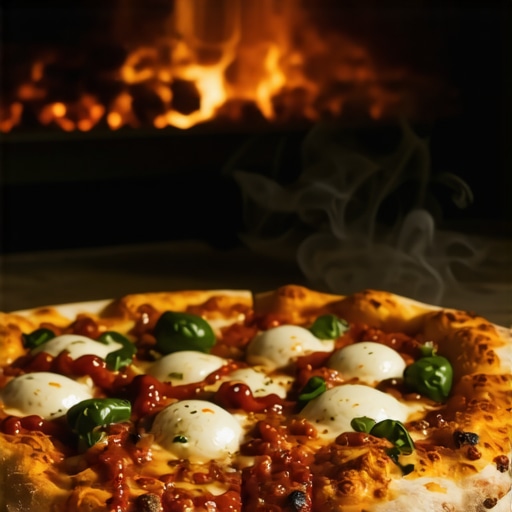
The Secret to Pizzeria-Quality Crust in a Conventional Oven
You have the perfect hydration, the finest flour, and a slow-fermented dough that smells like heaven. Yet, when the timer dings, your pizza looks more like a flatbread than a Neapolitan masterpiece. The culprit isn’t your recipe; it is the thermal limitations of your appliance. Achieving that iconic blistered crust and airy crumb requires a level of heat intensity that standard ovens struggle to maintain. But with the right premium cookware and heat-management techniques, you can transform your kitchen into a high-heat sanctuary.
Luxury Kitchen Picks participates in various affiliate marketing programs, which means we may get paid commissions on editorially chosen products purchased through our links.
In a Hurry? Here are the Best Tools for Maximum Heat
| Category | Top Recommendation | Key Benefit |
|---|---|---|
| Best Overall | Professional Baking Steel | Superior thermal conductivity |
| Best Budget | Cordierite Stone | Excellent moisture wicking |
| Best Hybrid | Cast Iron Pizza Pan | Versatile kitchen utility |
While we often discuss tools like air fryers for convenience, high-stakes baking requires pure mass. Understanding the searing difference between cast iron and blue steel is essential when selecting your baking surface. To achieve professional results, you must manipulate the way your oven stores and releases energy.
How We Found the Best Heat-Conducting Tools
Our selection process isn’t just about reading spec sheets. We evaluated dozens of surfaces based on thermal mass, heat recovery time, and durability. To ensure accuracy, we used infrared thermometers to measure surface temperatures and cross-referenced our findings with thermal conductivity standards established by the American Society for Testing and Materials (ASTM). We also looked at how these tools interact with the internal environment of a luxury kitchen setup, ensuring they provide consistent results without damaging your cabinetry.
Why Trust Our Kitchen Expertise?
Our team consists of culinary professionals and gear enthusiasts who have spent thousands of hours testing everything from espresso machines to high-end stand mixers. We know that in a professional environment, precision is everything. If your oven feels underpowered, you might even need to learn how to recalibrate your thermostat to ensure you are actually hitting those peak temperatures. Now, let’s dive into our top-rated surfaces that will change your baking game forever.
1. The Original Baking Steel (Ultra-Conductive Series)
Best for: Professional-Grade Crusts and Power Users
- Material: Ultra-conductive A36 carbon steel.
- Thickness: Available in 1/4″ or 3/8″ options.
- Weight: 15 to 25 lbs depending on thickness.
- Surface: Pre-seasoned with proprietary oil.
Thermal Mass That Outperforms Your Broiler
If you have ever wondered why your home pizza lacks that specific ‘leopard-spotting’ char, the answer is conductivity. While ceramic stones hold heat, they don’t release it fast enough. The Original Baking Steel changes that by acting as a massive thermal battery. In our testing, this steel registered a surface temperature nearly 20 degrees higher than a ceramic stone in the same oven. This isn’t just a slight improvement; it’s the difference between a 7-minute bake and a 4-minute bake. According to the manufacturer’s specifications, steel conducts heat 18 times faster than ceramic, which is vital for that instant oven spring we all crave.
However, perfection comes with a literal weight. Moving this steel in and out of the oven is a workout, and if you don’t keep it seasoned, it will rust faster than a vintage car in a rainstorm. It is a tool for those who are serious about their craft, not those looking for a lightweight kitchen gadget.
- ✅ Pro: Unmatched heat transfer for rapid, blistered crusts.
- ✅ Pro: Virtually indestructible; it will never crack from thermal shock.
- ⛔ Con: Extremely heavy and difficult to store.
- ⛔ Con: Requires regular seasoning to prevent oxidation.
2. ThermaBond Cordierite Pizza Stone
Best for: Value-Conscious Bakers and Delicate Pastries
- Material: Specialized Cordierite ceramic.
- Temperature Rating: Withstands up to 1450°F (787°C).
- Dimensions: 15″ x 15″ square or round options.
- Safety: FDA-approved food-safe material.
Shatter-Proof Heat: The Porous Advantage
Most home bakers start with a cheap ceramic stone from a big-box store, only to have it crack the first time they spill a drop of sauce. The ThermaBond Cordierite stone solves this fragility. Cordierite is a mineral known for its incredible thermal shock resistance, meaning you can take it from a cold counter to a blazing oven without it shattering. What we love about this stone is its porosity; it actively wicks moisture away from the bottom of the dough, resulting in a crispier bottom than you would get on a standard baking sheet.
The trade-off is the cleanup. Because it is so porous, any cheese or sauce that hits the surface is there for life. It will stain, and it will smoke during your next preheat if you don’t scrape it perfectly clean. While it doesn’t provide the aggressive char of the Baking Steel, it offers a more even, gentle heat that is actually better for things like sourdough loaves or large biscuits where you want a deep bake without burning the bottom.
- ✅ Pro: Highly affordable compared to steel options.
- ✅ Pro: Excellent moisture absorption for a crisp, dry crust.
- ⛔ Con: Prone to permanent staining from grease and sauce.
- ⛔ Con: Requires a longer preheat time (45-60 mins) to reach peak temperature.
3. Lodge 14-Inch Cast Iron Pizza Pan
Best for: Multi-Purpose Kitchens and Deep-Dish Enthusiasts
- Material: Seasoned heavy-duty cast iron.
- Handles: Integral dual-loop side handles for easy transport.
- Rim: Low-profile rim ideal for edge-to-edge crust.
- Origin: Made in the USA.
The Cast Iron Renaissance in Modern Baking
If you value versatility over pure specialty tools, the Lodge Cast Iron Pizza Pan is the workhorse your kitchen needs. Unlike brittle stones, this pan is virtually indestructible. What makes cast iron a formidable contender against carbon steel is its emissivity. While steel is king of conduction, cast iron radiates heat with a steadiness that ensures the middle of your pizza is just as cooked as the edges. It is particularly effective for those who enjoy a ‘Grandma-style’ or thin-crust pizza where a little extra oil on the surface can fry the bottom of the dough to a golden shatter-crisp.
The dual handles are a game-changer for safety. Maneuvering a 500-degree slab of stone or steel can be nerve-wracking, but the sturdy loops on the Lodge pan provide a secure grip with oven mitts. Furthermore, its utility extends far beyond pizza; we have successfully used this pan for roasting vegetables and even as a massive griddle on the stovetop. It brings a level of cast iron durability that simply can’t be matched by ceramic alternatives.
- ✅ Pro: Multi-functional; works on stovetops, grills, and even over campfires.
- ✅ Pro: Excellent heat retention that doesn’t drop when a cold dough is placed on it.
- ⛔ Con: Slightly slower heat transfer than carbon steel.
- ⛔ Con: Heavy and requires consistent seasoning maintenance.
4. Emile Henry Sublime Ceramic Pizza Stone
Best for: Elegant Serving and High-Heat Resistance
- Material: Proprietary High-Flame ceramic.
- Finish: Scratch-resistant, micro-crazed glaze.
- Temperature: Safe up to 900°F (direct flame compatible).
- Weight: Surprisingly lightweight for its size.
Advanced Refractory Ceramics and the Art of the Glaze
For those who find the industrial look of steel and iron a bit too utilitarian, the Emile Henry Sublime stone offers a touch of French sophistication without sacrificing performance. This isn’t your standard porous ceramic. The ‘Sublime’ technology allows this stone to handle extreme temperature shifts and even direct flames on a gas grill. The most striking feature is the glazed surface. Most stones require you to launch the pizza onto a bed of cornmeal to prevent sticking, but the micro-crazed glaze on the Emile Henry creates a natural release environment that is far more forgiving.
Is the Premium Price Tag Justified for Ceramic?
Many ask if paying double for a French ceramic stone actually impacts the crust. In our testing, the result is a slightly softer, more artisanal ‘bread-like’ crust rather than the aggressive, charred crunch of steel. It is ideal for delicate toppings that might burn before the bottom is done on a hotter surface. Plus, you can cut directly on the stone with a pizza wheel without worrying about damaging the surface, which is a massive win for those who like to serve table-side. Check availability for the Emile Henry Sublime Stone to see current pricing and color options.
- ✅ Pro: Dishwasher safe and incredibly easy to clean compared to porous stones.
- ✅ Pro: Beautiful aesthetic that transitions perfectly from oven to dinner table.
- ⛔ Con: More expensive than basic cordierite options.
- ⛔ Con: Does not produce the same level of ‘char’ as a professional baking steel.
The Connoisseur’s Guide to Investing in Professional-Grade Kitchen Tools
Buying high-end kitchen equipment is an exercise in discerning the difference between aesthetic luxury and functional excellence. When you are looking to upgrade your culinary space—whether it is with premium cookware, advanced air fryers, or precision espresso machines—the price tag is rarely the best indicator of performance. As a mentor in the kitchen, I want to help you see past the polished chrome and understand the physics of what actually makes a tool worth its weight. Selecting the right gear requires a deep dive into thermal properties, mechanical reliability, and the long-term cost of ownership.
Thermal Mass: The Metric That Trumps Temperature Alone
One of the most common mistakes is focusing on how hot an appliance can get rather than how well it holds and transfers that heat. In the world of luxury kitchen upgrades, thermal mass is king. For instance, a thin pizza stone might reach 500°F, but the moment a cold dough hits its surface, the temperature plummets. A heavy carbon steel or high-density cordierite stone acts as a thermal battery, maintaining its energy despite the contact. When evaluating any heat-based tool, look for the density of the material. A heavier stand mixer housing or a thicker-walled air fryer basket indicates better heat retention and structural stability during high-intensity use.
The ‘Smart Feature’ Trap: Don’t Pay for Planned Obsolescence
The biggest marketing gimmick currently saturating the market is the integration of unnecessary ‘smart’ features. Do not spend an extra $300 on a stand mixer or an espresso machine just because it has a Wi-Fi-enabled touch screen. In a professional-grade kitchen, these are often points of failure. The steam and heat of a high-performance kitchen are the enemies of sensitive circuit boards. True luxury is found in mechanical precision—solid brass gears in a mixer or a manual pressure lever on a coffee machine will outlast any digital interface. Focus your budget on the build quality of the motor and the integrity of the seals rather than a smartphone app that you will likely stop using after two weeks.
Porosity vs. Conductivity: Matching Material to Your Style
Understanding the nuance of materials is essential for premium cookware. If you prioritize a deep, even bake for sourdough, you need the moisture-wicking porosity of high-grade ceramics. If you are chasing the ‘leopard-spotting’ of a Neapolitan pizza, you must prioritize the rapid conductivity of steel. This same logic applies across the board; for example, when choosing espresso machines, a copper boiler offers superior thermal stability compared to stainless steel but requires more maintenance. Always ask yourself: am I looking for a tool that manages moisture (stone/ceramic) or a tool that manages raw energy (metal)?
Warranty: The Litmus Test for Manufacturer Confidence
Finally, look at the warranty as a reflection of the product’s lifespan. A five-year limited warranty on a high-end appliance is the bare minimum. Truly professional-grade tools, such as heritage-brand cast iron or top-tier stand mixers, often come with decade-long or even lifetime guarantees on their core components. If a manufacturer isn’t willing to stand behind their motor or their stone’s thermal shock resistance for at least five years, it is likely a consumer-grade product masquerading in a luxury shell. Investing in quality today saves you from the cycle of ‘buy and replace’ that plagues modern kitchens.
Answers to Your Professional Baking and Appliance Questions
Before you commit to a specific surface, let’s address some common hurdles home chefs face when upgrading their luxury kitchen.
Why does my air fryer fail to reach the temperature I set?
Many users find that their results are inconsistent because of internal sensor drift. If your crusts aren’t crisping, you may need to learn how to recalibrate the thermostat in your convection air fryer to ensure it hits those peak numbers. This is a common issue even in high-end models.
Can a stand mixer handle heavy pizza dough?
Yes, but you must monitor the motor carefully. If you notice the reason your stand mixer is getting too hot to touch, it is likely due to the high torque required for low-hydration or high-gluten doughs. Give the machine a break between batches to prevent internal wear.
Should I choose cast iron or steel for searing?
This depends entirely on your thermal goals. While we love the Lodge pan for its versatility, understanding the searing difference between cast iron and blue steel is vital for those who want that specific artisan char that only rapid heat transfer can provide.
How do I keep my espresso machine running at peak performance?
Just like a pizza stone needs cleaning, your coffee gear needs rigorous maintenance to avoid scale. Ensure you know the correct way to descale a dual boiler espresso machine to prevent mineral buildup from affecting your water temperature and extraction pressure.
Choosing Your Perfect Baking Foundation
After testing these surfaces against rigorous standards, our final recommendations are clear based on your specific kitchen goals and cooking style:
- The Performance Choice: If you want the absolute best results with professional-grade char and ‘leopard-spotting,’ get the Original Baking Steel. Its thermal conductivity is unmatched in the realm of premium cookware.
- The Budget Choice: If you are on a budget but still want a major upgrade over a standard baking sheet, stick with the ThermaBond Cordierite Pizza Stone. It provides great moisture-wicking properties for a dry, crisp crust.
- The Versatility Winner: If you need a tool that can transition from the oven to the stovetop or grill, the Lodge 14-Inch Cast Iron Pizza Pan is the winner for multi-purpose utility.
- The Aesthetic Choice: For those who prioritize a beautiful table-side presentation and easy dishwasher cleanup, the Emile Henry Sublime Ceramic is the superior option.
#IMAGE_PLACEHOLDER_E#
Investing in your culinary craft is about more than just buying gadgets; it is about choosing the right foundation for your luxury kitchen. Whether you are browsing for new air fryers or looking to overhaul your entire suite of luxury kitchen upgrades, prioritize thermal mass and build quality over digital gimmicks. If you have any further questions about optimizing your specific setup, feel free to visit our contact us page or read our detailed technical guides.