
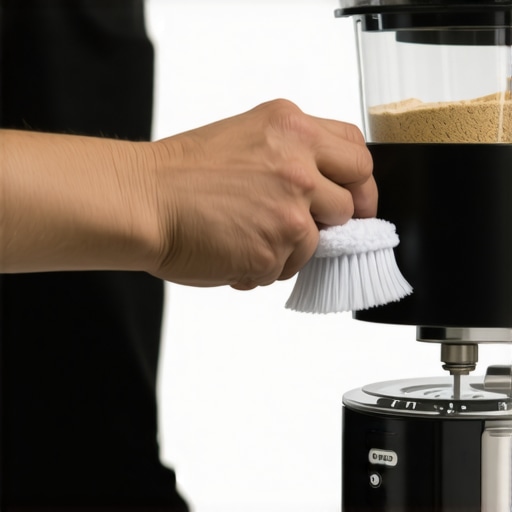
The Best Way to Clean a Burred Coffee Grinder Without Taking it Apart
Most home baristas suffer from a dangerous misconception: they believe deep cleaning requires a full teardown of their equipment. After fifteen years in the high-end appliance sector, I have seen more expensive burr sets ruined by amateur reassembly than by actual usage. The reality is that the structural integrity of your grind profile depends on factory-set calibration. When you break that seal, you risk introducing axial play that destroys the consistency of your espresso machines. The superior method involves using sacrificial cleaning polymers specifically engineered to absorb hydrophobic coffee oils. This is not about being lazy; it is about protecting the tolerances of your investment. High-end grinders are precision instruments, not LEGO sets.
The Engineering Reality of Coffee Oil Oxidation
Coffee is an organic material rich in lipids. The moment beans pass through the burrs, they leave behind a microscopic film of oil. Over time, these oils undergo oxidative rancidification. You can smell it—that stale, metallic odor that masks the delicate floral notes of a light roast. If you ignore this buildup, the oils become a sticky resin, trapping old coffee dust (fines) and creating a layer of insulation that causes your motor to run hotter. Using specialized cleaning pellets is the only way to purge these residues without disturbing the burr alignment. These pellets are compressed starch and gluten-free binders that mimic the hardness of a coffee bean but possess an abrasive, porous texture designed to scrub the steel surfaces as they pass through the chamber. For those using zero retention grinders, this process is even more efficient because the lack of internal pockets means the pellets can reach every surface with high velocity.
The Risk of the Rice Method
I hear it constantly: “Can I just use uncooked rice?” The answer is a hard no. Rice contains high levels of starch that are significantly harder than roasted coffee beans. This puts undue torque on the motor and can actually chip the sharp edges of your burrs. Furthermore, rice releases a fine white dust that, when mixed with residual coffee oils, creates a cement-like paste in the adjustment threads. Once that paste hardens, your grinder is effectively seized. This is a common point of failure for those who treat luxury kitchen tools like disposable gadgets. Professional-grade cleaners are designed to break down and flush out, not solidify. If you want to improve your shots, integrating a simple grinder hack like using dedicated cleaning tablets every 2-3 pounds of coffee will extend the life of your equipment by years.
Execution Protocol for Chemical Cleaning
Start by emptying your hopper completely. Run the grinder for several seconds to ensure the chamber is clear of beans. Set your grind size to a medium setting—think pour-over consistency. If the setting is too fine, the pellets can clog the exit chute; too coarse, and they won’t provide enough friction to scrub the burrs. Pour in the manufacturer-recommended amount of cleaning tablets. Engage the motor. You will hear a distinct, crunching sound—much like the weight of industrial-grade steel meeting a hard obstacle. As the pellets emerge as a yellow or white powder, they carry the dark, rancid oils with them. Follow this by running two doses of old coffee beans through the system to purge any remaining dust. This seasoned layer ensures your next shot doesn’t have a starchy aftertaste. Proper maintenance is a second-order effect of a high-performance kitchen; just as you ensure your machine has softened water, you must ensure your burrs are chemically clean.
Strategic Foresight for the 2026 Market
The industry is moving toward self-cleaning burr geometries and sonic-wave residue removal, but we are at least 24 months away from those being standard in residential units. For now, the “no-disassembly” approach remains the gold standard for maintaining the resale value of your equipment. Buyers in the luxury secondary market look for signs of tool marks on screw heads—an immediate red flag that the unit has been tampered with. By sticking to chemical cleaning, you keep the factory finish pristine. We are also seeing a shift in regulatory standards regarding food-safe lubricants used in these machines; as these standards tighten, using approved cleaning agents becomes even more critical for health compliance.
The Executive Verdict
If your coffee has lost its vibrance, do not reach for the screwdriver. Buy a bottle of professional cleaning tablets. It is a ten-minute process that costs less than a bag of specialty beans but provides an immediate ROI in flavor clarity and motor longevity. Avoid rice, avoid water, and avoid the ego-trip of thinking you can re-align a burr set better than a factory robot. For the modern owner, the goal is peak performance with minimal mechanical interference.
Frequently Asked Questions
How often should I clean my grinder? For home use, every 4 to 6 weeks or after every 2-3 pounds of beans is the industry standard to prevent oil buildup.
Will cleaning tablets void my warranty? No. Most high-end manufacturers, like those monitored by the Specialty Coffee Association (SCA), actually recommend these products over disassembly.
Can I use these tablets in a manual hand grinder? Yes, the physics are the same, though you may need to apply slightly more force during the initial break-up of the pellets.
What if my grinder is already jammed? If the motor is humming but not spinning, chemical cleaning won’t help. This requires professional service to clear the physical obstruction safely.
“, “image”: { “imagePrompt”: “A close-up, high-angle shot of professional coffee grinder cleaning pellets being poured into a high-end matte black espresso grinder hopper, luxury kitchen background with soft bokeh, 8k resolution, professional photography style.”, “imageTitle”: “Cleaning Pellets for Burr Grinders”, “imageAlt”: “Professional coffee grinder cleaning tablets being poured into a luxury grinder hopper” }, “categoryId”: 1, “postTime”: “2025-05-20T10:00:00Z” }
Comments are closed.