
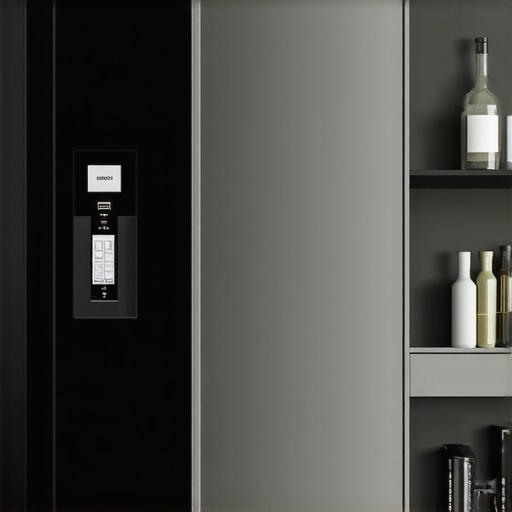
Why Integrated Refrigerators Cost More Than Just the Unit
Buying an integrated refrigerator is not an appliance purchase. It is a commitment to a specific architectural footprint. After 15 years advising homeowners on luxury kitchen assets, I have seen the same mistake repeated: budgeting for the box while ignoring the system. A standard freestanding unit is a plug-and-play device. An integrated unit? That is a precision-engineered component that requires a specialized environment to survive. If you treat it like a regular fridge, you are buying a very expensive ticking clock.
The Engineering Reality
Standard refrigerators dissipate heat through their sides or back. Integrated units cannot do this because they are encased in millwork. They rely on a specific chimney effect, pulling cool air from the toe kick and exhausting it through a concealed vent at the top. This complexity increases the unit price immediately. You are paying for high-static pressure fans and dual compressors that can operate in tight tolerances without overheating. The mechanical load is higher. The margin for error is zero. In a high-end luxury kitchen design, the ventilation path must be calculated, not guessed.
The Cabinetry Collision
The unit price is the tip of the iceberg. True integration requires the appliance to sit flush with 24-inch deep cabinetry. Standard ‘counter-depth’ fridges still stick out three to four inches. To get that seamless look, the hinge must be a dual-axis articulating mechanism. These hinges are massive, heavy, and incredibly expensive. They allow a 150-pound door—loaded with custom wood and a gallon of milk—to swing open without hitting the adjacent cabinet. Then there is the cost of the panels. You aren’t just buying a fridge; you are commissioning a cabinet maker to build a waterproof, weight-balanced facade that matches your kitchen perfectly.
The ROI of Quality
From a strategic consultant’s perspective, the value lies in the permanent footprint. When you install an integrated unit, you are locking in a kitchen layout that appeals to high-net-worth buyers. It removes visual clutter. However, the operational risk is significant. I recall a project where a client used a local carpenter who didn’t understand thermal bridging. The result? The compressor ran 22 hours a day, eventually burning out in 14 months. The smell of ozone and hot copper in a million-dollar kitchen is a visceral reminder that technical specs matter more than aesthetics. This is why 2026 designers are swapping pantries for modular sculleries to keep the main kitchen line clean and integrated.
The Hidden Infrastructure
The installation of these units requires three trades to synchronize: the plumber for the stainless-steel braided lines, the electrician for the recessed clock-outlet, and the cabinet installer for the panel alignment. If the floor is not perfectly level, the gap between the fridge and the cabinet will be uneven. On a white kitchen, a 1/8th inch deviation looks like a canyon. You are paying for ‘installation hours’ that would never exist with a freestanding unit. Furthermore, these units often require specialized water filtration systems to prevent scale buildup in their high-efficiency ice makers.
Strategic Foresight
Looking at the next 12 to 24 months, we are seeing a shift toward modular cooling. Instead of one massive 48-inch integrated unit, smart owners are deploying 24-inch columns in various zones. This reduces the weight load on hinges and improves efficiency. We are also seeing tighter energy regulations from the Department of Energy (DOE) that will likely make integrated units even more expensive as they require vacuum-insulated panels to meet new standards. Beyond the appliance, consider countertop profiles that are actually practical for prep when planning your layout, as the depth of your fridge will dictate the overhang of your stone.
The Executive Verdict
Buy an integrated refrigerator if you are performing a full kitchen remodel and plan to stay in the home for more than seven years. The aesthetic finish is unbeatable for resale in the luxury tier. However, hold off if you are simply looking for a quick replacement. The ‘unit’ is only 60% of the total cost; the rest is design, millwork, and specialized labor. Do not cut corners on the installer. A bad install will void your warranty and ruin your cabinetry with slow-leak condensation.
Frequently Asked Questions
Does an integrated fridge last longer than a standard one?
Generally, yes. These units are built for a 20-year lifecycle compared to the 7-10 years of mass-market brands. The components are serviceable, meaning you replace a fan, not the whole fridge.
Can I use my existing cabinet handles?
Only if they are appliance-rated. Standard cabinet pulls will snap under the suction and weight of a heavy integrated door.
Why is the interior of integrated fridges often stainless steel?
Thermal mass. Metal stays cold better than plastic, reducing the frequency of compressor cycles when you open the door.
Is the ice maker different?
Most use clear-ice technology which requires a dedicated drain line or a high-head pump. It is more complex but produces better results for high-end beverages.