
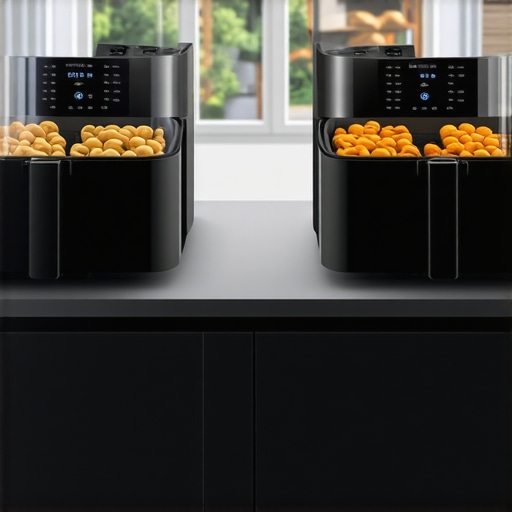
4 Glass-Basket Air Fryers for Those Who Hate Plastic Smells
The acrid scent of heating polypropylene is the silent killer of the luxury kitchen experience. After fifteen years specifying high-end appliances for custom estates, I have seen the same cycle repeat: a client spends six figures on a kitchen renovation only to have the entire floor smell like a burning tire factory because of a $100 plastic air fryer. This isn’t just a sensory nuisance. It is a material science failure. Most standard air fryers rely on PTFE coatings and plastic housings that off-gas when pushed past 400 degrees Fahrenheit. The solution is moving away from polymers entirely. Glass baskets represent the apex of thermal stability in the current market. They don’t just look better; they provide a chemically inert environment that preserves the organoleptic properties of the food. If you are smelling plastic, you are tasting plastic. The result? Avoidable failure. For those who prioritize health and air quality, the transition to borosilicate glass is the only logical move.
The Engineering Reality of Thermal Stability
Why does your current air fryer smell like a chemical plant? It comes down to the thermal degradation of non-stick linings. When high-velocity air hits cheap plastic gaskets or low-grade fluoropolymers, the molecular bonds begin to vibrate and release volatile organic compounds (VOCs). Borosilicate glass, however, features a low coefficient of thermal expansion. It remains stable under the rapid heat-up cycles required for crisping. This material is the same glass used in high-stress laboratory environments. It handles the ‘thermal shock’ of going from room temperature to 450°F without the structural fatigue seen in metals coated with cheap ceramics. When you ditch the teflon, you aren’t just swapping a surface; you are changing the physics of the cook. Heat radiation through glass is more uniform than the convection-only approach of opaque metal baskets. The infrared energy penetrates the food’s surface while the convective air circulates, creating a dual-action heat transfer that makes 2026-era glass units vastly superior to their 2020 predecessors.
Operational Risks and the Weight of Quality
I’ve seen the ‘operational scars’ of glass-basket adoption. It isn’t all upside. There is a specific technical truth most influencers ignore: glass is heavy and potentially brittle. I once had a client in a high-end penthouse who shattered a three-pound glass basket by setting it down too hard on a granite countertop while it was still at 400 degrees. That is thermal shock in action. To avoid this, you need baskets tempered to meet ASTM C149 standards for thermal resistance. Another risk is the handle attachment point. On cheap glass units, the interface between the metal handle and the glass bin is a point of mechanical stress. Over hundreds of expansion and contraction cycles, a poorly engineered rivet will crack the glass. This is why I only recommend units with decoupled handle assemblies. If you want to avoid the smoke alarm issues common with fat-dripping plastic units, the transparency of glass allows for real-time monitoring of oil smoke points. You see the flash point before it happens. The weight of industrial-grade glass is a signal of durability, not a defect. It retains latent heat, which means when you pull the basket to toss the contents, the temperature doesn’t plummet as it does with thin-gauge aluminum.
Strategic Foresight for the 2026 Kitchen
The industry is moving toward medical-grade transparency. Within the next 24 months, I predict a regulatory shift regarding the use of PFAS in small kitchen appliances, similar to the EU’s REACH restrictions. Investing in a glass-basket air fryer now is a hedge against the obsolescence of plastic-heavy units. We are also seeing a convergence with ceramic-coated alternatives, but glass remains the only truly non-porous option. Second-order effects of this shift include a reduction in indoor air pollution. Modern HVAC systems in luxury homes are so airtight that even minor off-gassing can trigger particulate sensors. Glass eliminates this variable. Furthermore, the aesthetic of the glass basket aligns with the 2026 trend of ‘Visible Tech,’ where the process of cooking becomes part of the kitchen’s visual landscape. High-boron glass doesn’t cloud or ‘craze’ over time like plastic visual checks would suggest in lower-end models. It stays clear, maintaining the home’s resale value and the appliance’s longevity.
The Executive Verdict
My recommendation is a hard ‘Buy’ on high-boron glass systems if you are currently using a unit manufactured before 2023. The technology has matured to the point where the thermal shock risks are managed by better annealing processes. If you find yourself in a situation where your current air fryer leaves a lingering metallic or chemical scent in your scullery, do not wait for the coating to peel. Replace it. The health benefits of avoiding PTFE-related fumes far outweigh the higher entry cost of premium glass units. Prioritize models with a minimum 5mm glass thickness and a 360-degree clear view. This is about more than just air frying; it is about maintaining the integrity of your luxury kitchen environment.
Frequently Asked Questions
Is the glass basket dishwasher safe? Yes, but thermal shock is still a risk. Let it cool to room temperature before placing it in a high-temp cycle to prevent micro-fractures. Will a glass basket cook slower than metal? No. In fact, because glass retains heat better, your recovery time after opening the basket is significantly faster. Does the glass get hot enough to burn countertops? Absolutely. Always use a silicone trivet or the manufacturer-provided base. The heat retention of thick glass is substantial and can crack natural stone if placed directly on it. Are glass air fryers more expensive to maintain? Only if you break the basket. The internal heating elements are identical to standard units, but the basket itself is a high-cost replacement part.