
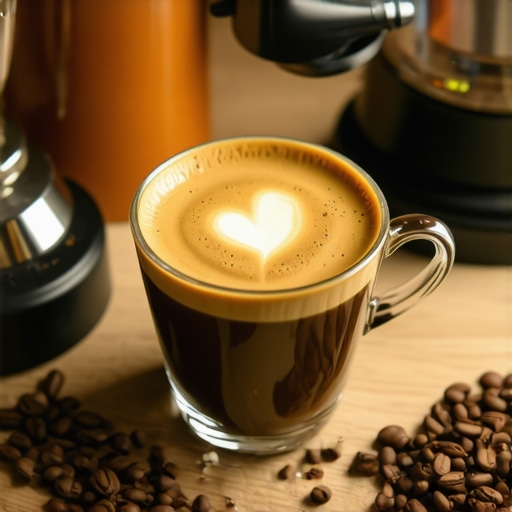
The 5-Minute Grinder Hack for Better Espresso Body Without Changing Your Beans
Body is the tactile sensation baristas chase. It is the viscosity on the tongue. Most home setups produce a thin, tea-like liquid that lacks the syrup-like texture of a professional cafe. The instinct is to buy darker beans. Stop. That just masks poor extraction with ash. After two decades of calibrating commercial grinders, I have found that the issue is rarely the bean. It is the thermal state of your burrs and the static-induced clumping that ruins your particle distribution. Consistency is a myth without thermal management. If you get this wrong, you are wasting $30 bags of specialty coffee on shots that taste like metallic water.
The Engineering Reality of Grinder Friction
Burrs are heat sinks. When you grind, friction creates heat. This heat causes the metal to expand by microns, narrowing the gap. A cold grinder and a hot grinder produce two different cups. This is the source of the dreaded ‘dial-in drift’ where your third shot of the morning suddenly tastes different than the first. Most baristas try to fix this by fixing sour extractions through grind adjustments. They are chasing a moving target. The real culprit is the torque curve of the motor. When beans hit a stationary burr set that then starts moving, the initial ‘shatter’ produces a massive spike in ‘fines’—those microscopic particles that clog your filter basket and create bitterness.
The Hot Start Strategy
The hack is simple: The Hot Start. Most home baristas drop beans into the hopper and then hit the button. This is a mistake. Instead, engage the motor first. Let the burrs reach their full RPM. Only then, drop your dose. This ensures that every single bean is sheared with the same centrifugal force. The result is a more uniform bimodal distribution. You get enough fines to create the resistance needed for a dense syrupy body, but you avoid the ‘dust’ that chokes the shot. This technique, combined with zero retention grinders, creates a repeatable particle profile that actually holds up under pressure.
According to the Specialty Coffee Association, extraction yield is deeply dependent on the surface area-to-volume ratio of the grounds. When you hot-start, you stabilize that ratio. You also need to manage the static charge. A single drop of water on the beans before grinding—known as the Ross Droplet Technique—neutralizes the static that otherwise causes fines to stick to the grinder walls. When these fines finally break loose, they enter the basket in clumps, causing channeling. You want them distributed. You want them to migrate to the bottom of the puck to form the ‘filter bed’ that creates the creamy mouthfeel we associate with high-end flow profiling machines.
Why Standard Methods Fail
The industry standard is to ‘purge’ a few grams of coffee. This is wasteful and inefficient. It does not address the underlying physics of the first-bean-crush. I remember a client in a high-end loft who spent $5,000 on a machine but couldn’t get a shot with any weight. We didn’t change his beans. We didn’t change his machine. We changed his sequence. By hot-starting and using precision baskets, we increased his total dissolved solids (TDS) by 2% without changing the grind setting. The difference was palpable. The smell of fresh oils replacing the scent of ozone and burnt dust. The weight of the liquid changed. It went from watery to heavy.
The ROI of Precision Grinding
Implementation risks are low, but the rewards are immediate. The only risk is a ‘popcorn effect’ where beans bounce on top of the spinning burrs. You solve this with a simple weight or a bellows system. In the next 12 months, expect more manufacturers to integrate ‘soft-start’ or ‘high-torque’ motors that mimic this effect automatically. We are seeing a shift toward solid state stability in every part of the kitchen, from induction hobs to grinders. Regulations on energy efficiency might soon limit motor power, making these mechanical ‘hacks’ even more essential for the home enthusiast.
The Executive Verdict
If you are tired of thin espresso, stop changing your beans. Buy/Hold your current setup and change your workflow. Hot-start your grinder. Use the RDT method. Ensure your burrs are seasoned. This is the fastest way to professional-grade body. The National Coffee Association notes that consumer expectations for home brewing are at an all-time high; meeting those expectations requires understanding the mechanics, not just buying the brand.
Technical FAQ
Does hot-starting damage the motor? No. Most high-end grinders are designed for constant rotation. Engaging the motor without a load is actually easier on the capacitors than starting under the weight of beans.
Will this work on a conical burr grinder? Yes, though the effect is most pronounced on flat burrs where particle uniformity is the primary selling point.
How does this affect extraction time? You might find the shot flows slightly faster because you have fewer ‘shatter fines’ clogging the holes. Tighten the grind by one notch to compensate, and you will see the body increase significantly.
Comments are closed.