
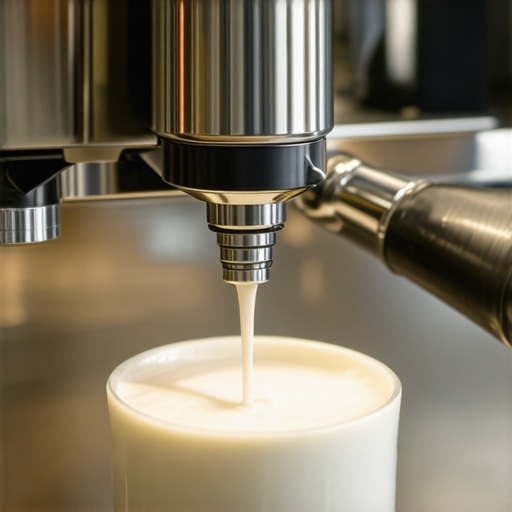
Most home baristas fight their equipment. They blame the machine when the milk looks like dish soap or feels like hot water. After fifteen years of rebuilding E61 group heads and diagnosing steam valve failures, I can tell you the machine is rarely the primary culprit. It is the air-milk interface. You are likely introducing air for too long or at the wrong pressure. This leads to a scorched, bubbly mess that ruins a perfectly good extraction. If your coffee is struggling, you might also find that why most home espresso shots taste sour is a related issue of thermal instability. The trick is a specific, two-second purge-and-dip. It is about stabilizing steam velocity before the wand even touches the liquid.
The 2-Second Steam Wand Trick for Silky Microfoam Every Time
The secret is timing the ‘stretch’ phase to exactly two seconds. No more. No less. Position the steam tip just below the surface. Open the valve fully. You want to hear a specific ‘chirping’ sound. This is the sound of air being shredded into microscopic bubbles. After two seconds, you must submerge the wand by another half-inch. This stops the aeration and starts the vortex. The vortex is where the magic happens. It incorporates those bubbles into the body of the milk. Without the vortex, you just have hot milk with a foam cap. With it, you have liquid silk. The physics of protein denaturation requires this rapid transition. According to standards from the Specialty Coffee Association, the ideal temperature for this texture peaks between 140°F and 155°F. Beyond that, you are just cooking the lactose until it turns bitter.
The Engineering Reality
Dry steam is your best friend. Wet steam is your enemy. When you first turn on your wand, the initial blast contains condensed water trapped in the pipe. If that water enters your pitcher, it dilutes the fats. This makes the foam unstable. I always tell my clients: purge the wand into a cloth until the ‘hiss’ sounds sharp and dry. Only then do you start the clock. The 2-second trick works because it respects the thermal capacity of a standard 12-ounce pitcher. Professional setups, like 3 multi-boiler machines that guarantee stable 2026 extraction, provide the consistent pressure needed for this technique. Lower-end thermoblocks often lose pressure halfway through the cycle. The result? Inconsistent texture. Avoidable failure. You need a steady 1.2 to 1.5 bars of pressure to move the milk fast enough to create the required centrifugal force.
Why Standard Methods Fail
The ‘paper tearing’ sound is the benchmark everyone uses. It is too vague. Beginners tear the paper for ten seconds. They end up with a stiff meringue that will not pour latte art. The ‘Executive Rhythm’ of steaming is: Purge, Dip, Chirp-Chirp, Bury, Spin. You should feel the heat transfer through the stainless steel pitcher. Once it is too hot to hold for more than a second, you are done. The smell of fresh, sweet milk should be present. If it smells like a kitchen sponge, you have over-aerated. I have seen countless $5,000 setups used to produce mediocre drinks because the owner lacked this fundamental mechanical understanding. It is about the angle. Keep the wand at a 15-degree offset from the center of the pitcher. This creates the ‘rolling’ effect. No rolling, no microfoam.
The ROI of Quality Hardware
Does the wand tip matter? Absolutely. A four-hole tip distributes steam more evenly than a single-hole tip. However, it also requires a larger boiler to maintain pressure. If you are using a single-boiler machine, the 2-second trick is even more vital. You have a limited window of peak pressure. For those who want to automate this precision, 3 milk-sensing espresso machines for 2026 are becoming the industry standard. These machines use infrared sensors to stop the stretch phase at the exact millisecond of optimal viscosity. It removes the human error of a slow reaction time. But for the purist, the tactile feedback of the pitcher and the sound of the vortex are irreplaceable. You can’t code the ‘feel’ of a perfect roll.
Market Corrections Ahead
The industry is moving toward high-enthalpy steam systems. We are seeing a shift away from traditional copper boilers toward stainless steel and even graphene-lined heating elements for faster recovery. In the next 24 months, expect to see more ‘smart wands’ in the consumer space. These will likely use ultrasonic vibrations to assist in bubble breakdown. However, these tools will not replace the need for proper technique. They will only make the floor higher. The ceiling for quality remains in the hands of the operator who understands the fluid dynamics at play. Regulatory bodies like NIST have long studied the thermal properties of liquids under pressure, and the findings consistently point to the importance of rapid heat exchange without localized boiling.
The Executive Verdict
If you want cafe-quality milk at home, stop guessing. Use the 2-second trick. If your machine can’t sustain the pressure for a full 20-second cycle, it is time to upgrade the boiler or check the heating element for scale. Scale buildup is the silent killer of steam pressure. Use soft water and purge religiously. If you are in a high-volume environment, buy a multi-boiler. If you are a home enthusiast, master the 15-degree tilt. The result is better taste and a better morning.
Expert Insights and Tactics
Why does my foam separate from the milk? This happens when the vortex was not strong enough to incorporate the air. You stretched the milk but did not ‘fold’ it. Next time, bury the wand deeper and sooner.
What is the best milk for microfoam? Whole milk with at least 3.5% fat content. The fats stabilize the air bubbles. Skim milk creates ‘mountain’ foam which is brittle and dry.
How do I know if my steam pressure is too low? If the milk takes longer than 40 seconds to reach 140°F, your boiler is underperforming. A healthy machine should do this in 15 to 25 seconds.
Does the pitcher size matter? Yes. Use a pitcher that is only half full. This gives the milk room to expand and roll without spilling. A 12oz pitcher is standard for a 6oz cappuccino.
Comments are closed.