
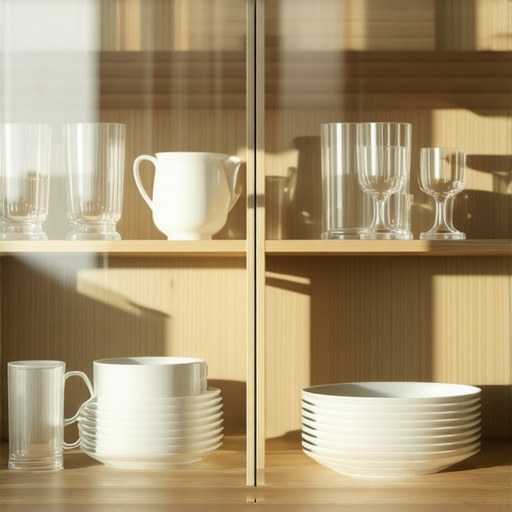
The Secret to Perfectly Clear Glass Cabinet Doors
High-end kitchen design is an exercise in optics. When you invest in a luxury kitchen, you are buying more than storage; you are buying a visual narrative of your lifestyle. However, that narrative breaks the moment a client notices a hazy film on their display cabinets. After fifteen years in the high-end cabinetry space, I have seen six-figure renovations ruined by a simple misunderstanding of surface tension and environmental grease. The reality? Achieving perfectly clear glass is not about the effort you put into scrubbing. It is about the science of the glass surface and the mitigation of airborne particulates from your cooking appliances.
The Physics of Kitchen Vapor and Glass Porosity
Standard glass is not as smooth as it appears. Under a microscope, the surface is jagged and porous. These microscopic valleys act as anchor points for volatilized fats released when using premium cookware or searing proteins. Even the most advanced air fryers release a fine mist of lipids that eventually settles on your vertical surfaces. Once these lipids occupy the pores of the glass, they oxidize and become sticky, attracting dust and becoming a magnet for streaks. If you do not address the grease first, you are simply moving dirt from one pore to another. This is why many owners struggle despite cleaning daily. The solution? You must use a surfactant that can break down the long-chain fatty acids without leaving behind a residue that fills those same pores.
To keep the air clean, you must prioritize ventilation. Many homeowners fail to realize that how to pick a range hood that actually sucks up smoke and grease is the first step in glass maintenance. If your range hood lacks the power to capture these particles at the source, your cabinet doors become the de facto filtration system. We recommend a high-velocity extraction system that maintains a consistent capture area. This prevents the grease from ever reaching your glass-fronted storage. According to the Glass Association of North America (GANA), improper cleaning agents can actually cause permanent etching if left in contact with specific glass types for too long. Avoid anything with ammonia, which can damage the surrounding most durable hardware finishes or the wood seals.
The Technical Truth About Cleaning Solutions
Most commercial glass cleaners are formulated for low-cost, quick-dry performance. They often contain surfactants that leave a thin, waxy film. This film is the primary cause of the ‘fog’ you see when the sun hits your cabinets at a certain angle. For a true laboratory-grade finish, I recommend a 50/50 mix of distilled water and 70% isopropyl alcohol. Distilled water is essential; tap water contains minerals like calcium and magnesium that cause hard-water spotting. The alcohol acts as a solvent for the kitchen grease while evaporating fast enough to prevent streaks. The tool is just as vital as the liquid. We exclusively use surgical huck towels. Unlike microfiber, which can sometimes scratch delicate coatings, huck towels are 100% cotton, lint-free, and highly absorbent. The result? A transparency that makes the glass look non-existent.
Why Standard Methods Fail and the Risk of Thermal Stress
One common mistake is cleaning glass while it is warm. If your kitchen has been active, with stand mixers running or your espresso machines steaming, the glass temperature rises. Applying a cool liquid to warm glass can cause the liquid to evaporate too quickly, trapping the cleaning agent on the surface before you can buff it out. Furthermore, placing heat-generating appliances like air fryers directly under glass-fronted cabinets is a recipe for disaster. The constant thermal cycling can cause the glass to expand and contract, eventually weakening the structural integrity of the frame. I have seen glass panes crack because an owner placed a high-heat toaster oven directly underneath a low-hanging cabinet. This is a technical failure of kitchen layout. Before you start a renovation, you must understand how to choose the right CFM for your specific cooking habits to ensure heat and moisture are managed properly.
Strategic Foresight for the Modern Kitchen
In the next 24 months, we expect a shift toward anti-reflective (AR) glass in luxury cabinetry. These coatings, similar to those used on high-end camera lenses, reduce reflections and make the contents of the cabinet pop with incredible clarity. However, AR coatings are even more sensitive to chemical cleaners. Using a standard abrasive could strip the coating, leading to a permanent mottled appearance. Lighting also plays a huge role. Avoid the lighting mistake that makes your kitchen look dated by using high-CRI (Color Rendering Index) LEDs inside the cabinets. This type of lighting reveals the true color of your items without highlighting the micro-scratches on the glass surface. The National Association of the Remodeling Industry (NARI) suggests that integrated lighting is now a standard expectation in the luxury segment, but it requires glass that is maintained at a higher standard than ever before.
The Executive Verdict
If you have glass cabinet doors, your strategy should be preventive, not reactive. Stop using paper towels—the wood pulp is abrasive. Stop using tap water. Ensure your ventilation is oversized for your cooking needs. If you are currently dealing with foggy glass, do a deep-clean with the alcohol-distilled water mix and switch to surgical cotton towels. This approach preserves the value of your cabinetry and ensures your luxury kitchen stays as sharp as the day it was installed. If your glass is already etched from years of ammonia use, replacement is your only logical path forward. For new builds, specify tempered, low-iron glass for maximum clarity and safety.
Common Questions
Does vinegar work for kitchen glass?
Vinegar is an acid. While it cuts through grease, it can be aggressive on certain hardware finishes and wood stains. Use it sparingly and never let it touch the cabinet frame.
How often should I clean display glass?
In a kitchen where you frequently use air fryers or high-heat cooking, a quick weekly buffing with a dry huck towel is better than a deep wet clean once a month.
Can I use microfiber on luxury glass?
Only use high-quality, clean microfiber. Cheap versions often contain polyester fibers that can cause micro-scratches over time, especially on coated or tinted glass.
” ,”image”: {“imagePrompt”: “A high-end luxury kitchen featuring glass-fronted cabinets with crystal clear transparency, surgical huck towels and a spray bottle on a marble island, warm interior cabinet lighting, premium cookware and a stand mixer in the background.”, “imageTitle”: “Pristine Glass Cabinet Doors in Luxury Kitchen”, “imageAlt”: “High-end glass cabinet doors showing perfect clarity with professional cleaning supplies on a marble countertop.”}, “categoryId”: 5, “postTime”: “2025-05-20T10:00:00Z”}