
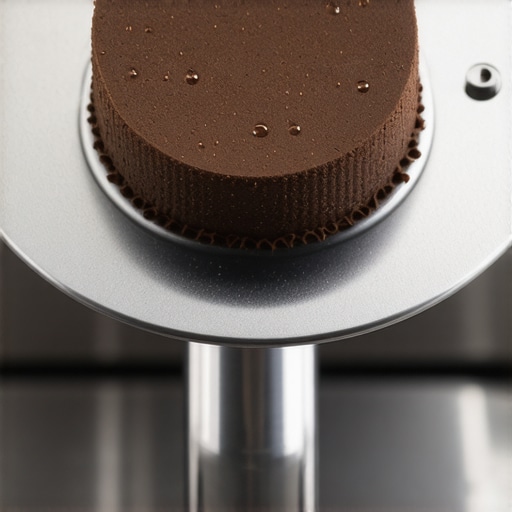
Why Your Espresso Puck Is Stuck to the Machine
A stuck puck is a mechanical failure, not a fluke. If you find yourself prying a muddy coffee disc off your shower screen after every shot, you are fighting physics. After fifteen years in high-end kitchen tech and equipment repair, I have seen every iteration of this frustration. It is messy. It ruins your workflow. Most importantly, it signals an imbalance in your extraction variables that likely affects the flavor in the cup. The primary culprit is rarely a defective machine; it is a lack of understanding regarding headspace and hydraulic vacuum forces.
The Engineering Reality
When you engage the pump on a prosumer machine, water under nine bars of pressure hits the coffee bed. When you stop the shot, the three-way solenoid valve opens, creating a path to the drip tray to relieve that pressure. This creates a momentary vacuum. If there is no air gap—technically known as headspace—between the puck and the shower screen, the suction pulls the entire coffee bed upward. This is basic fluid dynamics. If your basket is overfilled, the coffee expands as it saturates, pressing against the screen. The result? A puck that refuses to drop. To master this, you should read espresso machines unveiled to understand the internal plumbing of these systems. Proper headspace acts as a buffer, allowing the vacuum to pull water through the puck rather than pulling the puck itself.
The Headspace Deficit
Most home baristas dose by volume. This is a mistake. Different roasts have different densities. A 18-gram dose of a dark roast takes up significantly more physical space than 18 grams of a light roast. If you use a dark roast, it expands more during the pre-infusion phase because of higher CO2 content. This expansion closes the gap between the coffee and the group head. Use the nickel test: place a nickel on top of your dry, tamped puck and lock the portafilter into the machine. If the nickel is pressed into the coffee when you remove the portafilter, you have zero headspace. You are choking the machine. Fixing this often involves revisiting the coffee grinder setting to ensure your grind size isn’t so fine that it requires an oversized dose to achieve pressure.
The Solenoid and Gasket Failure
The hardware itself can sometimes be the antagonist. A worn-out group head gasket can cause the portafilter to sit higher than intended, reducing the available volume. If the solenoid valve is partially blocked by scale, the pressure relief is sluggish. This slow relief fails to break the surface tension between the wet puck and the screen. You might also notice why your espresso machine is leaking from the group head if the seals are failing. The ‘clack’ of the solenoid should be sharp and decisive. A muffled or weak sound indicates it is time for a backflush with a detergent or a full disassembly. In my experience, a dirty shower screen is a sticky shower screen. Oils and fine particles act like an adhesive, holding that puck in place against the laws of gravity.
The Physics of Suction
Consider the ‘sticky’ nature of wet coffee. When water is forced through a compressed bed, it creates a hydraulic seal. If your basket has a slight taper or if you are using a precision basket with a high hole density, the puck might have more grip on the screen than the basket walls. Using tools like a bottomless portafilter can help you see if your puck is lifting unevenly. Also, watch for signs of a failing espresso machine pump, as inconsistent pressure can lead to poor puck integrity, making it more likely to crumble and stick to the upper screen rather than staying together as a solid unit.
Market Corrections and Future Tech
The industry is moving toward ‘smart’ pressure profiling. In the next 24 months, expect to see more machines that modulate the end of the shot to prevent vacuum spikes. For now, the solution remains manual. High-end manufacturers like La Marzocco and Slayer focus heavily on the ‘exhaust’ phase of the shot. They know that a clean release is the hallmark of a professional machine. If you are using a standard consumer-grade machine, you are at the mercy of a cheaper, less efficient valve. This is the ‘operational risk’ of lower-tier equipment: it requires more technique to overcome hardware limitations. According to reports from the Specialty Coffee Association, precision in dosing remains the number one factor in extraction consistency.
Executive Verdict
If your puck is stuck, stop increasing your dose. My recommendation is a ‘Sell’ on the ‘more coffee is better’ philosophy and a ‘Buy’ on precision weighing. Scale your dose back by 0.5 grams until the puck consistently stays in the basket. Ensure your group head is clean. If the problem persists, check your gasket.
Frequently Asked Questions
Does a puck screen prevent sticking?
Yes. A stainless steel puck screen provides a physical barrier between the coffee and the group head, effectively eliminating puck sticking while improving water distribution.
Why does my puck stick only with certain beans?
Darker roasts contain more CO2 and oils, making them more prone to expansion and stickiness compared to denser light roasts.
Is it dangerous to the machine?
It is not immediately dangerous, but it places unnecessary stress on the solenoid valve and can lead to faster buildup of coffee oils inside the group head internals.
Should I wait longer before removing the portafilter?
Waiting 10-15 seconds allows the vacuum to dissipate and the puck to settle, which can help it release from the shower screen more easily.
“