
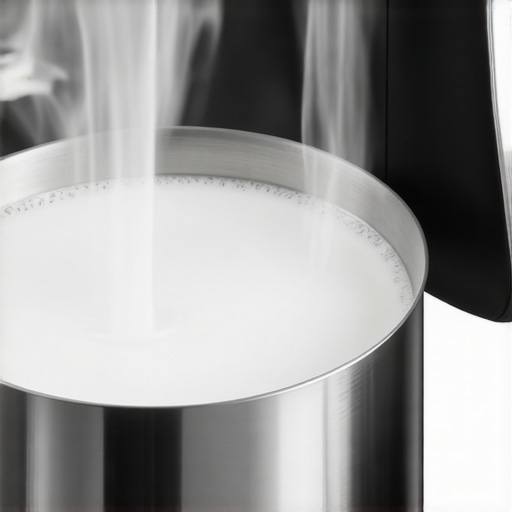
The Secret to Getting Silky Microfoam for Latte Art
True microfoam is not a foam in the traditional sense; it is a suspension of microscopic air bubbles trapped within a liquid protein matrix. Most homeowners treat the steam wand like a simple heater. That is a mistake. After a decade of diagnosing boiler pressure failures and calibrating prosumer espresso machines, the reality is clear: if you do not master the air entrainment phase within the first five seconds, the texture is ruined. This isn’t about aesthetic preference. It is about the chemistry of lipids and proteins under high-velocity steam injection. The stakes? A watery, flat beverage or a stiff, dry head of foam that refuses to pour. The solution lies in the physics of the vortex.
The Physics of Air Entrainment
The process starts with ‘stretching.’ You must introduce air into the milk while it is cold. This is where most people fail. They wait until the milk is warm to start texturing. By then, the proteins have already begun to denature, losing their ability to encapsulate air efficiently. You need the tip of the wand just below the surface—listen for the sound of paper tearing. This is not a random noise. It is the sound of air being shredded into the liquid. To understand the equipment requirements for this, one should look at espresso machines unveiled to ensure the boiler can maintain the necessary 1.2 to 1.5 bars of pressure. Without consistent pressure, the air bubbles will be too large, leading to ‘macro-foam’ that lacks the wet-paint sheen required for art.
Vortex Dynamics and Thermal Management
Once the milk reaches roughly 100 degrees Fahrenheit, the stretching phase must end. Now, the goal is integration. You sink the wand slightly deeper and tilt the pitcher to create a violent whirlpool. This vortex is the centrifugal force that drags the surface air down to the bottom, breaking large bubbles into sub-micron particles. If your wand isn’t positioned correctly, the milk just spins without turbulence. For a deeper look at the geometry involved, see the steam wand angle that makes microfoam possible every time. According to the Specialty Coffee Association (SCA) standards, milk should never exceed 150 degrees Fahrenheit. Beyond this point, the lactose breaks down, and the sweetness vanishes. The result? A bitter, burnt mess that no amount of art can fix.
The Reality of Scale and Equipment Failure
I have seen luxury kitchens with five-thousand-dollar setups producing subpar foam because of a simple maintenance oversight. Mineral buildup inside the steam tip is the silent killer of microfoam. If one of the three or four holes in your steam tip is partially blocked by calcium, the steam exit velocity becomes uneven. This prevents the formation of a stable vortex. Furthermore, if you do not purge the wand before and after use, you are inviting disaster. Residual milk siphons back into the wand, creating a bacterial breeding ground and clogging the internal valves. If you have already made this mistake, you will need to learn how to clean burnt-on milk from a steam wand using an enzymatic cleaner rather than a sharp object that could scratch the stainless steel. According to NIST, precise temperature control is vital for consistent results, and a simple handheld thermometer is often more reliable than the built-in sensors on lower-end machines.
Market Trends in Prosumer Technology
The industry is moving toward PID-controlled boilers that allow for half-degree adjustments in steam temperature. This is not overkill. High-end espresso machines now offer ‘dry steam’ technology, which reduces the amount of water dilution added to the milk during the steaming process. In the next 12 months, expect to see more integration of automated sensors that stop the steam flow exactly at the desired texture. However, for the purist, these sensors lack the tactile feedback of a heavy-gauge pitcher. You must feel the heat through the metal. It is the only way to react in real-time to the changing viscosity of the liquid. To achieve this level of precision, many are looking at how to get commercial-grade microfoam at home through manual technique rather than automated gadgets.
The Executive Verdict
If you are serious about latte art, stop focusing on the pour and start focusing on the chemistry of the steam. Buy a machine with a dedicated steam boiler. Ensure your steam tip has at least three holes for better distribution. Use cold, fresh whole milk for the best protein-to-fat ratio. If you find your foam is too thick, reduce your stretching time. If it is too thin, lower your wand depth. Mastery is found in the micro-adjustments.
Frequently Asked Questions
Why does my foam have large bubbles?
You are likely stretching the milk for too long or not creating a strong enough vortex to break the bubbles down. Stop adding air once the pitcher feels like it’s reaching room temperature.
Can I get microfoam with plant-based milks?
Yes, but the window of opportunity is much smaller. Oat milk responds best due to its higher fat content, but you must avoid overheating it as it curdles faster than dairy.
Is a larger pitcher better for steaming?
No. A pitcher that is too large for the volume of milk prevents the vortex from reaching the bottom. Use a 12oz pitcher for a single latte.
How often should I descale my steam boiler?
Depending on water hardness, every 3 to 6 months. Scale buildup reduces steam pressure, which is the primary driver of foam quality.