
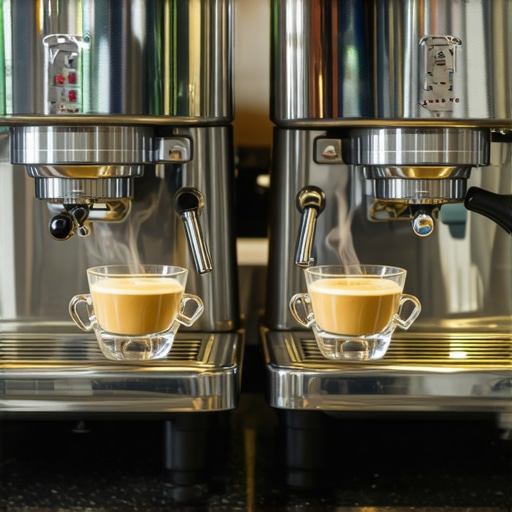
The Difference Between Semi-Automatic and Manual Espresso
Buying a high-end espresso machine is an investment in thermal stability and fluid dynamics. After 15 years designing luxury kitchen environments and sourcing industrial-grade espresso machines, I have seen too many enthusiasts waste thousands on hardware they lack the patience to operate. The choice between semi-automatic and manual systems is not about convenience; it is about where you want the control bottleneck to exist. If you value repeatable extraction and volumetric precision, you lean toward the pump. If you want to manipulate the pressure curve in real-time to save a shot that started too fast, you need a lever. Getting this wrong means your $5,000 Italian centerpiece becomes a glorified paperweight that produces bitter, under-extracted swill.
The Engineering Reality
Semi-automatic machines rely on an electric pump, usually a vibratory or rotary type, to move water from the reservoir through the group head. The user starts and stops the flow, but the machine dictates the pressure, typically a static 9 bars. This mechanical consistency is the hallmark of premium cookware in the beverage space. Manual machines, specifically lever-driven ones, remove the pump from the equation. You are the engine. You pull a lever to compress a spring or directly push water through the puck. The tactile feedback is intense. You feel the resistance of the coffee bed against your forearm. This is where the puck prep mistake that ruins every espresso shot becomes magnified; on a manual machine, poor distribution leads to a lack of physical resistance that you can feel through the metal handle. According to standards set by the Specialty Coffee Association, temperature stability is a non-negotiable metric, yet manual machines often struggle with thermal mass management compared to their dual-boiler semi-auto cousins.
Pressure Profiling Mechanics
The technical truth about espresso is that pressure should not be linear. A traditional semi-automatic machine hits the coffee puck with a wall of 9-bar pressure instantly. This can cause channeling. Manual machines allow for a soft pre-infusion, gently wetting the grounds before the full force is applied. This prevents the puck from fracturing. The result? A syrupy body that a standard pump machine struggles to replicate without a PID-controlled flow control valve. If you are using the best type of water for a prosumer espresso machine, the chemical interaction during this slow ramp-up extracts complex sugars that usually stay trapped in the beans. The cost-benefit here is clear: semi-autos offer ease and speed, while manuals offer the ‘God Shot’ at the expense of physical effort and a steep learning curve.
The Operational Risk of Manual Mastery
Operational scars in this industry usually involve steam burns and blown gaskets. Manual machines require a different maintenance mindset. You have to monitor the steam pressure drop on a manual machine because the boiler is often smaller to accommodate the lever mechanism. I remember a client in a high-rise who insisted on a La Pavoni manual for his luxury kitchen. Within a week, he had ‘sneezed’ the portafilter—removing it while the group was still under pressure. The result was a kitchen ceiling covered in scalding coffee grounds and a shattered porcelain cup. Manual machines are unforgiving. They demand respect for the laws of physics. If your grind is one micron too coarse, the lever will fly up with no resistance. If it is too fine, you will be hanging your entire body weight on the handle just to get a drip. The smell of hot brass and the hiss of an exposed boiler are sensory anchors for the purist, but for the casual drinker, it is a recipe for frustration.
Market Corrections and Future Tech
The industry is shifting toward a hybrid approach. In the next 12 to 24 months, we will see more prosumer machines that use digital profiling to mimic the natural pressure decay of a manual spring lever. This is the second-order effect of the third-wave coffee movement. People want the lever taste without the lever workout. However, a digital sensor will never replace the ‘feel’ of a manual pull. For those building a luxury kitchen in 2025, integrating a plumbed-in rotary pump semi-automatic remains the standard for resale value and utility. Regulatory changes regarding lead-free brass in European manufacturing are also pushing prices higher, making these machines heirloom-quality assets rather than disposable appliances. The Italian Espresso National Institute notes that the ‘certified’ espresso profile is becoming harder to achieve as home enthusiasts demand more experimental control over flow rates.
The Executive Verdict
If you are a data-driven individual who wants the same perfect latte every morning at 7:00 AM, buy a dual-boiler semi-automatic. It is a strategic tool for efficiency. If you view espresso as a craft and enjoy the ritual of taming a mechanical beast, buy a manual lever machine. My recommendation: if you have never pulled a shot before, start with a semi-auto to learn the variables of grind and dose before introducing the variable of manual pressure. The hidden seal that makes your espresso machine leak from underneath is a common failure point on both, so regardless of your choice, preventative maintenance is your only defense against a flooded countertop. Choose the machine that matches your morning temperment, not just your kitchen aesthetics.
Frequently Asked Questions
Is a manual machine harder to clean?
Actually, no. Manual machines often have fewer internal parts and no complex solenoids to backflush, though the piston seals require regular lubrication with food-grade grease.
Can I get good crema with a semi-automatic?
Crema is primarily a function of bean freshness and CO2 content. A semi-automatic provides the consistent 9 bars of pressure needed to emulsify those oils perfectly every time.
Why are manual machines usually more expensive if they have no pump?
You are paying for heavy-duty metal casting and precision machining. A high-end manual lever needs significant weight and high-quality springs to handle the mechanical stress of manual operation.
Does milk steaming differ between the two?
The steam wand performance depends on the boiler size and heating element wattage, not the extraction method. However, many manual machines are single-boiler systems, meaning you cannot steam and brew at the same time.