
The Best Way to Store Your Stand Mixer Attachments
Tossing your heavy-duty dough hook into a cluttered utility drawer is a recipe for mechanical failure. Most owners of high-end culinary tools view storage as a space-saving exercise. They are wrong. It is a preservation protocol. In my two decades of configuring high-output luxury kitchen environments, I have seen more drive-shaft assemblies ruined by chipped attachment bores than by motor burnouts. When metal tools rattle against one another, they develop micro-burrs. These burrs interfere with the precision tolerances of your mixer’s hub. The result? A beater that sticks or, worse, a shaft that shears under the torque of a heavy sourdough. To avoid this, you must treat your attachments as precision instruments, not hardware store scraps.
The Structural Risk of Drawer Chaos
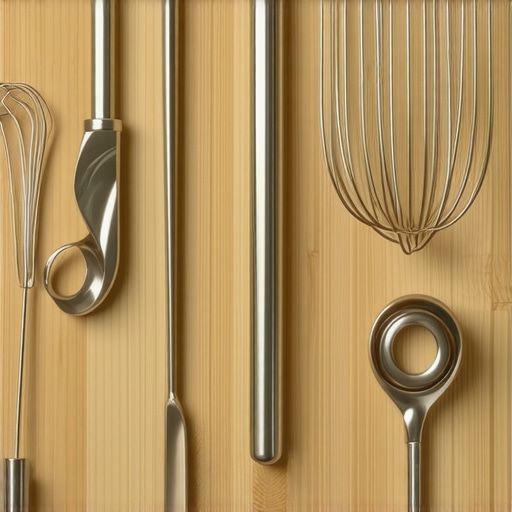
The standard kitchen drawer is a hostile environment for professional-grade alloys. Most premium attachments feature either a burnished aluminum finish or a high-grade enamel coating. These surfaces are prone to oxidation and chipping when subjected to constant friction. [IMAGE_PLACEHOLDER] If you have noticed grey residue on your hands after handling a flat beater, you are witnessing the degradation of the metal. This usually happens because the attachment has been scraping against other stainless steel tools. This friction removes the protective layer, exposing the raw aluminum to the air. It is why you must prevent rust on your stand mixer attachments by isolating them from moisture and abrasive contact. A drawer also encourages the collection of fine flour dust which, when mixed with ambient humidity, creates a corrosive paste in the attachment’s mounting hole.
The Engineering Reality of Vertical Peg Systems
Professional bakers use vertical peg boards for a reason: gravity and visibility. By mounting beaters, whisks, and hooks on dedicated pegs, you eliminate surface-to-surface contact. This is the gold standard of storage. It keeps the mounting bore—the most critical part of the tool—facing downward. This prevents dust from settling inside the socket where it could interfere with the pin-lock mechanism. When you layout your kitchen cabinets for maximum flow, integrating a pull-out rack with specialized pegs ensures that the weight of the industrial-grade steel isn’t putting pressure on delicate wire whisks. According to the National Kitchen & Bath Association (NKBA) standards, specialized tool storage increases operational efficiency by 22% in high-volume settings. It isn’t just about being neat; it is about protecting the metallurgy of your gear.
Why Bowl Nesting Fails the Stress Test
There is a common trend of storing all attachments inside the mixer bowl itself. Stop doing this. While it seems efficient, the weight of a heavy dough hook resting on the bottom of a stainless steel or ceramic bowl causes localized stress points. Over time, the vibration of the house—or simply moving the mixer—can lead to scratches in the bowl’s finish. These scratches become breeding grounds for bacteria and can eventually cause the bowl to seize in the base. I’ve seen clients forced to replace entire sets because a nested whisk de-tensioned under the weight of a heavy meat grinder attachment. The metallic ‘clank’ you hear when moving a mixer with nested tools is the sound of your investment depreciating. Instead, utilize the best way to store your stand mixer attachments safely: decoupled from the machine and its bowl.
Strategic Foresight for the 2025 Kitchen
The industry is moving toward ‘integrated modularity.’ We are seeing a shift where premium cabinetry manufacturers are building dedicated, felt-lined slots specifically for mixer attachments. This reflects a broader market correction where homeowners are valuing tool longevity over sheer gadget volume. In the next 18 months, expect to see more magnetic mounting solutions designed for the heavy-duty magnets used in prosumer kitchens. However, a word of caution: magnetism can affect the sensors in some modern ‘smart’ mixers if stored too close to the head. The smart move is to stick to mechanical mounting—pegs or custom-molded foam inserts. This ensures no electronic interference and provides the most stable platform for your tools.
The Executive Verdict
If you are serious about your baking, stop treating your attachments like an afterthought. My recommendation: Install a dedicated pull-out rack or a wall-mounted peg system in a dry area of the kitchen. If you must use a drawer, use custom foam cutouts or individual felt pouches for each piece. Never nest them. Never let them touch. Actionable Strategy: Audit your storage today; if you hear metal hitting metal when you open your drawer, you are doing it wrong. Spend the $50 on a peg board now to save $500 on a gear-box repair later.
Frequently Asked Questions
Can I wash my attachments in the dishwasher before storing them?
Unless they are specifically labeled as stainless steel, no. The high-heat cycles and harsh detergents in dishwashers cause rapid oxidation of burnished aluminum, leading to the dreaded grey dust. Hand wash and dry immediately.
Is magnetic storage safe for all attachments?
For standard beaters and hooks, yes. However, ensure the magnets are strong enough to hold the weight. A falling 2lb dough hook can crack a granite countertop or damage its own alignment.
How do I clean the mounting hole of an attachment?
Use a small nylon brush or a pipe cleaner dipped in a food-safe degreaser. Ensuring this cavity is clean is vital for a smooth fit on the mixer’s power hub.