
Why You Should Avoid Cheap Air Fryer Replacement Baskets
Buying a fifteen-dollar replacement basket for a high-end air fryer is the equivalent of putting retread tires on a Porsche. It looks fine in the driveway. The moment you hit high speeds, the failure becomes catastrophic. After fifteen years in the luxury kitchen appliance sector, I have witnessed the same cycle repeatedly. Owners of premium cookware and sophisticated air fryers attempt to save twenty bucks on an aftermarket basket, only to find their kitchen smelling of acrid chemicals. The stake here is not just the twenty dollars. It is the integrity of your food and the longevity of an expensive machine. The technical reality of convection heating requires precision that third-party manufacturers simply do not prioritize.
The Engineering Failure of Generic Mesh
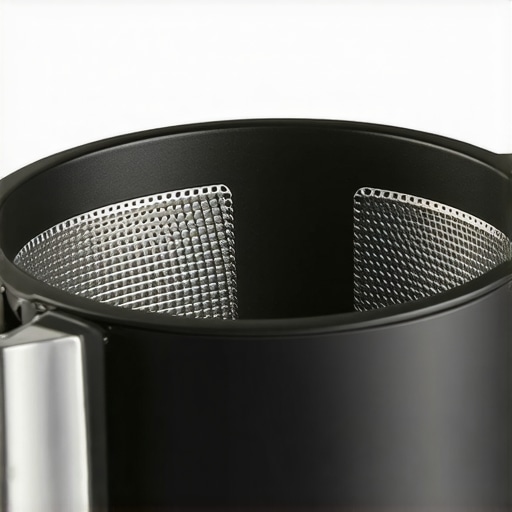
The core of air frying is high-velocity convection. Air must move at specific cubic feet per minute (CFM) to achieve the Maillard reaction without drying out the interior. Cheap baskets often feature mesh patterns or hole diameters that deviate from the Original Equipment Manufacturer (OEM) specs. This creates backpressure. The fan motor works harder, runs hotter, and eventually burns out. I have seen countless units where the thermal fuse tripped permanently because of a restrictive $10 basket. Beyond airflow, the metallurgy is suspect. OEM baskets are typically engineered with specific expansion coefficients to handle rapid heating from room temperature to 400 degrees Fahrenheit. Generic versions use thinner, lower-grade alloys. They warp. Once warped, they no longer sit flush, which causes significant heat loss. This often leads to users wondering how to stop your air fryer from rusting around the screws because the uneven heat causes condensation in areas not designed for moisture.
The Chemical Risk of Non-Stick Coatings
This is where the “operational scars” come in. I have walked into clients’ homes where a faint, metallic odor permeated the luxury kitchen after they used a knock-off basket. Cheap manufacturers often skip the high-temperature curing process for PTFE or ceramic coatings. The result is off-gassing. According to the Association of Home Appliance Manufacturers (AHAM), uncertified coatings can degrade at temperatures as low as 350 degrees if the substrate bonding is poor. You are not just cooking chicken; you are aerosolizing polymers. This is often the root cause when owners ask how to stop your air fryer from smelling like burnt plastic. The odor is not a break-in period. It is the coating failing. OEM baskets must comply with FDA 21 CFR 177.1550 standards for perfluorocarbon resins, ensuring they remain stable under intense heat. Third-party sellers on massive e-commerce platforms rarely provide these certifications. The weight of industrial-grade steel and the thickness of the coating are tangible differences you can feel. A cheap basket feels like a soda can; an OEM basket feels like a tool.
Thermal Bridging and Efficiency Loss
Let’s talk economics. A cheap basket often lacks the proper thermal bridging insulation. Heat transfers through the handle or the outer rim, making the air fryer’s exterior dangerously hot. This is a massive safety hazard in a kitchen with children or granite countertops sensitive to thermal shock. When the basket does not fit the internal rails perfectly, the bypass air—the air that escapes around the basket rather than through it—increases. This extends cook times by 20% or more. Over a year, the energy waste and the wear on the heating element negate any initial savings. I recommend looking into the air fryers revolution top models that redefine healthy cooking in 2025 to see how integrated basket designs are moving toward stainless steel and high-durability glass to avoid these exact issues. The industry is shifting away from disposable components toward heirloom-quality engineering.
Market Corrections and Regulation
In the next 12 to 24 months, I anticipate a significant regulatory crackdown on aftermarket appliance parts that do not meet UL 1026 safety standards. European markets are already tightening the screws on PFAS-containing components. For the local homeowner, this means the cheap parts available today might be illegal tomorrow. We are seeing a move toward “Repairability Scores” where brands like Miele and Breville are making OEM parts more accessible to combat the flood of dangerous generics. If you value your health and your appliance’s lifespan, the verdict is simple: Buy the OEM part or do not replace it at all. The risk of a grease fire or toxic inhalation is too high for a minor price break. If you are in a situation where the OEM basket is discontinued, it is time to upgrade the unit rather than Frankenstein it with a generic part.
Common Questions Regarding Air Fryer Baskets
Can I use a basket from a different brand if it fits? No. Even if the dimensions match, the airflow requirements and locking mechanisms are specific to each model’s fan curve and wattage. Why is my replacement basket flaking after two uses? This is typically due to poor substrate preparation during the coating process. The metal wasn’t degreased properly before the non-stick layer was applied. Is stainless steel better than non-stick baskets? Generally, yes, for durability and safety, though it requires more manual cleaning. High-end models are increasingly adopting polished stainless steel to avoid coating issues entirely.