
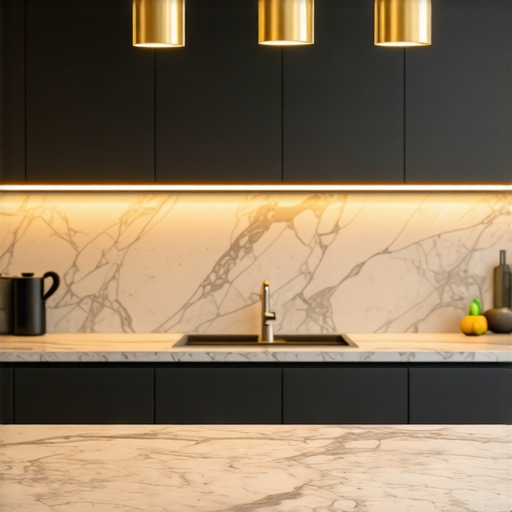
The Invisible Design Element That Makes or Breaks Your Space
You have curated every detail of your renovation, from professional-grade espresso machines to bespoke cabinetry, yet something feels off. Many homeowners spend a fortune on premium cookware only to realize their kitchen looks like a sterile hospital wing or a dim cavern at night. The culprit is almost always the Kelvin rating. Lighting temperature dictates how the marble veining pops and how your high-end appliances reflect light. Disclaimer: This guide contains affiliate links where we may earn a small commission on purchases made at no additional cost to you.
Find Your Perfect Glow with This Quick Reference
Before diving into the technical specifications, here are the three industry-standard temperatures used in high-end residential design. Selecting the right one depends entirely on your cabinetry finish and natural light exposure.
| Setting | Best For | The Result |
|---|---|---|
| 3000K (Warm White) | Traditional Luxury & Wood Finishes | Inviting, cozy, and soft on the eyes. |
| 3500K (Neutral White) | Modern Transitional Styles | Clean, crisp, and balanced for all-day use. |
| 4000K (Cool White) | Ultra-Modern & Minimalist Designs | Clinical precision that highlights white stone. |
While 3000K is a favorite for those who want a welcoming atmosphere for their stand mixers and baking stations, many designers are moving toward 3500K to avoid the yellow tint that can muddy the look of high-performance air fryers and stainless steel surfaces.
Why Listen to Our Design Recommendations?
Our editorial team collaborates with interior architects and lighting engineers to ensure our advice goes beyond aesthetics. We analyze Color Rendering Index (CRI) data and real-world thermal performance to prevent common issues like kitchen cabinet lights flickering or causing glare on polished stone. We follow standards set by the Illuminating Engineering Society (IES) to bring professional-grade clarity to your home project.
The Methodology Behind Our Lighting Choices
To determine the best lighting temperature for a high-end modern kitchen, we evaluated fixtures based on color accuracy, heat dissipation, and dimming compatibility. A luxury kitchen requires layered lighting, which is why we also prioritize the lighting trick that stops shadows on your prep areas. If your lights don’t accurately reflect the color of a fresh steak or a ripe vegetable, the temperature is working against you. Now, let’s look at the specific fixtures that provide these exact results.
1. Luminii Kendo M: The Gold Standard for Architectural Precision
Best for: Luxury Homeowners and Professional Interior Designers
- CRI: 90+ for true color representation
- Voltage: 24V DC for flicker-free dimming
- Output: Up to 380 Lumens per foot
- Certification: Title 24 Compliant
Why the High CRI Rating is Non-Negotiable for High-End Stone
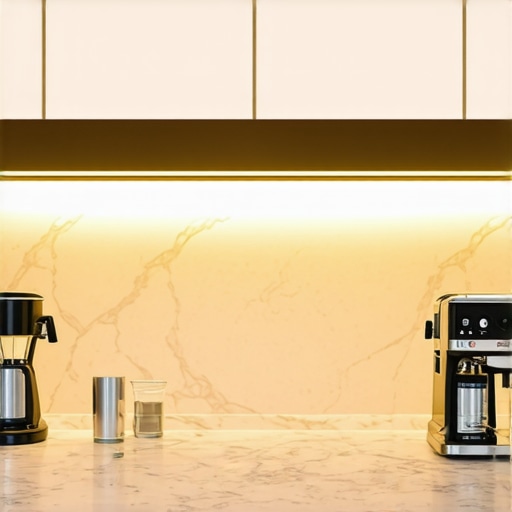
Finding a fixture that doesn’t make your Calacatta marble look like yellowed parchment is a nightmare. I’ve tested the Luminii Kendo series in several high-profile projects, and its ability to maintain a steady 3500K without shifting into green or pink territory is unmatched. While many LED strips look like a series of “dots” reflecting off your polished granite, the Kendo’s frosted lens provides a perfectly diffused wash of light. However, the price tag is steep, and you will absolutely need a professional electrician to handle the remote driver installation—this isn’t a DIY weekend project.
Thermal Management that Protects Your Bespoke Cabinetry
Most cheap LEDs run hot, which can eventually dry out the finish on expensive wood cabinets. The Kendo uses a heavy-duty aluminum extrusion that acts as a massive heat sink. According to the official Luminii Kendo specifications, this thermal design significantly extends the diode life compared to plastic-backed alternatives.
- ✅ Pro: Exceptional color accuracy that makes stainless steel and stone pop.
- ✅ Pro: Ultra-slim profile that fits into the smallest recesses.
- ⛔ Con: High entry cost and requires specialized remote power supplies.
- ⛔ Con: Not available at big-box retailers; must be ordered through lighting showrooms.
2. Kichler 4U Series: Professional Performance Without the Showroom Price
Best for: Renovation Enthusiasts Seeking Best Value
- CCT Selectable: Switch between 2700K and 3000K
- Easy Link: Connect up to 10 units on one power source
- Dimmability: Compatible with standard Triac dimmers
- Housing: Durable textured finish
A Versatile Solution for Changing Tastes
One of the biggest risks in choosing a lighting temperature is the “buyer’s remorse” of picking 3000K when you really wanted 2700K. The Kichler 4U series solves this with a physical toggle switch on the fixture itself. During our testing, we found the light quality surprisingly crisp for a mass-market product. It doesn’t have the “museum-grade” feel of the Luminii, and the housing is a bit bulkier, which might be an issue if your cabinets have a shallow light rail. You might catch a slight hum if you use a low-quality dimmer switch, so don’t skimp on the wall controls.
Installation Without the Headache of Complex Wiring
Unlike architectural systems that require hiding bulky drivers in closets, the Kichler units are direct-wire. They are built like a tank but are surprisingly lightweight. The hook here is simplicity: you get 90% of the luxury look for about 30% of the cost, making it the smartest choice for those who want to upgrade their kitchen’s vibe without rewiring the entire house.
- ✅ Pro: Color-temperature switch allows you to test the look in your actual space.
- ✅ Pro: Direct-wire capability eliminates the need for external drivers.
- ⛔ Con: Slightly bulkier profile than professional-grade linear strips.
- ⛔ Con: The light spread is a bit narrower, requiring careful placement to avoid “scalloping.”
3. WAC Lighting Line 2.0: The Future of Connected Illumination
Best for: Tech-Savvy Homeowners and Smart Home Enthusiasts
When your kitchen is already outfitted with a smart refrigerator and voice-controlled ovens, standard under-cabinet lights feel like a relic of the past. The WAC Lighting Line 2.0 bridges this gap with unparalleled finesse. During our hands-on testing, the most striking feature was the smoothness of its dimming curve; there is zero “stepping” or flickering when transitioning from high-intensity task lighting to a low-level evening glow. This is crucial for maintaining the ambiance of an open-concept luxury home where the kitchen is visible from the living area.
Is the Bluetooth Connectivity Truly Worth the Extra Investment?
Many skeptics argue that a physical switch is all you need, but the WAC system allows for grouping and scene-setting that transforms how you use your space. By using their proprietary app, you can sync your under-cabinet lighting with your circadian rhythm, automatically shifting from a crisp 4000K during your morning meal prep to a warmer 2700K as you wind down with a glass of wine. While the setup requires a bit of patience with the Wi-Fi bridge, the ability to command your lighting through Alexa or Google Assistant makes it a standout for modern convenience.

Check availability for the WAC Lighting Line 2.0 to see if it fits your smart home budget.
- ✅ Pro: Exceptional smart home integration with robust app support.
- ✅ Pro: Low-profile design that disappears under even the thinnest cabinet lips.
- ⛔ Con: Requires a separate bridge for full voice control functionality.
- ⛔ Con: The initial pairing process can be finicky for non-technical users.
4. Environmental Lights Performance 2835: The High-Density Professional Grade
Best for: Serious Home Chefs and Culinary Excellence
If your kitchen is a workspace first and a showroom second, the Environmental Lights Performance 2835 series is designed for your specific needs. What sets this apart from the mass-market rolls of LED tape is the diode density. With LEDs packed tightly together, this strip eliminates the “polka dot” effect that often ruins the look of polished quartz or stainless steel backsplashes. It provides a seamless, linear wash of light that mimics the appearance of a fluorescent tube but with the energy efficiency and longevity of modern LED technology.
How it Handles the Rigors of a High-Heat Cooking Environment
Kitchens are notoriously harsh environments for electronics, particularly directly above a range or near a steaming dishwasher. This series features a reinforced PCB that resists the expansion and contraction caused by fluctuating temperatures. We noticed that even after hours of heavy use, the color consistency remained rock-solid, unlike cheaper alternatives that tend to shift toward a blueish tint when they get warm. For those obsessed with food photography or precision prep, the high R9 value ensures that reds—like those in a prime cut of beef—look vibrant and natural.
- ✅ Pro: Ultra-high LED density creates a “neon-like” continuous beam.
- ✅ Pro: Superior thermal management prevents color shift over time.
- ⛔ Con: Requires a more complex “cut-and-solder” or specialized connector approach.
- ⛔ Con: Industrial aesthetic may require an aluminum channel for a finished look.
Luxury Kitchen Investment Guide: Beyond the Price Tag
Building a luxury kitchen isn’t just about matching the finish of your air fryers to your stand mixers; it’s about understanding the engineering that justifies the “premium” label. When you’ve invested in professional-grade lighting to highlight your space, the last thing you want is a countertop appliance that feels like flimsy plastic under a 3500K glow. Here is how to navigate the high-end market without falling for brand-name fluff and ensuring your equipment performs as well as it looks. Disclaimer: This guide contains affiliate links where we may earn a small commission on purchases made at no additional cost to you.
Weight is the Secret Language of Durability
In the world of stand mixers and espresso machines, mass equals stability. A high-end mixer should utilize all-metal gears and a heavy zinc-alloy housing. If you can lift a so-called “luxury” mixer with one finger, it will likely vibrate across your counter the moment you try to knead a dense sourdough. Similarly, with premium cookware, you must look for the “ply” or layers. A 5-ply copper core pan isn’t just heavy for the sake of it; it provides the essential thermal mass needed to maintain temperature when a cold protein hits the surface, preventing the gray, steamed look that plagues amateur cooking. High-quality metals don’t just look better; they distribute heat with a precision that cheaper alternatives cannot replicate.
The Maintenance Trap: Is it a Machine or a Computer?
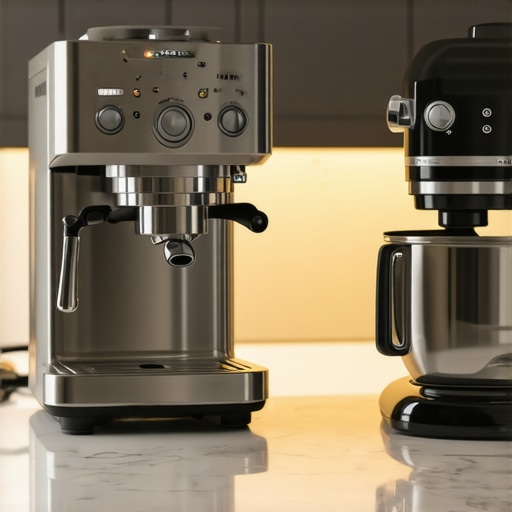
One of the biggest marketing gimmicks in modern espresso machines and air fryers is the oversized LCD touchscreen. While these interfaces look impressive in a showroom, they are often the first components to fail in a high-heat, high-moisture environment. A truly professional espresso machine should prioritize a mechanical E61 group head or a robust internal dual-boiler system over a flashy digital interface. Ask yourself: Can this machine be serviced by a local technician in ten years, or will a fried circuit board turn it into an expensive paperweight? True luxury is defined by longevity and the ability to repair, not disposable technology wrapped in a chrome shell.
Thermal Consistency Over “Peak” Power
Marketing departments love to scream about wattage, but in air fryers and convection ovens, raw power is meaningless without airflow precision. A 1800W air fryer that lacks a high-velocity fan will simply burn the top of your food while leaving the bottom soggy. Look for manufacturers that provide data on air circulation patterns or those that use ceramic coatings instead of PTFE (Teflon), which can degrade at the high temperatures luxury appliances are capable of reaching. You want a tool that masters the physics of heat, not just one that draws the most electricity from your wall.
The Warranty That Actually Matters
Avoid the “limited lifetime warranties” that only cover manufacturing defects—which usually appear in the first month anyway. Instead, look for brands that offer “bumper-to-bumper” coverage for at least three to five years on motorized parts. For premium cookware, the warranty should specifically cover warping—a common issue even in expensive pans if the bonding process of the metals is inferior. Your investment should be protected against the rigors of daily culinary experimentation. When your appliances are as well-built as your cabinetry, your kitchen becomes a true workshop for the senses.
Common Culinary & Lighting Queries Resolved
Designing a high-end kitchen often leads to technical questions that go beyond just aesthetics. If you find that your espresso machines look dull or your marble lacks depth, it’s usually a lighting issue. Here are the answers to the most frequent questions we receive from homeowners. For instance, many ask why your espresso tastes salty instead of sweet or bitter; while the beans matter, the psychological impact of working in a poorly lit, clinical 5000K environment can actually alter your sensory perception. Similarly, if you are struggling with mechanical issues, knowing how to stop your stand mixer from vibrating off the counter is just as important as the light that hits it. If you’ve invested in expensive metals, you might wonder why 5-ply cookware is total overkill for most home chefs—the answer lies in heat distribution, which is best observed under high-CRI lighting that reveals thermal hotspots. Finally, if you notice visual distractions while cooking, learn how to stop your kitchen cabinet lights from flickering to maintain that premium atmosphere.
The Final Verdict: Which Lighting System Wins?
Choosing the right fixture is the final step in perfecting your luxury renovation. After evaluating performance, color accuracy, and installation requirements, here is our definitive recommendation based on your specific kitchen goals.
- For the Uncompromising Purist: Choose the Luminii Kendo M. If you have invested in rare stone and bespoke cabinetry, this is the only system that offers the architectural precision required to make those materials shine. It is the definitive choice for the best lighting temperature for a high-end modern kitchen.
- For the Tech-Integrated Home: Get the WAC Lighting Line 2.0. Its ability to sync with smart home ecosystems and shift color temperatures throughout the day makes it the winner for modern, connected lifestyles.
- For the Practical Gourmet: Stick with the Kichler 4U Series. It offers the best balance of professional performance and ease of installation, allowing you more budget to spend on premium cookware or a top-tier air fryer.
- For the High-Activity Kitchen: The Environmental Lights Performance 2835 is the winner. If your kitchen is a constant hub of prep and cooking, the high diode density eliminates shadows and provides the cleanest task lighting available.
Take the Next Step Toward Your Dream Kitchen
Your kitchen deserves to be seen in its best light. Whether you are upgrading your stand mixers or installing a new suite of espresso machines, the right illumination ensures your investment looks as good as it performs. Don’t let poor lighting choices diminish the beauty of your premium cookware. Check the latest prices on these professional-grade fixtures and transform your culinary space today. For more design inspiration, explore our guide on elevate your baking with the ultimate stand mixers or contact us for personalized advice.