
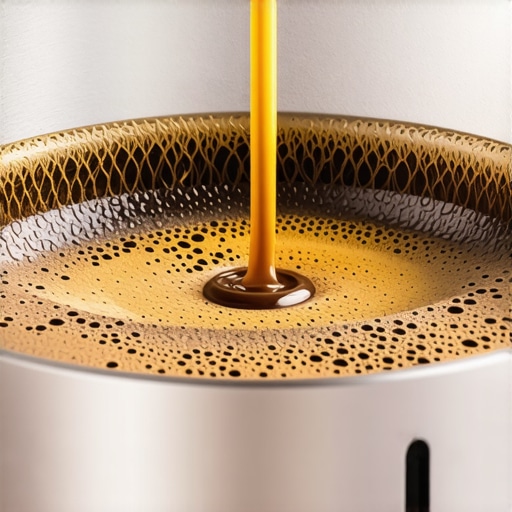
Why Your Espresso Shot Flows Too Fast Regardless of Grind
You have tightened your burrs until they almost touch. The dial is at zero. Yet, the liquid gushes from the portafilter like a broken water main. This isn’t just a nuisance; it is a systemic failure of the extraction process that wastes expensive beans and ruins the luxury of a home cafe experience. After fifteen years of rebuilding E61 group heads and calibrating high-end espresso machines, I have seen this frustration break the spirit of even the most dedicated home baristas. The assumption that grind size is the only lever for flow control is a fundamental misunderstanding of espresso physics. We are dealing with fluid dynamics under pressure, and sometimes the grind is not the culprit.
The Engineering Reality of Hydraulic Resistance
Espresso relies on the puck of coffee creating enough resistance to hold back nine bars of pressure. If the water finds a path of least resistance, it will exploit it. This is often a result of the puck prep mistake that ruins every espresso shot—uneven distribution. When the density of the coffee bed is inconsistent, high-pressure water carves a channel through the loose areas. The result? A watery, sour mess. Even if your grind is fine enough to make Turkish coffee, a single micro-fissure in the puck will cause a total collapse of hydraulic resistance. You can hear it—a sharp hiss followed by a blonding stream that happens far too early in the cycle.
The Impact of Water Temperature and Viscosity
Temperature plays a silent role in flow rate. Hotter water has lower viscosity, meaning it moves through the coffee bed faster. In many prosumer setups, machines may overheat during back-to-back shots, causing the second or third extraction to run significantly faster than the first. This thermal drift changes how the oils in the coffee are emulsified. If your PID controller isn’t calibrated or your group head is too hot, the water will simply slip through the grounds. It is a technical truth that many ignore: thermal stability is just as vital as grind size. According to standards set by the Specialty Coffee Association (SCA), maintaining a variance of less than 1 degree Celsius is vital for repeatable results. When that stability fails, the flow rate follows suit.
The Physics of Basket Geometry and Headspace
Precision baskets like those from VST or IMS have higher total hole areas than stock baskets found in standard luxury kitchen appliances. If you switched to a high-flow competition basket without adjusting your dose, your shots will gush. Furthermore, the gap between the coffee puck and the shower screen—the headspace—dictates how the puck expands. Too much headspace allows the puck to break apart under the initial hit of water. This mechanical failure occurs before the pressure even reaches 9 bars. You might also need to burr alignment secret to ensure that your grinder isn’t producing too many boulders that allow water to bypass the fines. Proper alignment ensures a unimodal distribution that actually traps water rather than letting it leak through.
The Cost of Scale and Internal Blockages
Internal scaling is the silent killer of pressure consistency. If you have neglected to descale a dual-boiler espresso machine, mineral deposits can partially clog the gicleur—the tiny orifice that restricts flow to the group head. This seems counterintuitive. How does a clog make it flow faster? It causes erratic pressure spikes or prevents the pre-infusion phase from properly saturating the puck. A dry puck is a brittle puck. When the full 9 bars hit a dry, unevenly saturated bed, it shatters the structure. You see a momentary pause, then a violent surge of liquid. I have felt the weight of industrial-grade steel boilers pitted by calcium; it is an expensive repair that starts with poor water filtration.
Market Corrections and Professional Standards
The industry is moving toward flow-profiling and needle-valve control. This allows baristas to manually override the pump’s output, compensating for bean age and CO2 content. In the next 24 months, expect to see more espresso machines and stand mixers integrating smart sensors that detect flow anomalies in real-time. We are shifting away from static 9-bar extractions toward dynamic pressure curves. This tech helps bypass the limitations of older equipment, but it still requires a foundation of quality premium cookware and precise tools. Organizations like IEEE have begun looking into the standardization of PID logic in high-end kitchen appliances to ensure these “smart” features actually deliver on their promises.
The Executive Strategy for Perfect Extraction
If your shots are running fast, stop moving the grind dial. First, check your dose; a half-gram increase can often provide the resistance your grind is missing. Second, inspect your shower screen for uneven water dispersion. Third, verify your water temperature. My professional recommendation: if you are using a light roast, increase your dose and use a slower pre-infusion. If you are using a dark roast, drop the temperature to increase viscosity and slow the flow. Stop chasing the grind and start managing the hydraulics.
How does bean age affect flow?
Fresh beans contain more CO2, which creates back-pressure during extraction. As beans age and lose gas, they offer less resistance, requiring a finer grind or a higher dose to maintain the same flow rate.
Can a worn group gasket cause fast flow?
Not usually. A worn gasket causes leaks around the outside of the portafilter. Fast flow *through* the portafilter is almost always an internal puck or pressure issue, not a seal problem.
Does tamping harder slow down the shot?
Only to a point. Once you have compressed the air out of the coffee bed, additional force does not increase density. Tamping consistently is more important than tamping heavily.
Why does my bottomless portafilter spray?
Spraying is a classic sign of channeling. It means the water has found a hole in the coffee puck and is exiting at high velocity. This is a puck prep issue, not a machine defect.