
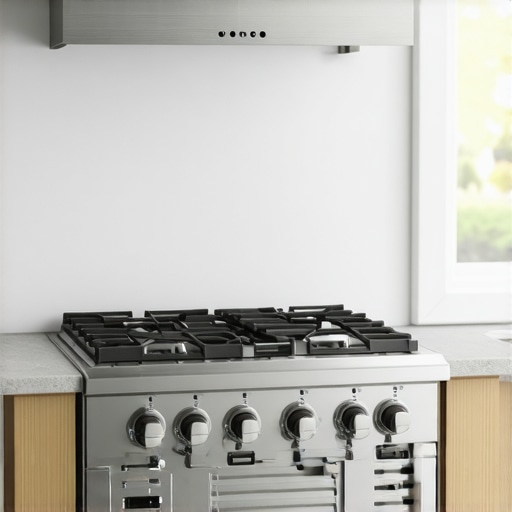
The Truth About Professional Ranges in Small Kitchens
Installing a 36-inch or 48-inch high-output range in a compact urban kitchen isn’t just about making a design statement; it is a structural gamble that most homeowners lose. After fifteen years in the high-end appliance sector, I have witnessed the fallout of the ‘bigger is better’ mentality. People want the prestige of industrial burners in an 80-square-foot galley. The result? Avoidable failure. When you cram a professional-grade heating element into a space designed for standard residential use, you aren’t just buying a stove. You are redesigning the thermal dynamics of your home. If the engineering doesn’t match the square footage, the investment is dead on arrival. This is about safety, property value, and the physics of heat. You wouldn’t put a jet engine in a compact car. Why do it to your kitchen?
The Engineering Reality
A professional range operates on a different plane of energy than your standard big-box store unit. We are talking about 18,000 to 25,000 BTUs per burner. In a small kitchen, that volume of heat creates a massive thermal envelope. If your cabinetry isn’t rated for those temperatures, the finish will bubble. This isn’t a theory; it is a common insurance claim. Standard residential gas lines are often half-inch. True professional units often demand a three-quarter-inch feed to sustain the necessary flow. According to the Association of Home Appliance Manufacturers, high-output burners require specific air exchange rates that small floor plans rarely provide. Without a massive increase in CFM, your luxury kitchen becomes a sauna of grease and carbon monoxide. You must account for makeup air—a requirement many local codes enforce once you cross the 400 CFM threshold on your hood. This often means cutting a hole in your exterior wall just to let air back in so your furnace doesn’t backdraft. Most ignore this. The air becomes thick. The hidden vent problem that makes your kitchen smell like grease is usually just the tip of the iceberg.
[image_placeholder_1]
The Hidden Cost of High BTUs
Heat behaves like water; it finds the path of least resistance. In a tight space, that path is usually your countertops and upper cabinets. I’ve seen quartz countertops crack from thermal shock because a 36-inch range was installed with zero side clearance. Pro-style ranges require ‘combustible material’ offsets that the glossy brochures don’t always emphasize. You also lose your prep space. In a small footprint, every inch is a premium. If you sacrifice 12 inches of counter for a larger range, you’ll find yourself prepping on the dining table. It’s a workflow disaster. Many homeowners think they will compensate by using other tools like air fryers or smaller appliances, but the range remains the center of gravity. If you can’t stand near it because the ambient temperature has hit 95 degrees, the kitchen is broken. The how-to-fix-a-loose-knob-on-your-premium-gas-range guide won’t help when the entire manifold has expanded due to poor ventilation.
Market Corrections Ahead
The industry is shifting. The next 18 months will see a massive push toward high-end induction. Why? Because induction doesn’t heat the room; it heats the pan. In a small luxury kitchen, induction provides the same precision as gas without the 30% waste heat that turns your apartment into a furnace. Regulatory changes in urban centers are already targeting gas hookups in new builds. If you install a massive gas range today, you might be looking at a depreciating asset by 2026. Buyers are becoming savvy about indoor air quality. They look at the hood as much as the range. If they see a 1200 CFM beast in a tiny room, they know the electrical bill and the noise level will be a nightmare. Lighting also suffers. A massive professional hood often blocks the natural flow of light. You’ll need to reconsider your lighting trick that stops shadows on your prep area just to see what you are chopping. It’s a domino effect of compromises.
The Executive Verdict
If you are working with less than 120 square feet, do not buy a 36-inch gas range. It is a ‘Sell’ on the ROI scale. Instead, invest in a 30-inch high-performance induction unit or a professional-grade 30-inch gas range from a brand that specializes in zero-clearance insulation. Use the saved space for premium cookware or an integrated espresso station. Quality beats quantity every time in a tight layout. Focus on the CFM-to-volume ratio. If your hood can’t clear the air in three minutes, it’s too small, or your range is too big. Stop buying for the ‘look’ and start buying for the output capacity of the room. Your cabinets, and your lungs, will thank you.
Frequently Asked Questions
Can I install a professional range against a side wall?
Never. Most professional ranges require at least 6 to 12 inches of clearance from side walls to prevent fire hazards and heat damage. Always check the manufacturer’s ‘combustible surfaces’ map before cutting your stone.
Why is my range hood so loud?
In small kitchens, hoods are often oversized for the ductwork. If you force 900 CFM through a 6-inch duct, you get turbulence. That noise is the sound of air struggling to escape. It’s inefficient and annoying.
Does induction actually perform like gas?
Better. It responds faster and offers a lower simmer than most professional gas burners. For small kitchens, it is the only way to get pro-level results without the massive heat gain.