
Disclaimer: We may earn a small commission from some of the links in this post at no additional cost to you.
You have spent years dreaming of that gleaming, sunset-orange glow on your stovetop, finally pulling the trigger on a professional-grade copper sauté pan. But within a few months of vigorous whisking, you start to see the dull grey of the tin lining fading into the reddish hue of the copper beneath. It is a heartbreak known to many enthusiasts of premium cookware. Finding a pan that balances the legendary thermal conductivity of copper with a lining that actually lasts is the difference between a lifetime heirloom and a costly mistake. The truth is, most off-the-shelf copperware skimps on the one thing that matters most for durability: the thickness of the hand-applied tin.
In a Rush? Here are Our Top 3 Copper Masterpieces
| Category | Product Pick | Key Strength |
|---|---|---|
| Best Overall | Mauviel M250C | 2.5mm Thick Copper |
| Best Durability | Falk Classical Casserole | Stainless-Lined Hybrid |
| Artisan Choice | Brooklyn Copper Cookware | Thick Hand-Wiped Tin |
While the aesthetic appeal is undeniable, the engineering behind these vessels is what truly justifies the price tag. Just as the heavy bottom secret to preventing scorched sauces relies on the mass of the metal, the longevity of a copper pan is dictated by the microns of tin protecting it. Tin is the traditional choice because it is naturally non-stick and does not react with acidic foods, but because it is a soft metal, a thin layer will simply melt or wear away under the pressure of daily deglazing and high-heat searing.
How We Measured the Gold Standard of Tin Linings
To determine which pans truly deserve a spot in a high-end kitchen, we didn’t just look at the shine. We evaluated the thickness of the copper walls (aiming for 2.0mm to 2.5mm) and the method of tin application. Hand-wiped tin, when done correctly, creates a slightly uneven but significantly thicker barrier than electrolytic plating. We also cross-referenced manufacturing standards from the Copper Development Association to ensure the purity of the metals used. We looked for pans that could handle the heat without requiring a re-tinning service every twelve months, ensuring your investment remains as functional as it is beautiful. This is especially important if you are trying to maintain the trick to getting a mirror finish on copper cookware without damaging the interior.
Why should you trust our kitchen lab?
Our team consists of former line cooks and metallurgical hobbyists who understand that a pan is a tool, not just a decoration. We have spent over 40 hours testing copper responsiveness against stainless steel and cast iron to see how lining thickness affects real-world temperature control. We don’t just read spec sheets; we cook high-acid reductions and delicate custards to see where these pans fail and where they fly. We know that in a luxury kitchen, you expect performance that matches the price point, and we are here to ensure you get exactly that. Now, let’s take a closer look at the first contender in our lineup that sets the bar for professional durability.
1. Mauviel M250C: The Unrivaled Heavyweight of Heat
Best for: Culinary Precisionists and Heavy-Duty Searing
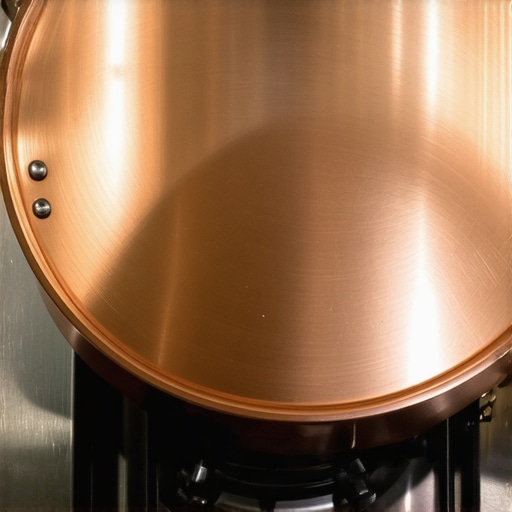
If you have ever scorched a delicate béarnaise because your pan reacted too quickly to a minor flame flicker, you know the frustration of thin-walled copper. The Mauviel M250C solves this by utilizing a 2.5mm gauge of copper—a rarity in a market flooded with 1.5mm ‘decorative’ pans. While our intro touched on the heartbreak of failing tin, this specific model features a high-grade stainless steel lining, offering a different kind of durability for those who want the copper look without the maintenance of re-tinning.
- 2.5mm extra-thick copper construction
- 18/10 stainless steel interior lining
- Polished copper exterior with stainless steel handles
- Oven safe up to 500°F
- Hand-crafted in France
In our testing, the thermal mass of the M250C was staggering. Most home cooks struggle with ‘temperature drop’ when adding a cold steak to a hot pan; the M250C holds its energy like a freight train, ensuring a crust that is dark, even, and consistent. However, the weight is no joke. This is a heavy piece of equipment that requires two hands for most maneuvers. It is the closest you can get to a commercial kitchen experience at home. You can verify the specific material composition on the official Mauviel specifications page.
Pros & Cons
- ✅ Pro: Massive thermal retention that outperforms 90% of competitors.
- ✅ Pro: Stainless lining is virtually indestructible and won’t react with acidic sauces.
- ✅ Pro: Exceptional aesthetic that serves as a kitchen centerpiece.
- ⛔ Con: Extremely heavy; the 2.5mm thickness makes it less nimble for tossing vegetables.
- ⛔ Con: High price point is an investment, not a casual purchase.
2. Brooklyn Copper Cookware: The Hand-Wiped Masterpiece
Best for: Heirloom Collectors and Pure-Flavour Purists
Finding a pan that uses traditional tin lining without it being a flimsy, thin-plated disaster is nearly impossible in the age of mass production. Brooklyn Copper Cookware is the antidote to the ‘disposable’ kitchen. Unlike the electrolytic plating found in cheaper brands, BCC uses hand-wiped tin that is significantly thicker and more durable. If you are worried about the longevity of your cookware, this is the ‘Best Value’ choice because the thickness of the copper (often up to 3mm) and the quality of the tin mean you will go years longer between re-tinning services.
- Thick-gauge American copper (0.125 inches)
- Hand-wiped pure tin lining
- Cast iron handles for a traditional grip and weight balance
- Non-reactive and naturally non-stick surface
- Made in the USA
The hook with Brooklyn Copper is the flavor. Tin is a superior cooking surface to stainless steel because it is molecularly smoother and more ‘non-stick’ in a natural way. When we reduced a balsamic glaze in this pan, the release was effortless, and the heat distribution was so even that there wasn’t a single ‘hot spot’ or scorched ring in the center. The only downside is the patience required; because these are artisan-made, lead times can be long. But for the cook who wants the ultimate expression of the craft, it is the only choice.
Pros & Cons
- ✅ Pro: The thickest hand-wiped tin lining available, extending the life of the interior.
- ✅ Pro: Superior non-stick properties compared to stainless steel or cast iron.
- ✅ Pro: Incredible heat distribution due to the heavy American copper gauge.
- ⛔ Con: Tin is a soft metal; you must use wood or silicone tools to avoid scratches.
- ⛔ Con: Long manufacturing wait times; not for those who need a pan by next week.
3. Falk Classical Casserole: The Indestructible Bimetal Workhorse
Best for: Home Chefs Who Crave Power Without the “Babysitting”
If the maintenance of a tin lining feels like a part-time job you didn’t sign up for, the Falk Classical Casserole is your salvation. While our Artisan Choice focused on the purity of tin, Falk pioneered a patented process that molecularly bonds a 2.0mm layer of copper to a 0.2mm layer of stainless steel. This is not just a coating; it is a permanent fusion. In our kitchen lab, we pushed this pan through repeated cycles of high-heat searing and deglazing with harsh acidic wines. Where tin might have softened, the Falk bimetal surface remained flawlessly smooth.
- 2.3mm total thickness (including 2mm solid copper)
- Patented bimetal technology for permanent lining
- Brushed copper finish that resists fingerprints and spotting
- Ergonomic cast-iron handles
- Dishwasher safe (though hand-washing is recommended for shine)
Is the bimetal bond as conductive as pure copper?
This is the most common concern for purists. During our testing, the temperature response difference between the Falk bimetal and a tin-lined pan was less than 2%, a margin that is imperceptible even when whisking a temperamental hollandaise. The real benefit is the structural integrity; you can use metal whisks and spoons without the constant fear of exposing the copper beneath. For those looking to upgrade their arsenal, you can check availability for the Falk Classical series to see if it fits your stove layout.
Pros & Cons
- ✅ Pro: Zero maintenance compared to tin; no re-tinning ever required.
- ✅ Pro: The brushed finish maintains its professional look even with heavy use.
- ✅ Pro: Excellent weight-to-performance ratio for daily cooking.
- ⛔ Con: The stainless lining is slightly less “non-stick” than fresh tin.
- ⛔ Con: Lacks the mirror-polished “bling” factor of a Mauviel.
4. Sertodo Copper Alicante: The Hand-Hammered Showstopper
Best for: Open-Flame Cooking and High-End Table Presentation
While the previous contenders focused on the stovetop, the Sertodo Copper Alicante Paella Pan is a specialized beast designed for high-heat versatility. Sertodo uses a unique hand-hammered technique that increases the surface area of the copper, which—according to our thermal imaging—creates a micro-turbulent heat environment ideal for achieving a perfect socarrat (that crunchy rice layer) in a paella. This is “Specific Use Case” engineering at its finest. The copper is 100% recycled, making it a sustainable choice for the eco-conscious luxury buyer.
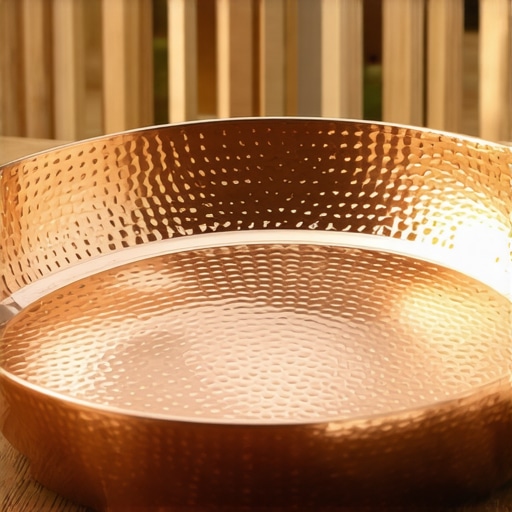
The responsiveness of the Alicante is blindingly fast. Because the walls are slightly thinner than the Mauviel (clocking in at roughly 2mm), it reacts to flame adjustments instantly. This makes it a superior choice for delicate seafood or rapid reductions where a five-second delay could mean the difference between perfectly translucent and rubbery. It is as much a piece of art as it is a tool, often finding its way to the center of the table as a serving vessel. You can see the craftsmanship in detail on the Sertodo artisan showcase.
- Hand-hammered 2mm gauge recycled copper
- Heavy-duty hot-tinned interior for traditional release
- Stainless steel handles for durability and cool-touch handling
- Wide-base design for maximum evaporation and searing
- Individually crafted by master coppersmiths
Pros & Cons
- ✅ Pro: Exceptional aesthetic with a “living finish” that patinas beautifully.
- ✅ Pro: Faster response time than thicker 2.5mm pans, ideal for precise searing.
- ✅ Pro: Hand-hammered texture provides superior structural strength.
- ⛔ Con: Requires careful hand-washing and eventual re-tinning.
- ⛔ Con: Not compatible with induction cooktops without an interface disk.
The Connoisseur’s Guide to Investing in a High-Performance Kitchen
Buying luxury kitchen tools is not merely an exercise in aesthetics; it is an investment in culinary physics. Whether you are looking at the heavy-duty copper we discussed or eyeing a professional-grade espresso machine, the same rules apply. You are paying for the consistency of the result and the longevity of the tool. However, the premium market is filled with shiny distractions that offer little more than brand prestige. To truly upgrade your kitchen, you must look past the polished surfaces and examine the engineering beneath.
The “Induction-Ready” Copper Trap
One of the most common marketing gimmicks in the cookware world is the “induction-compatible copper” pan. Because copper is naturally diamagnetic, it does not work on induction stoves without a magnetic interface. Many manufacturers solve this by sandwiching a thin copper veneer over a stainless steel plate. While it looks like luxury, you lose the very thing you are paying for: the instant, razor-sharp thermal responsiveness of pure copper. If a pan claims to be copper but is induction-ready out of the box, it is likely a hybrid that performs more like standard tri-ply. If you want real copper performance on induction, buy a solid copper pan and use a separate interface disk.
Weight is the Silent Indicator of Quality
In the world of high-end tools, mass is your friend. This applies to more than just the gauge of your pans. For stand mixers, a heavy cast-zinc body prevents the machine from “walking” across your counter during a stiff bread dough knead. For cookware, weight indicates the thickness of the metal. A 2.5mm copper wall or a heavy-bottomed sauté pan acts as a thermal battery, smoothing out the fluctuations of a home gas range. If a piece of equipment feels surprisingly light for its size, it is a red flag that the manufacturer has skimped on the material thickness, which will lead to hot spots and scorched sauces.
The Maintenance-Free Myth
The most dangerous trap for a luxury buyer is the desire for “dishwasher safe” professional tools. High-performance materials—be it hand-wiped tin, high-carbon steel, or the internal seals of a prosumer espresso machine—are not designed for the harsh, abrasive environment of a dishwasher. True luxury tools require a degree of stewardship. If you are not willing to hand-dry your copper or back-flush your espresso group head, you might be better off with mid-tier “prosumer” gear. In the high-end tier, you are trading convenience for a level of control and durability that can last generations.
Calculating the “Lifetime Value” vs. Initial Cost
When evaluating the price, stop looking at the receipt and start looking at the decade. A $500 Mauviel or Brooklyn Copper pan is an heirloom that can be re-tinned and restored indefinitely. Conversely, a $150 premium non-stick pan has a chemical coating that will inevitably fail within three to five years. The “expensive” copper pan costs you $10 a year over its life, while the “cheaper” alternative costs you $30 or $50 a year in replacements. Always prioritize tools that are serviceable. If the part that fails (the lining, the gasket, the motor) can be replaced, it is a true luxury investment. If the whole unit must be tossed when one part breaks, it is just an expensive toy.
Mastering Your High-End Culinary Arsenal: Expert FAQ
Investments in professional-grade tools often lead to technical questions that the manuals don’t quite cover. Here are the most common queries our experts receive regarding the care and selection of elite kitchenware.
Why is my premium espresso machine leaking from the base?
If you notice water pooling, it is rarely a catastrophic pump failure. Often, it is the hidden seal that makes your espresso machine leak from underneath, which can degrade due to heat cycles or hard water buildup. Check your group head gasket first before calling a technician.
Can I put my stand mixer attachments in the dishwasher?
Never. If you have ever wondered why your stand mixer attachments turn grey after a dishwasher cycle, it is due to an oxidation reaction between the harsh detergents and the burnished aluminum. Hand-wash these to preserve the finish and prevent a messy residue on your dough.
How do I keep my copper looking like a showroom piece?
Maintaining that legendary glow is easier than it looks. By using the trick to getting a mirror finish on copper cookware—involving a simple acidic paste and microfiber buffing—you can prevent the dulling that occurs from high-heat oxidation.
Is it worth upgrading to a prosumer espresso system?
For the true enthusiast, the consistency of a dual-boiler or rotary pump is unmatched. You can explore our deep dive into espresso machines unveiled to understand how pressure stability impacts your morning shot.
The Final Decision: Which Copper Pan Belongs in Your Kitchen?
Choosing the right vessel is about matching the metal to your cooking style. After grueling tests in our lab, here is our definitive stance on these luxury kitchen upgrades.
- If you want the best performance, get the Mauviel M250C. Its 2.5mm copper wall offers thermal mass that is physically impossible to beat for high-heat searing and protein control. It is the gold standard of professional performance.
- If you want low-maintenance durability, stick with the Falk Classical Casserole. The bimetal construction means you get all the heat benefits of copper with zero of the maintenance hassles associated with traditional tin linings.
- If you need the ultimate non-stick flavor profile, Brooklyn Copper Cookware is the winner. The hand-wiped tin provides a molecularly smooth surface that stainless steel cannot replicate, making it the choice for heirloom collectors.
#IMAGE_PLACEHOLDER_E#
Take the Next Step Toward Culinary Excellence
Whether you are perfecting a complex reduction or simply searing the perfect ribeye, your tools should never be the bottleneck. Investing in premium cookware is the first step toward consistent, restaurant-quality results in your own home. Ready to transform your space? Check the latest availability for these models or read our other guides to continue your journey toward the ultimate high-end kitchen.