
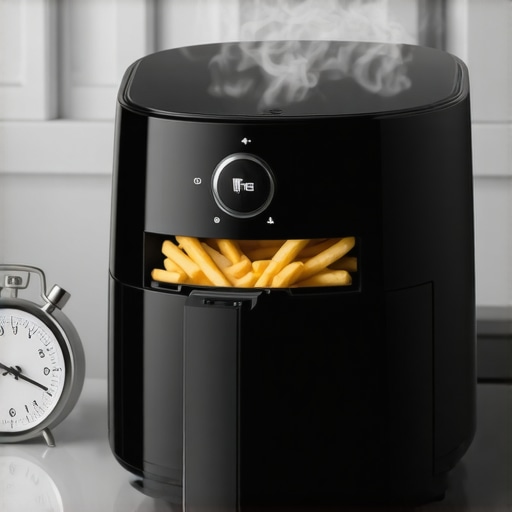
The Air Fryer Preheating Myth: Does It Actually Save Time?
Preheating an air fryer is a psychological carryover from the era of massive, inefficient thermal mass ovens. After fifteen years of designing high-end culinary spaces and testing every convection-based appliance on the market, I can tell you that for 90% of home cooking, the preheat cycle is a ritual without a purpose. We are dealing with a small cavity, high-velocity air movement, and heating elements that reach maximum output in seconds. To treat these machines like a 5-cubic-foot wall oven is to ignore the fundamental physics of convection. The stakes here involve more than just five wasted minutes. We are talking about energy efficiency, moisture retention in proteins, and the longevity of the appliance itself.
Thermodynamic Reality
The core of the issue lies in the ratio of power to volume. A standard air fryer uses roughly 1500 to 1800 watts to heat a tiny 4-to-6-quart space. In contrast, a traditional oven uses about 3000 watts to heat a space twenty times larger. The air fryer achieves thermal equilibrium almost instantly. When you start the fan, you are creating a vortex of heat that strips the cold boundary layer off your food far faster than a conventional oven ever could. I have observed that why most air fryers don’t reach the advertised temperature in the way manufacturers claim, primarily because the air is moving so fast the sensor struggles with accuracy. The heat is directed, not ambient. The result? Your food starts cooking the moment the element glows orange.
The Mechanical Cost of Waiting
There is a specific operational risk that most lifestyle bloggers miss. When you preheat an empty basket, you are subjecting the non-stick coating—be it ceramic or PTFE—to direct, unabsorbed radiant heat. Without food to absorb the energy, the basket material itself experiences rapid thermal expansion. This leads to the microscopic cracking of the coating over time. Furthermore, safety is a factor that often goes unaddressed in owner’s manuals. Specifically, why you should never preheat your air fryer with parchment is a lesson learned the hard way. I’ve seen units caught in a fire because the light paper was sucked into the heating element during an empty preheat cycle. The mechanical strain on the fan motor is also higher during those initial dry minutes when the air density hasn’t yet shifted.
Engineering Failure Points
What breaks first? Usually the thermostat or the fan bearings. If you are constantly running the machine empty to ‘reach temp,’ you are putting hours on the motor that don’t contribute to a meal. I often tell my clients to check the calibration. If your results are inconsistent, knowing how to recalibrate the thermostat in your convection air fryer is a necessary skill for the serious home chef. The smell of fresh adhesive or hot plastic during a long preheat is a warning sign that the internal components are being stressed. In the field, we see higher failure rates in units where the owner insists on a ten-minute preheat before every use. The thermal fuse doesn’t care about your crispy fries; it only cares about the internal ambient temperature of the electronics housing.
Market Shifts and Technological Progress
The industry is moving toward smarter, sensor-driven cooking. Over the next 24 months, expect to see more machines that eliminate the ‘preheat’ button entirely. These units will use infrared sensors to measure the surface temperature of the food in real-time, adjusting fan speed and wattage dynamically. We are moving away from ‘set it and forget it’ and toward precision engineering. However, your current machine likely lacks these sophisticated arrays. You must also consider the physical placement of the unit. The heat exhaust is intense. Many people ignore the problem with putting your air fryer too close to the wall, which can lead to scorched backsplashes or, worse, melted cabinet finishes. Air fryers are essentially jet engines for your countertop; they need room to breathe.
The Executive Verdict
If you are cooking frozen goods, vegetables, or thick proteins, skip the preheat. The gradual ramp-up in temperature actually helps defrost the exterior of frozen foods before the high-intensity heat sets in. Only preheat when you are baking delicate pastries or searing a very thin steak where immediate crust formation is the sole goal. For everything else, you are just burning electricity. This is about efficiency and appliance lifespan. Start the machine with the food inside. Adjust your cook time by maybe sixty seconds if you’re worried. Your equipment will last longer, and your energy bill will reflect the change.
Frequently Asked Questions
Does skipping the preheat make food less crispy? No. The crispness comes from the removal of moisture by high-velocity air, which happens regardless of whether the machine was hot for 30 seconds or 3 minutes before the food went in.
Is it safer to preheat? No, it is actually riskier. Empty baskets can overheat, and light accessories like parchment or foil can be sucked into the heating element without food to weight them down.
How do I know if my air fryer is actually hot? Use an independent infrared thermometer gun to check the basket surface. You will find that most units reach 350°F in less than 90 seconds, making a long preheat cycle redundant.