
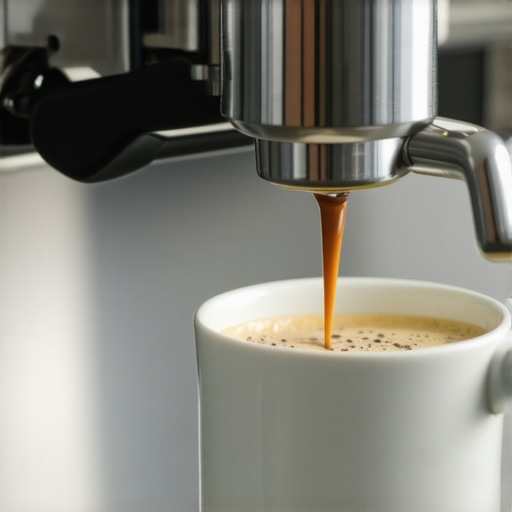
Why your espresso shots are spraying everywhere
A spraying espresso shot is not a minor nuisance; it is a definitive signal of hydraulic failure. After fifteen years of diagnosing high-end bar setups and recalibrating commercial-grade rotary pumps, I have learned that water is inherently lazy. It seeks the path of least resistance. When your bottomless portafilter starts painting your backsplash with brown streaks, you are witnessing channeling. This phenomenon occurs when pressurized water carves a tunnel through the coffee puck rather than saturating it evenly. The stake? You are wasting premium beans and drinking a beverage that is simultaneously sour and bitter. The technical reality remains: if the resistance within the puck is not uniform, the 9 bars of pressure from your machine will find the fracture. The result? Total extraction collapse.
Hydraulic Dynamics and the Path of Least Resistance
The physics of espresso extraction requires a perfectly homogenous medium. When the pump engages, water hits the surface of the coffee at roughly 130 PSI. If your distribution is uneven, the water finds microscopic gaps. As it forces its way through, it erodes the coffee grounds, widening the gap and creating a high-velocity jet. This is often caused by poor distribution or a subpar grinder. If you notice the reason your burr grinder produces uneven dust, you have already lost the battle. Uneven particles mean uneven resistance. Fines migrate to the bottom of the basket, while larger boulders create voids. This lack of structural integrity is the primary catalyst for the mess on your counter. Precision baskets, like those from VST or IMS, exacerbate this if your technique is flawed because their high-flow designs demand absolute perfection.
The Mechanical Reality of Puck Prep
Many home baristas blame their machine, but the fault usually lies in the hand-held tools. A common error involves the physical leveling of the coffee before the tamp. If you have ever wondered why your espresso tamps are always slanted, you are looking at the source of your spraying shots. A slanted tamp creates a density gradient. Water will rush toward the thinner side of the puck every single time. To combat this, you need a technical approach to distribution. Tools like the Weiss Distribution Technique (WDT) are not just trends; they are essential for breaking up clumps that act as obstacles to water flow. Clumps create internal