
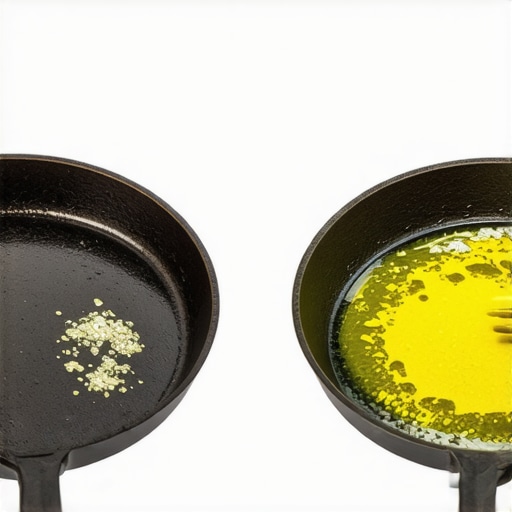
Why You Should Never Use Olive Oil to Season Your Cast Iron
Using olive oil to season a high-end cast iron skillet is a technical error that compromises the integrity of your cookware. After fifteen years of curating luxury kitchen environments and troubleshooting the equipment of elite chefs, I have seen more ruined surfaces than I care to count. The problem isn’t the oil’s flavor; it is the chemistry of polymerization. When you season a pan, you aren’t just greasing it. You are facilitating a chemical reaction where liquid fat transforms into a hard, plastic-like solid through intense heat. Olive oil fails this transition. The result? A sticky, rancid mess that ruins your sear and requires an aggressive strip-down to fix.
The Chemical Failure of Low Smoke Points
The engineering reality of seasoning hinges on the smoke point of the lipid. Extra virgin olive oil has a smoke point hovering around 375°F. For effective polymerization to occur, you need to sustain temperatures that exceed the smoke point long enough to break down the carbon chains. Because olive oil breaks down so early, it carbonizes into soot rather than bonding into a smooth matrix. This is why your seared scallops might stick even after you thought you ‘seasoned’ the pan. You haven’t created a non-stick layer; you’ve created a layer of burnt impurities. In a kitchen equipped with commercial-grade espresso machines and precision cooktops, this lack of technical rigor is unacceptable. According to reports from the American Chemical Society, the stability of fats under high heat determines the density of the resulting polymer. Monounsaturated fats, which dominate olive oil, lack the cross-linking potential of polyunsaturated fats like grapeseed or flaxseed oil.
The Economic Reality of Surface Maintenance
Maintaining a luxury kitchen is about protecting the ROI of your hardware. A high-end cast iron or carbon steel pan is meant to last generations, but incorrect seasoning leads to accelerated pitting and surface degradation. If you treat your cookware with the same precision you use when choosing multi-clad stainless steel, you’ll avoid the common pitfalls of amateur maintenance. The sticky residue left by olive oil attracts dust and lint. It becomes a magnet for old food particles. When you finally go to cook, that layer smokes prematurely, filling your home with acrid fumes that even the best kitchen hoods struggle to clear. It is a domino effect of inefficiency. I once walked into a client’s kitchen where a set of bespoke cast iron had been treated with premium olive oil for months. The surface felt like old tape. We had to use an orbital sander to find the metal again. Avoidable failure.
Implementation Risks and The Messy Reality
The smell of scorched olives is unmistakable. It is sharp and heavy. When this happens, the seasoning layer is fragile. It chips. You’ll see black flakes in your eggs. This isn’t ‘extra iron’ in your diet; it is burnt carbon and degraded lipids. This is the same type of maintenance oversight that leads people to make the non-stick pan move that ruins the coating in record time. If you are using induction, the heat is direct and fast. Olive oil cannot keep up with the rapid thermal ramp-up. It breaks before it bonds. You need an oil with a high iodine value and a smoke point above 450°F to create a durable, slick surface that mirrors the performance of modern air fryers or ceramic-coated gear.
Industry Trends for 2025
We are seeing a massive shift toward ‘technically correct’ cooking. Homeowners are no longer satisfied with ‘good enough.’ They want professional-grade results. This means moving away from traditional kitchen myths. The market is correcting toward high-stability fats like avocado oil or specialized seasoning waxes. Regulatory changes in food safety and the push for PFAS-free kitchens are making cast iron more popular than ever, but only if maintained correctly. In the next 18 months, expect more brands to release pre-seasoned pans using proprietary vacuum-seal polymerization techniques to prevent the user from making these olive oil mistakes at home.
The Executive Verdict
If you are currently using olive oil on your cast iron, stop immediately. Switch to grapeseed oil or a dedicated seasoning blend. If your pan is already sticky, scrub it with coarse salt and a chainmail scrubber until the metal is smooth, then restart the process at 475°F for one hour. Precision matters. Strategy matters. Your cookware is an investment, treat it with the technical respect it deserves.
Frequently Asked Questions
Can I use light olive oil instead of extra virgin?
While light olive oil has a higher smoke point, it still lacks the drying properties required for a permanent polymer bond. Stick to grapeseed.
How do I know if my seasoning has failed?
If the pan feels tacky to the touch or if it smokes at low temperatures, the oil did not polymerize correctly. It is a layer of grease, not a finish.
Does this apply to carbon steel too?
Absolutely. Carbon steel is even more sensitive to oil selection due to its smoother surface. You need the most stable bond possible.
What is the best temperature for seasoning?
For most high-heat oils, 450°F to 500°F is the sweet spot to ensure the fat breaks down and reforms into a hard carbon shell.