
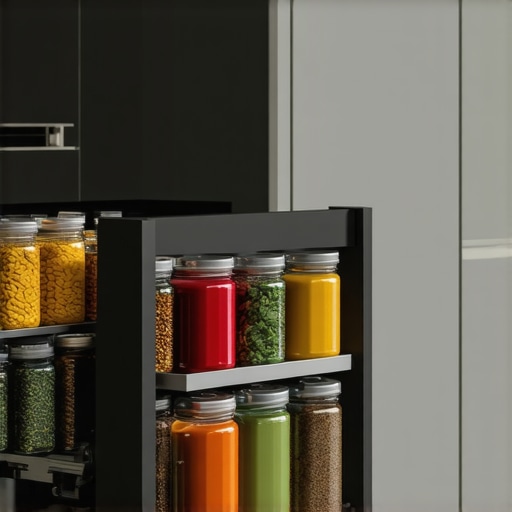
Why Every Modern Kitchen Needs a Pull-Out Spice Rack
In the high-stakes environment of a luxury kitchen, seconds define the boundary between a perfectly seared scallop and a rubbery disaster. After designing high-end culinary spaces for over fifteen years, I’ve seen homeowners drop $20,000 on a range only to bury their spices in a dark, cavernous cabinet. It is a strategic error. Spices are volatile organic compounds. Heat, light, and humidity are their enemies. A pull-out spice rack isn’t a luxury; it’s a technical necessity for thermal management and workflow kinetics. When you are managing an espresso machine while monitoring a reduction, you cannot afford to hunt for the cumin.
The ROI of kitchen organization is often measured in saved movement. Think of your kitchen as a cockpit. In a professional setting, the ‘mis-en-place’ must be within arm’s reach. Most residential designs ignore this, forcing the cook to reach over heat sources or bend at awkward angles. A vertical pull-out utilizes the dead space often found adjacent to the oven. It transforms a useless three-inch gap into a high-density storage engine. The result? Better flavor. Shorter prep times.
The Ergonomic Reality of High-Pressure Cooking
Standard cabinetry is deep. It is designed for bulk, not for the granular precision required when using premium cookware. When spices are stacked three deep on a fixed shelf, the rear jars become forgotten artifacts. They lose potency. They gather dust. By the time you find that smoked paprika, its essential oils have oxidized into a tasteless powder. A pull-out rack brings the inventory to you. It uses full-extension slides to expose every single bottle to clear light and easy access. No more digging. No more duplicate purchases because you couldn’t see the back of the shelf.
Precision engineering matters here. Cheap plastic inserts or wire baskets that rattle are the marks of a low-grade build. You want heavy-duty steel or solid wood construction with ball-bearing glides. This ensures that even when the rack is fully loaded with heavy glass jars, the movement is silent and fluid. The sensation of a soft-close cabinet hardware engagement isn’t just about sound; it’s about protecting the glass containers from high-impact collisions that lead to micro-fractures. In my years on the floor, I have seen hundreds of inferior racks fail under the weight of a serious spice collection.
Thermal Load Management in Custom Cabinetry
A common mistake in kitchen layout is placing spices directly above the range. Heat rises. It penetrates the cabinetry and accelerates the degradation of your ingredients. If you are using professional-grade ranges with high BTU output, the cabinet interior temperature can spike significantly. A pull-out rack installed in the base cabinetry keeps spices away from the rising heat plume of the cooktop. This is a technical truth that most general contractors overlook. By lowering the storage height and isolating it from the primary heat zone, you extend the shelf life of your inventory by months.
Furthermore, standard cabinets often leave a kitchen cabinet gap that makes your space look unfinished and wastes valuable square inches. A custom pull-out fills this void perfectly. It integrates into the face-frame design, providing a flush, architectural finish that mimics a standard drawer front but conceals a vertical library of flavor. This isn’t just about hiding clutter; it’s about the density of utility. We are talking about maximizing the volumetric efficiency of your footprint. According to the National Kitchen & Bath Association (NKBA), ergonomic accessibility is one of the top three factors in long-term kitchen satisfaction.
The Mechanical Failure of Standard Storage
I’ve walked into multi-million dollar homes where the owner is using a tiered plastic ‘lazy susan’ that jams every time a jar tip over. It’s embarrassing. These solutions lack the structural integrity required for a high-performance luxury kitchen. When you invest in premium cookware for 2025, you shouldn’t be fighting your furniture to find the salt. A properly installed pull-out uses a ‘stay-put’ design. Each level has a railing to prevent tipping during rapid acceleration or deceleration of the drawer. If the hardware is poor, you will find that your pull-out pantry keeps jumping off the track, which is a clear indicator of lateral instability.
The weight of the industrial-grade steel and the smell of fresh wood finish are sensory anchors of a quality install. You can feel the resistance of the oil-dampened glides. It’s the difference between a high-end car door and a tin can. If your current storage solutions feel flimsy, they are likely compromising your efficiency. I recall a client in the local area who insisted on DIY wire racks. Within six months, the tracks had warped under the weight of her artisanal honey and spice jars. We had to gut the cabinet and install a reinforced vertical pull-out. The cost of doing it twice was triple the price of doing it right the first time.
Market Corrections and Future Trends
The industry is moving toward ‘Active Storage.’ This means every cubic inch must perform a task. In the next 12 to 24 months, we expect to see integrated UV-filtration glass on pull-out fronts to further protect spices from light exposure. We are also seeing a shift toward modular internal dividers that can be adjusted as your collection grows. If you are planning a renovation, ignore the fad of open shelving for spices. It is a disaster for cleanliness. Greasy steam from cooking binds with dust to create a sticky film on exposed jars. A pull-out keeps your inventory in a sealed, dark, and clean environment.
Strategic foresight suggests that as kitchens become more integrated with living spaces, the need to hide the ‘clutter’ of cooking while maintaining immediate access will only increase. Regulatory changes in building codes are also placing a higher premium on ergonomic clearances, making these slim, high-efficiency storage units even more attractive for passing inspections and increasing property value. My recommendation for any serious home cook? Buy the heavy-duty variant. If you are in a situation where you have a three-to-six-inch gap between your appliances, fill it with a pull-out. It is the single most effective way to upgrade your workflow without moving walls.
The Executive Verdict
Hold the cheap plastic inserts. Sell the idea that open shelving is ‘good enough.’ Buy a custom-fitted, full-extension, soft-close spice pull-out. It is a fundamental component of the modern culinary architecture. It protects your investment in high-end ingredients and ensures your kitchen functions as a precision tool rather than just a showpiece. Stop digging through the dark. Bring the spices to the light.
Frequently Asked Questions
What is the ideal width for a spice pull-out?
For most luxury kitchens, a 3-inch or 6-inch width is standard. The 6-inch model allows for two rows of jars, which is ideal for serious collectors.
Can I retro-fit this into existing cabinets?
Yes, though it requires removing the existing door and installing a frame-mounted glide system. It is easier to do during a full remodel but entirely possible as a standalone upgrade if you have the clearance.
How do I prevent jars from rattling?
Look for units with silicone liners or adjustable dividers. This dampens the sound and prevents glass-on-glass contact during movement.
Are wood or metal pull-outs better?
Metal is often more durable and easier to clean, while wood offers a classic aesthetic that matches high-end cabinetry. Both are excellent if they use high-quality ball-bearing glides.