
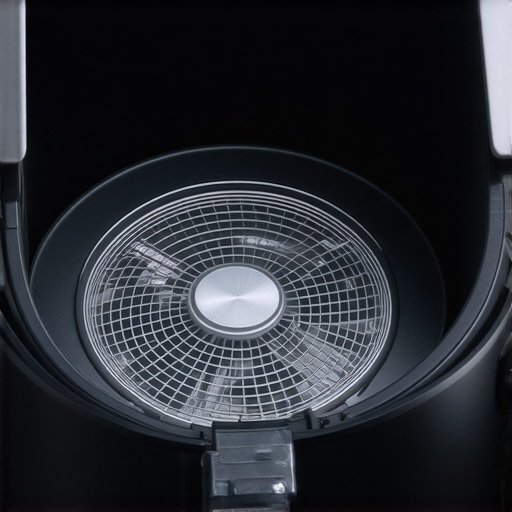
The Reason Your Air Fryer Fan Makes a High-Pitched Squeal
That piercing, metallic shriek coming from your countertop convection unit is not a minor quirk. It is the sound of friction winning a battle against engineering tolerances. After managing high-end appliance maintenance for fifteen years, I have seen these units fail in two distinct ways: either they die quietly because of a blown fuse or they scream until the motor seizes. A high-pitched squeal is the hardware’s final warning. Ignoring it leads to a catastrophic thermal event or, at the very least, a dead motor. The stake here is not just your dinner. It is the longevity of a luxury kitchen investment. The noise usually stems from the sleeve bearing or the ball bearing assembly within the fan motor, a component that spins at upwards of 2,500 RPM. When the lubricant fails, metal meets metal. The result? Avoidable failure.
The Engineering Reality of High-RPM Convection
Air fryers are essentially miniaturized high-velocity convection ovens. To achieve that crisp texture without oil, the fan must move air at incredible speeds across a heating element. This requires a motor that can handle both high heat and high rotational velocity. Most consumer-grade units utilize sleeve bearings because they are cheaper to manufacture. These bearings rely on a thin film of oil to keep the shaft spinning smoothly. However, the heat inside an air fryer is relentless. Over time, this heat thins the lubricant, causing it to seep out or evaporate entirely. Once the oil is gone, the shaft begins to vibrate against the sleeve. This vibration creates that characteristic high-pitched whine. It is a physical manifestation of kinetic energy converting into heat and sound rather than airflow. If you find why your air fryer takes longer to cook than the recipe says, it is often because the fan can no longer reach its intended RPM due to this internal drag. The motor draws more current to overcome the friction, which brings us to the next risk: electrical strain.
Thermal Expansion and Centrifugal Imbalance
In premium cookware and high-end appliances, material choice is everything. In cheaper air fryers, the fan blades are often stamped from thin aluminum or molded from low-grade polymers. As the unit heats up, these materials expand. If the expansion is uneven—a common result of poor manufacturing—the fan becomes unbalanced. An unbalanced fan at 2,800 RPM creates a centrifugal force that pulls the motor shaft to one side. This uneven pressure wears down one side of the bearing faster than the other. You might hear the squeal intermittently at first, perhaps only when the unit is at full heat. This is the thermal expansion coefficient in action. The metal expands, the tolerance tightens, and the friction increases. This is a common issue when people use heavy accessories that block airflow, causing the internal temperature to spike beyond the motor’s design limits. I always tell clients that understanding how to stop your air fryer from blowing a fuse starts with maintaining the mechanical integrity of the fan.
The Messy Reality of Grease Infiltration
We need to talk about the smell of scorched lithium grease and aerosolized bacon fat. Air fryers are messy environments. Despite the filters, microscopic grease particles bypass the basket and settle on the motor shaft. When this grease meets the high-temperature environment of the motor housing, it undergoes a process called polymerization. It turns into a sticky, varnish-like substance. This ‘gunk’ enters the bearing housing and acts as an abrasive. Instead of a smooth spin, the motor is now grinding through a slurry of old fat and carbonized food particles. This is why the best way to clean greasy air fryer coils without chemicals is a vital maintenance step; it prevents the buildup from migrating to the sensitive motor components. I’ve seen motors where the grease had turned into a solid carbon crust, locking the fan in place. The smell is unmistakable—a sharp, acrid odor that signifies the end of the motor’s life cycle.
Market Corrections and the 2025 Standard
The industry is shifting. We are seeing a move away from disposable $60 units toward repairable, professional-grade convection systems. For 2025, expect to see more brushless DC (BLDC) motors in the luxury kitchen segment. These motors lack the physical brushes that wear out and often use sealed ball bearings that are far more resistant to heat-induced lubricant loss. Regulatory bodies are also looking at the energy efficiency of these devices. A squealing fan is an inefficient fan. It wastes energy as heat and sound. As standards tighten, the era of the ‘cheap’ air fryer motor is ending. If you are buying a unit today, look for ‘brushless motor’ or ‘sealed bearing’ in the technical specs. It costs more upfront, but the ROI manifests in a decade of silent operation rather than a two-year cycle of replacement. Avoiding why most air fryer liners are a waste of money will also help preserve airflow and prevent the overheating that kills these motors.
The Executive Verdict
If your air fryer is squealing, do not wait for it to stop on its own. It won’t. If the unit is under warranty, claim it immediately. If it is an out-of-warranty budget model, the cost of labor and parts for a motor replacement usually exceeds the value of the machine. However, for high-end integrated units, a technician can often lubricate the bearings with high-temperature synthetic oil or replace the fan assembly entirely. My recommendation: if the squeal is constant, stop using it. The friction can generate enough heat to melt the plastic housing or start an electrical fire. According to reports from the Association of Home Appliance Manufacturers (AHAM), mechanical failure in small heating appliances is a leading cause of localized kitchen fires. Invest in quality. Maintain the airflow. Keep the internals clean.
Frequently Asked Questions
Can I spray WD-40 into the fan to stop the noise?
No. Standard WD-40 is a solvent, not a long-term lubricant, and it is highly flammable. Using it near a heating element is a fire hazard. Only food-safe, high-temperature synthetic lubricants should ever be used, and only if you can access the bearing directly.
Is the squeal dangerous?
It is a warning sign. While not immediately explosive, it indicates high friction and heat. Continued use can lead to the motor burning out or the plastic components melting.
How often should I clean the fan area?
For heavy users, a deep clean of the visible fan area should happen every three months. Use a soft brush to remove dust and a damp cloth for grease buildup to ensure the motor stays cool.