Why Most Knife Sharpeners Actually Damage Your Premium Blades
The average home cook views a knife as a simple wedge. They are wrong. After fifteen years managing high-performance kitchen assets, I have seen five-hundred-dollar Japanese Santokus turned into serrated butter knives by those ten-dollar pull-through gadgets. The stake here is not just a dull edge. It is the permanent destruction of the blade’s heat treatment and geometry. You buy premium cookware and espresso machines for precision, yet you let a piece of tungsten carbide chew through your cutlery. It is a fundamental mismatch of engineering. Most commercial sharpeners do not sharpen; they strip. They act as metal planers, removing massive amounts of steel to create a ragged, temporary bite. This is an operational failure. I have stood in professional kitchens where the smell of burnt steel from an electric sharpener signaled the end of a chef’s favorite tool. Precision requires a different path.
The Engineering Reality of Edge Destruction
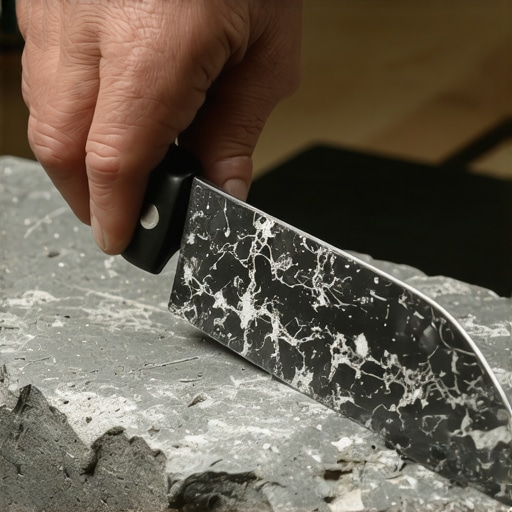
Geometry is the soul of the knife. When a manufacturer sets a 15-degree angle on a high-carbon blade, they are balancing structural integrity with slicing efficiency. Standard V-slot sharpeners force a generic 20-degree angle onto every piece of steel that passes through them. The result? Avoidable failure. These devices use carbide inserts that are harder than the steel itself. Instead of realigning the edge, they peel away ribbons of metal. This aggressive removal thins the blade prematurely, shortening its lifespan by decades. If you have noticed the countertop mistake that ruins your knife edge, you know that micro-impacts are bad, but a carbide pull-through is a systematic assault. We also need to talk about the burr. A proper sharpening process creates a microscopic wire edge that is then refined. Pull-throughs leave a jagged, unstable apex that rolls over after the first two cuts on a shallot. It is a cycle of diminishing returns. According to data from ASM International, the structural integrity of tool steel relies on maintaining the grain structure at the very tip, something these devices ignore completely.
Friction and the Loss of Temper
Heat is the silent assassin. Most high-end luxury kitchen tools are tempered at specific temperatures to achieve a high Rockwell hardness, often 60 or above. High-speed electric sharpeners generate localized heat at the apex. This heat often exceeds the tempering temperature of the steel. When that happens, the steel softens. You might get the knife sharp for a moment, but it will never hold that edge again. The steel has been ‘blown.’ This is a technical truth that most big-box retailers will never share because they want to sell you a new knife every three years. The smell of hot metal is the sound of your investment evaporating. Beyond the heat, there is the issue of pressure. Manual sharpeners require the user to press down, often unevenly. This creates waves in the blade. A wavy edge is impossible to use safely. It is why we always recommend checking your storage habits, as seen in the knife magnet vs drawer debate which saves your edge longer, to ensure that once a real edge is established, it stays protected.
The ROI of Technical Precision
Maintaining a blade is about asset management. If you spend three hundred dollars on a chef knife, spending forty dollars a year on professional whetstone service or learning the craft yourself is the only logical move. The Cutlery and Allied Trades Research Association (CATRA) has shown that refined edges last up to five times longer than those created by rapid-abrasion methods. This isn’t just about sharp knives; it is about the economics of the kitchen. A well-maintained blade requires less force, which means fewer accidents and less fatigue. Think of it like your stand mixers or air fryers; you wouldn’t use a sledgehammer to fix a motor issue. You shouldn’t use a coarse abrasive to fix a microscopic edge. Beside that, there is the sensory reality. The weight of industrial-grade steel should feel balanced, not lightened by years of grinding away the primary bevel. You should also ensure you are not compounding these issues by following poor cleaning habits, such as why you should never put your high-end chef knife in the dishwasher, which further degrades the metal and the handle scales.
Market Corrections Ahead
The industry is shifting. We see a move toward harder, thinner steels like ZDP-189 and R2 powder metallurgy. These steels are brittle. If you put a powder-steel blade into a standard pull-through sharpener, the edge will not just dull; it will chip. These chips require professional thinning to remove, which can cost more than the sharpener itself. In the next 24 months, I expect to see a surge in high-end guided rod systems and water-cooled sharpening tech entering the home market. Consumers are tired of ruining their gear. The second-order effect of this is a higher demand for professional-grade maintenance tools that respect the engineering of the blade.
The Executive Verdict
If you own premium knives, stop using anything that promises a sharp edge in ten seconds. It is a lie. Buy a double-sided whetstone (1000/6000 grit) or find a local pro who uses water-cooled stones. If you are in a high-volume environment, the guided rod systems offer the best balance of speed and safety. Protect the bevel, respect the temper, and keep your fingers away from the carbide. Your knives will last a lifetime instead of a season.
Frequently Asked Questions
Q: Are all electric sharpeners bad?
A: Not all, but most home models spin too fast and use coarse abrasives. Professional models with slow-speed, water-cooled wheels are the exception.
Q: How can I tell if my sharpener is damaging my knife?
A: Look for tiny curls of metal in the sharpener or a visible ‘step’ developing on the blade’s edge. Both indicate excessive material removal.
Q: Is a honing rod the same as a sharpener?
A: No. A honing rod (ceramic or steel) realigns the existing edge. It does not remove metal. Use it daily; sharpen only when honing no longer works.
Q: Can a ruined blade be fixed?
A: Usually, yes. A professional can regrind the primary bevel and thin the blade, though this changes the knife’s profile slightly.