
The Proper Way to Store Your Stand Mixer Attachments
Treating your stand mixer attachments like loose silverware in a junk drawer is a silent killer for high-end kitchen gear. Most owners assume that as long as the motor turns, the machine is healthy. They are wrong. After 15 years of diagnosing gearbox failures and metallurgical degradation in professional kitchens, I can tell you that improper storage is the primary driver of premature wear. When you stack heavy metal beaters and dough hooks inside the bowl, you are inviting micro-abrasions, surface oxidation, and hub misalignment. This isn’t just about kitchen aesthetics; it is about protecting a $600 to $1,500 investment from avoidable failure. The weight of industrial grade steel isn’t something to toss around lightly. If you want your equipment to survive the next decade, you must understand the physics of storage.
The Engineering Cost of Neglect
Most stand mixer attachments are made from burnished aluminum or enamel-coated zinc. These materials are chosen for their weight-to-strength ratio, but they are not indestructible. When these tools clatter against each other in a drawer, they develop burrs. These small, jagged edges of metal can catch on dough, or worse, begin to flake off into your food. This is particularly problematic with the white enamel coatings found on many entry-level beaters. Once that coating is breached, the underlying metal is exposed to oxygen and moisture. The result? The dreaded grey soot. This is actually aluminum oxide. It happens when raw aluminum is put through a dishwasher or stored in humid, cramped conditions where it cannot dry properly. You might think it is just grease. It isn’t. It is the metal itself breaking down. To understand what your machine needs, you should first learn how to choose a stand mixer for bread vs cake baking because the attachment weight and material vary significantly between models.
The storage problem extends to the attachment hub itself. The square pin that connects the paddle to the planetary head is machined to tight tolerances. Even a slight bend in this pin, caused by heavy tools shifting in a drawer, can cause the mixer to vibrate at high speeds. This vibration travels upward, stressing the the heavy duty gear secret inside premium stand mixers and leading to a whining sound that signals imminent gear stripping. I have seen clients spend hundreds on repairs that started with a bent dough hook stored under a stack of cast iron pans. It is a fundamental error in equipment management.
Why the Bowl Storage Trap Fails
It is the most common habit: finishing a bake, washing the paddle, and dropping it back into the stainless steel bowl. It seems logical. It saves space. However, this is a recipe for surface pitting. Stainless steel is resistant to corrosion, but when a different metal—like a burnished aluminum whisk—sits against it in a high-humidity kitchen, galvanic corrosion can occur. This creates small pits in the bowl surface that trap bacteria and ruin the finish. Furthermore, storing tools in the bowl means you have to remove them every time you want to use the machine. This constant shuffling increases the risk of dropping them on a hard stone countertop. One drop on granite is often enough to bend the tines of a wire whisk. If that whisk is no longer perfectly circular, it won’t clear the sides of the bowl. You’ll end up needing to how to adjust your stand mixer bowl clearance for small batches just to stop the scraping sound. The the whisk attachment mistake that deflates your meringue often starts with a whisk that has been slightly deformed by poor storage habits.
The Vertical Storage Advantage
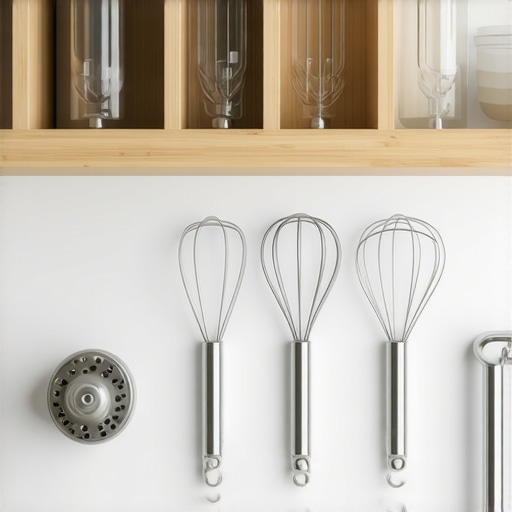
The industry standard for preserving the integrity of kitchen tools is vertical separation. Wall-mounted magnetic strips or dedicated pegboards are not just for show. They keep the attachment hub clear of any weight-bearing pressure. When a tool is hung vertically, air circulates around the entire surface, ensuring it is 100% dry. This is vital for burnished attachments which are prone to spotting. According to reports from the International Housewares Association, tool longevity increases by nearly 40% when items are stored in a manner that prevents metal-on-metal contact. If you don’t have wall space, consider a dedicated pull-out drawer with foam inserts. This keeps the tools stationary. No shifting. No clanking. No micro-fractures in the enamel. For those with high-end premium cookware, this level of care should be the baseline, not the exception.
Regulatory Shifts and Material Science
We are seeing a move in the industry toward all-stainless steel attachments to avoid the coating issues altogether. However, stainless steel is heavier. This extra weight means that if these tools are stored poorly, the impact damage to other items in your kitchen is higher. ASM International materials specialists note that even high-grade alloys are susceptible to fatigue if they are subjected to repeated impact. In the next 12 to 24 months, I expect more manufacturers to move away from coated zinc due to tightening environmental regulations regarding PTFE and PFOA-related manufacturing processes. This means your future attachments will be more durable but also more expensive. Protecting them now is a financial strategy. The market is shifting toward ‘heirloom’ quality, but an heirloom only lasts if the owner respects the engineering.
The Executive Verdict
Stop using your mixer bowl as a catch-all. If you are serious about your baking and the lifespan of your luxury kitchen appliances, you must implement a segregated storage system. Buy a dedicated attachment rack or build a custom drawer insert. Hold off on buying more attachments until you have a safe place to put the ones you already own. The strategy is simple: Zero metal-on-metal contact. If you are currently seeing grey residue on your hands after touching your paddle, it is already oxidizing. Scrub it with a mixture of baking soda and lemon juice, dry it immediately, and get it out of that drawer. Protect the hub, protect the finish, and you’ll protect the motor.
Frequently Asked Questions
Can I store my attachments in the original box?
No. Cardboard retains moisture and can promote the growth of mold or accelerate oxidation in humid environments.
Is it okay to put attachments in the dishwasher?
Only if they are specifically labeled as dishwasher safe (usually stainless steel or nylon-coated). Burnished aluminum will turn grey and ruin your next batch of dough if put through a dishwasher cycle.
How do I fix a wobbly attachment?
Check the hub for debris and ensure the pin is straight. If the wobble persists, you likely have a misalignment in the planetary head that requires professional service.
What is the best material for a storage rack?
Food-grade plastic or silicone-coated wood. These materials offer the best cushion against accidental drops and won’t scratch the attachments.