
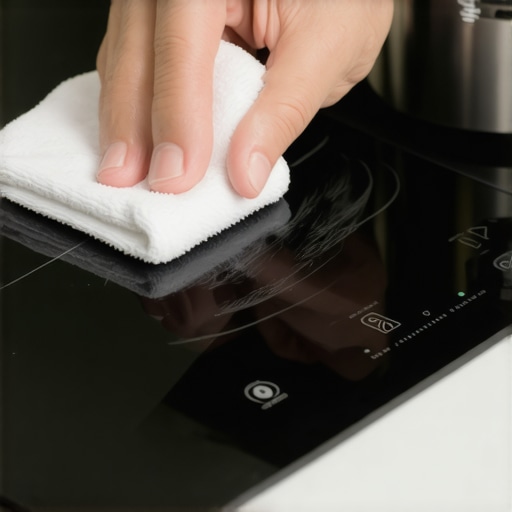
How to Get Rid of Scratches on Your Induction Cooktop
An induction cooktop is a high-performance engine for your kitchen. When a scratch appears on that pristine glass-ceramic surface, it is more than an aesthetic nuisance; it is a sign of mechanical friction that shouldn’t happen. After fifteen years in the high-end kitchen industry, I have seen thousands of homeowners treat these surfaces with a casualness that eventually ruins them. The stake here is simple. You either maintain the optical clarity and structural integrity of the glass, or you face a $1,200 glass replacement bill. This is not about ‘cleaning’ your kitchen. This is about abrasive management on a surface designed for electromagnetic precision.
The Engineering Reality of Glass-Ceramic Surfaces
The material on your induction stove is likely a glass-ceramic composite like Schott Ceran or EuroKera. These materials possess a low thermal expansion coefficient, allowing them to withstand extreme temperature spikes without shattering. However, on the Mohs scale of mineral hardness, they typically sit around 5.5 to 6.0. This means that common kitchen particulates—silica in dust, salt crystals, or carbonized food—can act as sandpaper under the weight of premium cookware. When you slide a pan, you are potentially dragging these micro-abrasives across the surface, creating a trough in the glass. Restoration is about leveling that trough through controlled mechanical shear. You are essentially thinning the surrounding glass at a microscopic level to match the depth of the scratch.
Surface Restoration via Cerium Oxide
If the scratch is shallow enough that your fingernail does not catch in it, you have a high probability of success. The tool of choice for the industry professional is cerium oxide. This rare earth mineral is used in telescope mirror polishing for a reason. It creates a chemical-mechanical polishing action. You mix the powder into a slurry with the consistency of heavy cream. Using a felt buffing pad attached to a low-RPM drill or a high-torque stand mixer attachment (if you are feeling creative, though a dedicated buffer is better), you apply light, even pressure. Heat is the enemy here. If you stay in one spot too long, you risk localized thermal stress. You must keep the slurry wet. The result? The scratch disappears as the edges of the glass trough are rounded over and blended into the surface plane.
Why Standard Methods Fail
Most online advice suggests using baking soda or toothpaste. This is amateur hour. Baking soda is too soft to effectively level glass-ceramic, and toothpaste contains silica levels that are inconsistent and unpredictable. You might remove a light scuff, but you will often leave behind a cloudy haze that is harder to fix than the original scratch. I have walked into kitchens where owners used a green scouring pad to ‘clean’ a burnt spot, effectively destroying the factory-applied finish. If you have burnt sugar on your induction hob, mechanical scraping with a fresh razor blade at a 45-degree angle is the only acceptable method. Anything else is a gamble with your surface’s longevity.
Operational Risks and Structural Failure
Not every scratch can be saved. If you can feel the depth with your nail, you are looking at a fissure. Glass-ceramic is incredibly strong under compression but vulnerable to tension. Deep scratches act as stress concentrators. When you bring that cooktop up to 400 degrees, the temperature gradient between the active zone and the cool periphery creates internal stress. A deep scratch can become the starting point for a full-thickness crack. I recall a client who ignored a deep gouge caused by a dropped cast-iron lid. Three months later, during a holiday dinner, the cooktop sounded like a gunshot. The glass had fractured along the line of that ‘minor’ scratch. This is why you must stop your induction hob from scratching before the damage becomes structural. Protection is cheaper than restoration.
The Macro View of Kitchen Surface Durability
We are seeing a shift in the high-end appliance market. Manufacturers are beginning to introduce textured glass surfaces and matte coatings designed to hide micro-abrasions. This is a response to the ‘showroom’ problem—induction looks great on day one but shows every flaw by day 300. Regulatory changes regarding energy efficiency are pushing more consumers toward induction, but the industry has yet to solve the durability gap between old-school coil burners and modern glass. Within the next 24 months, expect to see an influx of ‘sacrificial’ sapphire-coated glass options which boast a Mohs hardness of 9. For now, we are stuck with maintenance protocols. If you notice your induction pots making a high-pitched squeal, it is often due to vibration. That same vibration, if there is grit under the pan, acts like an ultrasonic sander on your cooktop.
Executive Verdict
If you have light micro-scratches, invest in a cerium oxide polishing kit. Do not use home remedies. If you have deep gouges, do not attempt to polish them out, as you will create a lens effect in the glass that looks worse than the scratch. In that case, hold your position and focus on prevention. Your action strategy: First, inspect your pan bottoms for burrs or stuck-on carbon. Second, switch to a microfiber-only cleaning regime. Third, use a silicone induction mat if your manufacturer permits it; it creates a physical barrier without interfering with the magnetic field. Stop treating your stove like a countertop. It is a precision instrument. Treat it like one.
Professional FAQ
Can I use a car buffer on my induction stove?
Yes, provided it is a random orbital buffer and you use a dedicated glass polishing compound. High-speed rotary buffers generate too much heat for glass-ceramic and can cause permanent distortion.
Will polishing the glass void my warranty?
Most manufacturers, including Bosch and Wolf, consider scratches to be cosmetic wear and tear. However, aggressive mechanical polishing that changes the thickness of the glass can technically be cited as a modification. Always check your specific terms.
Does a scratch affect the heating performance?
No. The magnetic field passes through the glass-ceramic regardless of surface scratches. The risk is strictly structural integrity and aesthetic value.
How often should I polish the surface?
Never more than once a year. Every time you polish, you are removing a microscopic layer of the glass. Over-polishing will eventually lead to a ‘dipped’ surface that reflects light unevenly.