
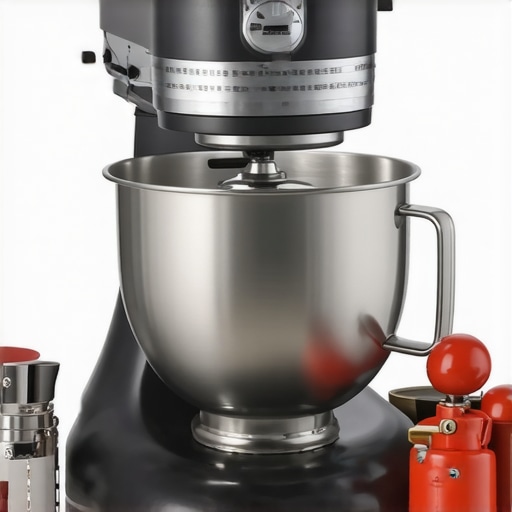
The Hidden Benefit of High-Wattage Stand Mixer Motors
Power ratings in luxury kitchen appliances are frequently misunderstood. Most consumers look at a wattage sticker and assume it indicates speed or pure ‘strength’ for the sake of speed. They are wrong. After 15 years of tearing down motor housings and analyzing gear shear patterns, I can tell you that high wattage in a premium stand mixer is not about going fast. It is about thermal headroom. It is about the ability of the machine to maintain its structural and electrical integrity when the resistance of a 65% hydration dough tries to lock the planetary assembly. Buying a low-wattage machine for a serious kitchen is a recipe for premature appliance death. The stakes are clear: you either invest in a motor that loafs through heavy work or you buy one that screams under the load until the thermal fuse—or the nylon gears—finally give up.
The Engineering Reality of Motor Efficiency
To understand why wattage matters, we have to look at the difference between input power and output torque. A high-wattage motor, particularly those found in professional-grade stand mixers, utilizes thicker copper windings. These windings offer lower resistance. In the world of electrical engineering, lower resistance under high load means less heat generation. When you are kneading a heavy brioche, a 325-watt motor is working at 95% of its capacity. It gets hot. Fast. A 1000-watt DC motor, by contrast, might only be using 30% of its potential. This ‘lazy’ operation is the secret to longevity. It is why the heavy duty gear secret inside premium stand mixers is often tied directly to the motor’s ability to stay cool under pressure. If the motor doesn’t overheat, the lubricants in the gearbox don’t thin out. If the lubricants don’t thin, the gears don’t grind themselves into metallic dust.
The Economic Logic of Thermal Headroom
Think of it as a cost-benefit matrix. A cheaper, lower-wattage unit costs less upfront. However, the operational risk is high. If you bake once a month, you might never notice. But for the enthusiast using premium cookware and demanding professional results, the duty cycle matters. A motor operating near its limit consumes its own lifespan with every rotation. You are essentially paying for ‘buffer.’ This buffer ensures that even when why cheap flour ruins your high torque stand mixer becomes a factor due to unexpected gluten development, the machine doesn’t stall. According to the National Electrical Manufacturers Association (NEMA) standards for fractional horsepower motors, heat is the primary cause of insulation failure. High wattage is your insurance policy against that heat.
Why Standard Methods Fail in the Home Kitchen
Most home cooks follow recipes that suggest 10 minutes of kneading. In a low-wattage machine, that tenth minute is dangerous. I have stood in kitchens where the smell of ozone and burning brush carbon filled the air because a machine was asked to do work it wasn’t rated for. The result? Avoidable failure. The motor housing becomes too hot to touch, and the internal plastic components begin to warp. This is why we advocate for the bread kneading speed that actually saves your motor. It is not just about the dial setting; it is about the raw energy available to push through the resistance. If the motor has to fight the dough, the dough wins unless the motor has the wattage to ignore the struggle.
Implementation Risks and the Messy Reality
There is a downside to high-wattage monsters: weight and noise. To house those thick copper windings and the massive magnets required for high torque, the machine must be heavy. We are talking 30 pounds of die-cast metal. If your cabinetry isn’t rated for that kind of localized load, you might see sagging. Furthermore, some high-wattage AC motors have a specific whine—a high-frequency vibration that can be jarring in a quiet home. I remember a client who bought a top-tier 1.3 horsepower model. She loved the power but hated the way it made her marble island vibrate. We had to install specialized dampening mats. This is the reality of industrial power in a domestic space. You have to manage the energy you’ve unleashed. You should also know how to keep your stand mixer motor cool during two-hour sessions if you are doing back-to-back holiday batches.
Market Corrections Ahead
The industry is moving toward high-efficiency brushless DC motors. These provide massive torque with lower overall wattage draw from the wall, but they are expensive to manufacture. Over the next 24 months, expect to see the ‘wattage war’ shift toward ‘torque ratings.’ Regulatory changes regarding energy efficiency in small appliances are forcing manufacturers to rethink how they move the beaters. However, for now, wattage remains the most reliable proxy for motor mass. And in a mechanical system, mass often equals durability. The local market for luxury kitchen upgrades is already seeing a surge in ‘prosumer’ gear that ignores the aesthetic trends of the 2010s in favor of raw, industrial capability.
The Executive Verdict
If you are a casual baker making the occasional sponge cake, a standard 300-watt mixer is sufficient. Hold your money. But if you are working with sourdough, whole grains, or double batches of cookies, you must buy for the peak, not the average. Buy a mixer with at least 600 watts of rated power—preferably with a DC motor configuration. My recommendation: Buy the highest wattage your budget allows to ensure you never use more than 50% of its capacity. This is the only way to ensure the machine lasts a generation rather than a few holiday seasons.
Common Questions Regarding Mixer Power
Does higher wattage mean it will use more electricity on my bill?
Not significantly. A motor only draws the current it needs to overcome the resistance. A high-wattage motor is actually often more efficient because it doesn’t waste as much energy as heat during the process.
Is wattage the same as horsepower?
Technically, 746 watts equals one horsepower. However, manufacturers often use ‘peak horsepower,’ which is a marketing term. Stick to the continuous wattage rating for a real metric of work capacity.
Can a motor be too powerful for my recipes?
Rarely. The risk isn’t ‘too much power’ for the dough, but rather the machine being so strong it could damage its own attachments if you use them at the wrong speed. Always match your speed to the task.
Why do some low-wattage mixers seem to work fine?
They likely use aggressive gearing ratios. This gives them strength but at the cost of speed and heat buildup. They are fine for light work but will fail under the sustained load of heavy doughs.