
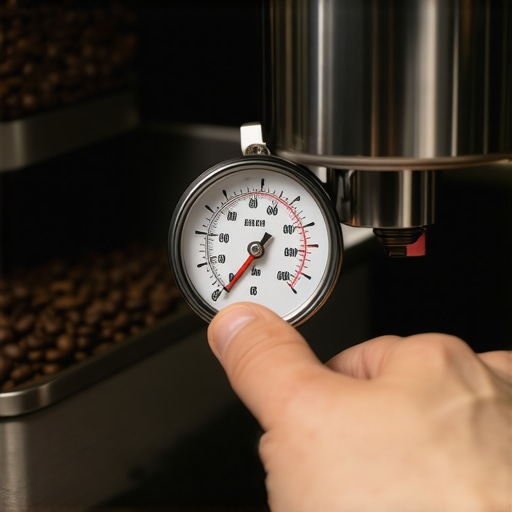
Why Your Espresso Machine’s Pressure Gauge is Lying to You
The fixation on the number nine has crippled more home espresso setups than stale beans ever could. After fifteen years of tearing down E61 group heads and calibrating industrial vibratory pumps, I can tell you that the analog dial on your chrome-plated machine is often little more than a decorative distraction. It presents a static measurement of a dynamic event. Most owners assume that if the needle hits the 9-bar mark, the physics of extraction are satisfied. They aren’t. The gauge is typically tapped at the pump or the boiler, not the puck. By the time that water hits the coffee bed, the pressure drop can be significant. The result? Systematic under-extraction masked by a pretty dial.
The Mechanical Deception of the Manometer
In most prosumer machines, the manometer measures the resistance the pump faces, not the pressure actually exerted on the coffee grounds. If your grind is too coarse, the water flies through, the pump faces no resistance, and the gauge stays low. Conversely, if you’ve choked the machine with a dust-fine grind, the gauge might scream 10 bars while the actual flow rate is zero. This is a crucial distinction in fluid dynamics. High-end equipment relies on an Over Pressure Valve (OPV) to bleed off excess force, but these valves are notorious for drifting. I’ve seen factory-new machines set to 12 bars out of the box, which is high enough to cause immediate channeling and a bitter, ashy profile that no amount of expensive beans can fix. Real precision requires measuring at the group head. This is why some espresso baskets cost $30 and others cost $5; the engineering of the hole diameter and spacing determines how that pressure is translated into flavor.
The Resistance Paradox and Puck Prep
The gauge is a reactive instrument, not a proactive guide. It tells you what happened a second ago, not what is happening in the center of your coffee puck. If your puck prep is sloppy, the water will find the path of least resistance. You might see a steady 9 bars on the dial because the overall resistance is high, yet inside the basket, a massive channel has opened up, bypassing 40% of your coffee. This is where the sensory anchors of the trade come in: the hiss of the steam, the distinct metallic scent of a hot group head, and the weight of the portafilter. To combat this, smart baristas are using a puck screen hack for a cleaner espresso group head and more even water distribution. Without even distribution, that pressure gauge is just lying to your face while your shot turns into a watery mess.
The Engineering Reality of Thermal Drift
Pressure is only half the equation; thermal stability is the silent partner. A common issue is that your espresso machine takes forever to heat up, leading to a situation where the pressure gauge looks perfect but the water temperature is 20 degrees below the strike point. Cold water is denser and moves differently under pressure. According to standards set by the Specialty Coffee Association (SCA), consistent pressure must be paired with a temperature variance of less than 1 degree Celsius. If your boiler is struggling, the gauge might show 9 bars of pressure from a pump working overtime to push lukewarm water through a dense puck. It is an industrial mismatch that ruins the solubility of the coffee oils.
Market Corrections and the Shift to Flow Profiling
The industry is moving away from static pressure. Within the next 18 months, I expect to see a total shift toward flow-rate sensors in the luxury kitchen space. Pressure is a blunt instrument; flow is the scalpel. Advanced machines now allow baristas to manipulate the flow in real-time, effectively ignoring what the traditional manometer says in favor of digital transducers that provide millisecond feedback. For the local homeowner, this means the old ‘set it and forget it’ mentality is dead. If you are serious about your morning ritual, you need to master the grinder hack for perfectly even espresso extractions to ensure your grind size matches the actual hydraulic output of your specific machine.
The Executive Verdict
Stop treating the pressure gauge as the ultimate truth. It is a secondary diagnostic tool, nothing more. If the shot tastes sour despite a ‘perfect’ 9-bar reading, your grind is too coarse or your temperature is too low. If it’s bitter and burnt, your OPV is likely set too high, regardless of what the faceplate says. My recommendation: ignore the needle for a week. Dial in your shots based on yield and time. If you can’t get a 1:2 ratio in 25-30 seconds, your pressure—or your interaction with it—is the problem. Invest in a group-head manometer if you must have data, but prioritize puck prep and water chemistry first.
Frequently Asked Questions
Does a 15-bar pump make better coffee? No. 15 bars is an entry-level marketing gimmick. High-quality espresso is brewed at 8 to 9 bars. Anything higher usually causes the puck to compress too tightly, leading to channeling. Why does my pressure drop mid-shot? This usually indicates the puck structure is breaking down. As coffee solids dissolve, the resistance decreases. A slight drop is normal; a crash means you have a channel. Can I calibrate my own pressure gauge? You can adjust the OPV on most prosumer machines, but you should use a portafilter pressure gauge to verify the actual output at the group head rather than relying on the internal display. Is the steam pressure gauge different? Yes, that measures boiler steam pressure for frothing, typically sitting between 1.0 and 1.5 bars. It has no bearing on the actual coffee extraction pressure.