
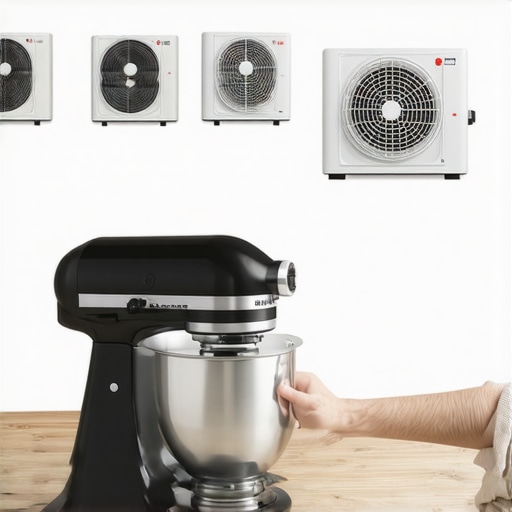
How to Keep Your Stand Mixer Motor Cool During Two-Hour Sessions
High-performance stand mixers are the heart of any luxury kitchen. They represent a significant investment in culinary precision. When you are pushing a machine through a two-hour marathon of stiff bread dough or dense royal icing, you are not just cooking. You are engaging in a battle against thermodynamics. After 15 years of diagnosing mechanical failures in premium cookware and commercial-grade appliances, I have seen the same error repeatedly. Owners treat their mixers like eternal turbines. They are not. Heat is the primary killer of high-torque motors. It degrades the lubricant. It expands the tolerances. Eventually, it melts the carbon brushes. This is the operational reality of the amateur-to-pro transition.
The Thermal Dynamics of Planetary Action
Most luxury kitchen stand mixers rely on planetary gear systems. This means the attachment rotates while the entire head orbits the bowl. This creates immense friction. If your machine features a die-cast metal housing, that metal acts as a heat sink. It pulls warmth away from the armature. However, heat sinks have a saturation point. Once that zinc or aluminum body feels hot to the touch, the motor inside is already approaching its thermal limit. I have found that the heavy duty gear secret inside premium stand mixers often lies in the specific viscosity of the food-grade grease used to coat those teeth. When the temp spikes, that grease thins. Metal meets metal. The result? Avoidable failure. To prevent this, you must understand the duty cycle. High-end equipment often specifies a 10-minute work, 15-minute rest period for heavy loads. Pushing past this without active cooling strategies is reckless. Most users fail to realize that the bread kneading speed that actually saves your motor is rarely the highest setting. Lower speeds provide more torque with less heat generation through air friction and vibration.
The Heat Sink Saturation Risk
When you are deep into a session, the smell of ozone is your final warning. That sharp, metallic scent indicates the motor brushes are arcing due to extreme heat. It is a sensory signal you cannot ignore. I recall a client who attempted a triple batch of panettone—a notorious motor-killer—in a machine designed for lighter cake batters. The housing became so hot it actually scorched the flour dusting the top. We had to replace the entire planetary assembly. This is why why your high-end stand mixer is whining at low speeds; the internal tolerances have shifted. If you must run long sessions, use a external fan aimed directly at the motor head. Airflow is your cheapest insurance. According to standards set by the Association of Home Appliance Manufacturers, maintaining proper airflow around kitchen electronics is essential for longevity. This applies to your espresso machines and air fryers as well. Heat trapped in a corner of your luxury kitchen cabinets will drastically shorten the lifespan of any induction-based or motor-driven tool.
Strategic Speed Management for Long Runs
Speed selection is a tactical decision. Many bakers think faster is better for development. They are wrong. High speeds increase the centrifugal force within the gear housing, pushing lubricant away from the contact points. This creates dry spots. For a two-hour session, you should never exceed the ‘Speed 2’ setting on most planetary mixers for dough. If you are whipping meringues, you have more leeway because the resistance is lower. However, even then, the motor is spinning at 15,000+ RPM internally. The friction adds up. If you are at the stage where you are wondering how to choose a stand mixer for bread vs cake baking, prioritize a DC motor. DC motors offer higher torque at lower speeds and generally run cooler than their AC counterparts. They are the gold standard for marathon baking. The International Electrotechnical Commission (IEC) notes that Class F insulation in motors, often found in premium European models, can handle higher temperatures, but even these have limits when the ambient kitchen temperature rises above 75 degrees Fahrenheit.
The Industrial Future of Kitchen Torque
The industry is shifting. In the next 24 months, expect to see more integration of brushless DC motors in the premium cookware segment. These eliminate the friction of carbon brushes entirely. This means less heat and longer run times. Regulatory changes regarding energy efficiency are also forcing manufacturers to move away from the high-wattage, low-efficiency AC motors of the past. For the current owner, the strategy is simple: active cooling and scheduled downtime. Treat your mixer like the precision engine it is. If the head is too hot to hold your hand on for five seconds, the motor is suffering. Shut it down. Ice the bowl if necessary, but keep the motor head clear of obstructions. The technical truth is that no consumer-grade machine is truly meant for 120 minutes of continuous high-torque output without intervention.
The Executive Verdict
Buy a DC motor mixer if you intend to bake bread daily. Manage your speeds with discipline. Use external airflow to assist the internal fan. If you are in a situation where the motor is struggling, reduce the batch size rather than increasing the speed. This protects your investment and ensures consistent results. Your luxury kitchen deserves tools that last decades, not seasons. Efficiency is not just about power; it is about thermal management. How often do you check the temperature of your appliance housing? Start doing it today.
Frequently Asked Questions
Can I use an ice pack on my mixer head?
Never. Condensation can drip into the electrical components. Use a dry fan for airflow instead.
Why does my mixer get hot even with light batters?
Check for overfilled gear housing or old grease that has hardened, creating internal resistance.
Is a higher wattage always better for long sessions?
No. Wattage is power consumption, not power output. Torque and motor efficiency are the metrics that matter for heat control.
Does the bowl material affect motor heat?
Indirectly. Stainless steel bowls transmit heat to the base, while glass or ceramic act as insulators, which might keep the dough cooler but doesn’t help the motor.