
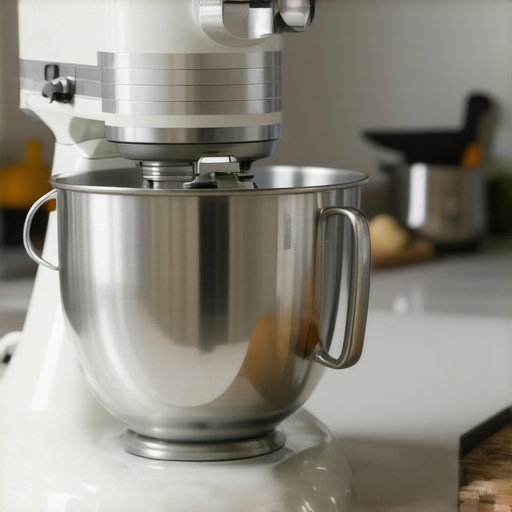
How to Stop Your Stand Mixer Head from Rattling at High Speed
A rattling stand mixer head is more than a noise; it is a structural failure in progress. After fifteen years of diagnosing gear failures and motor burnouts in luxury kitchens, I can tell you that ignoring that rhythmic clank is the fastest way to turn a premium appliance into a paperweight. When the tilt-head mechanism loses its tension, the alignment of the planetary gears shifts. This creates uneven wear. The internal drive shaft begins to fight against the resistance of the dough, leading to heat buildup and eventually, the smell of scorched electrical windings. The fix isn’t just about tightening a screw. It is about understanding the physics of axial play and rotational torque. If you are operating at high speeds with air fryers or espresso machines nearby, the combined resonance can even destabilize other countertop equipment. The result? Avoidable failure.
The Mechanics of Axial Play
The primary reason for a jumping head is the migration of the pivot pin. This solid steel rod holds the tilt-head to the base. During high-speed operation with dense doughs, the vibration acts like a slow-motion hammer, pushing the pin out of its seating. If the pin is not flush with the side of the mixer, the center of gravity shifts. You can see this clearly when you choose a stand mixer for bread vs cake baking; the torque requirements are vastly different. High-speed rattling often stems from the lock lever losing its bite. Inside the base, a small tension spring holds the lock bracket against the head. If this spring weakens or the bracket accumulates flour dust, the head will bounce. This bounce creates axial play—a vertical movement that ruins the beater-to-bowl clearance. To maintain the heavy-duty gear secret inside premium stand mixers, you must eliminate this movement immediately. Mechanical standards from the American National Standards Institute (ANSI) suggest that even minor misalignments in rotating machinery lead to exponential increases in wear. Your mixer is no different. The vibration through the industrial-grade steel frame isn’t just annoying; it’s destructive.
The Stress Test of Real World Baking
I remember a client who specialized in sourdough. She complained of a screaming sound at speed four. Upon inspection, the head was vibrating so violently that the internal gears were literally shaving metal fragments into the grease. This is the grey oil phenomenon. If you see discolored lubricant, the damage has already started. Refer to my guide on how to stop your stand mixer from leaking gray oil into the bowl to diagnose that specific mess. The messy reality is that most people over-tighten the pivot screw, which strips the threads in the aluminum housing. It is a delicate balance. You want the head to be firm, but not so tight that the tilt mechanism binds. The smell of hot ozone often follows a poorly adjusted machine. When the head rattles, the motor works twice as hard to maintain the planetary rotation. You are wasting energy and killing your capacitors. I’ve felt the heat radiating from a chassis after just ten minutes of uncalibrated mixing. It’s a sensory warning you can’t ignore.
The Macro View of Kitchen Engineering
The industry is shifting. We are seeing a move back to DC motors in high-end models, which offer more torque at lower speeds, reducing the need for the high-speed thrashing that causes rattling in the first place. Over the next 24 months, I expect new regulations regarding the Right to Repair to force manufacturers to make these pivot pins and lock brackets more accessible to the home user. For now, we deal with what we have. Most luxury kitchen setups are designed for aesthetics, but the mechanical reality of a stand mixer requires a stable, non-porous surface. If your mixer is on a rolling cart or a thin wooden island, the vibration is magnified. You need to understand the bread kneading speed that actually saves your motor to prevent this structural fatigue before it starts. According to reports from the Association of Home Appliance Manufacturers (AHAM), mechanical stress is the leading cause of out-of-warranty service calls.
The Executive Verdict
If your mixer head is rattling, do not keep baking. Stop. Unplug. Check the pivot pin. If it is sticking out, tap it back in with a rubber mallet. If the bounce persists, adjust the beater height using the nickel test. If the coin is being thrown across the bowl, your hinge tension is gone. Buy a replacement lock bracket if the spring feels soft. My recommendation is simple: calibrate every six months if you bake bread twice a week. In this business, maintenance is cheaper than replacement. Always. You should also check why your high-end stand mixer is whining at low speeds to ensure the motor itself isn’t the primary source of the vibration.
Frequent Questions
Can I use thread-locker on the pivot screw? Yes, but use the blue removable formula. Never use the red permanent type or you will never be able to service the gears again.
Why does it only rattle at high speeds? This is related to the resonant frequency of the motor. At higher RPMs, the vibration matches the natural frequency of the loose hinge, creating a feedback loop of movement.
Is head bounce covered under warranty? Usually, yes, if it is a manufacturing defect in the lock bracket. However, normal wear from over-loading the machine is often excluded.
Does a rattling head affect the texture of my cake? Absolutely. It prevents the whisk from maintaining the consistent sweep needed for proper aeration, leading to flat or dense sponges.