
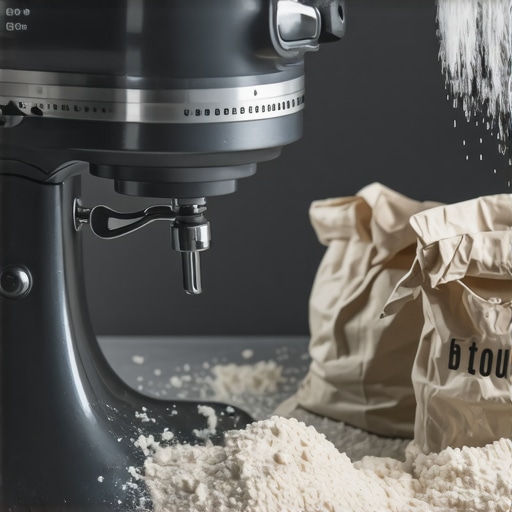
Why Cheap Flour Ruins Your High-Torque Stand Mixer
Your high-torque stand mixer is an industrial-grade marvel disguised as a countertop appliance. Most owners believe that as long as the motor is rated for heavy dough, the input ingredients are irrelevant to the machine’s mechanical health. This is a fallacy. After fifteen years of diagnosing burnt-out windings and shattered planetary gears, I can tell you that the primary killer of luxury kitchen machinery isn’t overuse—it’s the unpredictable drag of low-quality, high-ash flour. Cheap flour lacks the uniform particle size found in premium brands. This inconsistency creates erratic resistance during the kneading cycle. The motor expects a steady load. Instead, it gets a series of micro-shocks as it hits unrefined bran fragments. The result? Thermal runaway.
The Engineering Reality
When we talk about high-torque mixers, we are discussing the physics of resistance. Premium stand mixers use the heavy-duty gear secret inside premium stand mixers to convert electrical energy into the sheer force needed to develop gluten. Cheap flour often has a wildly variable protein-to-starch ratio. As the dough hydrates, low-grade proteins fail to form the elastic chains required for smooth movement. The dough becomes a dense, stubborn mass rather than a pliable medium. This forces the motor to draw more amperage to maintain the set RPM. This isn’t just a theory; you can hear it. Listen for the pitch shift in the motor. That whining sound is the copper windings vibrating under the stress of heat they weren’t designed to dissipate. If you continue, you might face the dreaded internal failure where you have to learn how to stop your stand mixer from leaking gray oil into the bowl because the gear lubricant has liquefied from the heat.
The Friction Coefficient Risk
Think about the surface area of the flour. Low-cost milling processes often leave behind a higher percentage of the wheat’s outer layers. These microscopic particles act like an abrasive. As the dough hook rotates, these particles create friction not just within the dough, but against the hook itself. This increases the ‘drag’ on the planetary head. In my workshop, I’ve seen planetary housings warped by just a few millimeters—enough to throw the entire timing out of sync. This is why the flour test-why some mixers cant handle 100 rye is so telling for equipment durability. According to standards set by the North American Millers’ Association, premium flour must adhere to strict ash content limits to ensure consistency. When you deviate from that, you are essentially gambling with your machine’s drivetrain.
Operational Failure Points
I recall a client who specialized in sourdough. She used a top-tier European mixer but bought her flour in bulk from a discount warehouse. Six months in, the smell of scorched ozone filled her kitchen. The high-torque motor had literally cooked itself from the inside out. The flour she was using had such a high level of pentosans that the dough was becoming excessively sticky, creating a suction effect against the bowl. The motor couldn’t break the seal. The machine didn’t just stop; it failed catastrophically. The plastic sacrificial gear—designed to break to save the motor—did its job, but the heat had already brittle-fried the wiring harness. This is the messy reality of kitchen physics. It is the weight of the industrial grade steel fighting against the viscosity of poor ingredients.
Market Corrections Ahead
The next 18 months will see a shift. As more consumers move toward heritage grains and stone-milled flours, we are seeing a spike in warranty claims for even the most expensive brands. Manufacturers are starting to notice that the “all-purpose” label is becoming a catch-all for inferior milling. I predict we will see smart mixers equipped with sensors that can detect dough viscosity and automatically down-regulate RPM to prevent motor burnout. Until then, the burden of protection is on the user. You must match the quality of your ingredients to the quality of your gears. High-end espresso machines require specific water hardness; your stand mixer requires specific flour stability. It is a closed-loop system.
The Executive Verdict
If you own a mixer that cost more than $500, stop buying flour that costs less than $1 a pound. You are saving pennies on the ingredient while spending dollars on the depreciation of the machine. My recommendation is a “Buy” on high-protein, professionally milled bread flour and a “Sell” on generic store-brand all-purpose flours for any task involving a dough hook. Your Actionable Strategy: If you notice the machine’s head bouncing or hear a rhythmic thud, stop. Add a tablespoon of water to reduce the viscosity, or better yet, switch to a flour with a certified protein percentage of at least 12.7%. Why your high end stand mixer is whining at low speeds is usually a cry for help from the gears under load. Don’t ignore it.
Frequently Asked Questions
Does cheap flour really have that much more friction?
Yes. Poorly milled flour contains more bran and germ fragments. These are harder and more abrasive than the endosperm, creating more resistance during the kneading process which taxes the motor.
Can I just knead for a shorter time to save the motor?
Shorter kneading with poor flour often results in underdeveloped gluten, which makes the dough even more difficult for the machine to handle in the final stages. It is better to use the right flour and knead for the proper duration.
What is the first sign of motor strain?
The most common sign is a change in the frequency of the motor’s hum. If it sounds deeper or starts to stutter in rhythm, the torque limits are being reached and the motor is generating excess heat.