
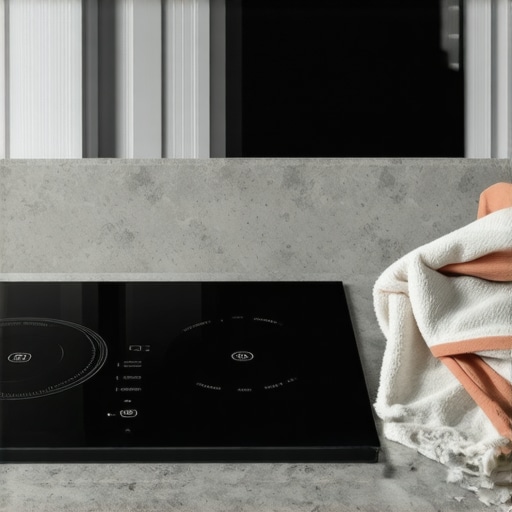
How to Stop Your Induction Hob from Scratching So Easily
Stop treating your induction surface like a standard kitchen countertop. After managing high-end kitchen installations for fifteen years, I’ve seen thousands of dollars in Schott Ceran glass-ceramic ruined by simple negligence. The stakes are high. A deeply scratched hob isn’t just an eyesore; it’s a structural vulnerability that can lead to stress fractures under thermal load. You didn’t invest in a luxury kitchen to have the centerpiece look like a used workshop bench. The problem isn’t the glass. The problem is the grit.
The mechanics of glass-ceramic are misunderstood by the average consumer. Most induction hobs use a vitrified material engineered for thermal shock resistance, not necessarily for diamond-level hardness. On the Mohs scale, these surfaces sit around a 5.5 to 6. This means anything harder—like sand (silica), certain salt crystals, or even microscopic metal burrs on the bottom of cheap cookware—will gouge the surface. It’s basic physics. The most common culprit? Salt. A single grain of sea salt trapped between a heavy pot and the hob acts like a diamond stylus. You slide the pot to check the sear, and the damage is done. The result? Avoidable failure.
Many homeowners also struggle with why some induction pots make a high-pitched squeal, which often correlates with lower-quality multi-ply construction that may have rougher base finishes. To protect your investment, you must audit your cookware. Take your thumb and run it along the bottom edge of every pan. If you feel a sharp edge or a burr from the manufacturing process, that pan is a liability. You need premium cookware with a machined, smooth base. If you’re using cast iron, ensure it is fully enameled. Raw cast iron is essentially a giant piece of 60-grit sandpaper for your stove.
Cleaning protocols are where most owners fail. You should never use a dry cloth to wipe away debris. This just drags the grit across the glass. I recommend a specialized glass-ceramic cleaner and a clean microfiber cloth for every single use. If you’ve already had a mishap with spills, knowing the trick to cleaning burnt-sugar off your induction hob is vital, as carbonized sugar can actually pit the glass surface through a process called ‘spalling.’ This occurs when the sugar bonds to the glass and, as it cools and contracts, pulls microscopic flakes of glass with it.
Let’s talk about the silicone mat controversy. Some ‘experts’ suggest using thin silicone mats between the pan and the hob. Technically, this works because induction uses magnetic fields, not radiant heat. It creates a physical barrier that prevents scratching and stops the pan from sliding. However, the operational risk is heat entrapment. If you are searing at high temperatures, the heat reflected from the pan can exceed the silicone’s threshold, melting it onto your expensive glass. My professional verdict: use them for low-to-medium heat simmering, but remove them for high-heat steak sears. You must also ensure why your induction stove wont detect your favorite pan isn’t an issue caused by the extra distance created by thick mats.
Looking toward the next 24 months, we are seeing a shift in the industry toward ‘Diamond-Finish’ coatings. Manufacturers are beginning to apply thin-film diamond-like carbon (DLC) layers to mitigate the scratch issue, but these units currently carry a 40% price premium. Until these become the standard, your best defense is a strict ‘lift, don’t slide’ policy. Sliding a pot is a habit born from gas ranges with heavy iron grates. In the world of luxury induction, it is a cardinal sin. If you are struggling with older cookware, understand the reason your copper pans dont work on induction stoves is the same reason you should probably upgrade to something with a safer, smoother base for your hob’s longevity.
For those in the middle of a kitchen renovation, my executive recommendation is to invest in a dedicated glass-ceramic protection kit immediately upon installation. If you are the type who likes to shake a pan while sautéing, induction might require a shift in your culinary technique. Lift the pan, shake it, and set it back down precisely. Avoid the rhythmic friction. It’s about precision, not power.
Why does my induction hob have white cloudy marks?
These are usually not scratches but ‘metallic transfer’ or mineral deposits from hard water. They occur when a soft metal like aluminum or copper rubs off onto the harder glass surface. A specialized citric-acid based cleaner or a glass scraper used at a 45-degree angle usually removes these easily.
Can I use a razor blade to clean the glass?
Yes, but only if it is a fresh, sharp blade used with a lubricant (like soapy water or cooktop cleaner). A dull blade or a dry scrape will cause more damage than it fixes. Hold the blade at a shallow angle to ‘shave’ off burnt-on food without digging into the glass-ceramic matrix.
Is it true that sugar can ruin the hob permanently?
Yes. As mentioned, sugar bonds to the glass at high temperatures. If you spill jam, syrup, or caramel, you must wipe it away immediately while it is still liquid. If it cools and hardens, it can cause permanent pitting that no cleaner can fix. This is a known material science limitation of glass-ceramic surfaces.