
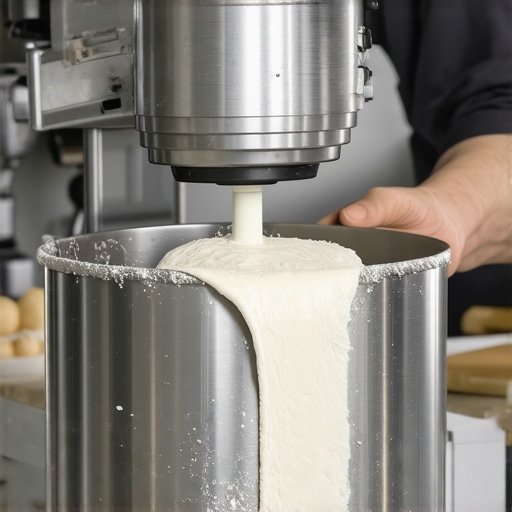
Why Every Baker Needs a Heavy-Duty Steel Dough Hook
After fifteen years diagnosing mechanical failures in high-end kitchens and seeing thousands of dollars in machinery reduced to scrap, I have identified a single, recurring point of failure: the attachment. Most high-end stand mixers ship with cast-aluminum or nylon-coated hooks. These are adequate for cookie dough or sponge cakes. They are catastrophic for artisanal bread. The sheer torque required to develop a gluten network in a high-hydration sourdough or a stiff bagel dough exceeds the yield strength of these inferior materials. The result? Avoidable failure. A snapped hook is the best-case scenario. The worst-case is a stripped worm gear or a cracked transmission housing that requires a total rebuild of your machine. Switching to solid, heavy-duty stainless steel is not an upgrade; it is a fundamental requirement for anyone moving beyond basic pastry.
The Engineering of Torsional Stress
Let’s talk about the physics of the bowl. When you are working with low-hydration doughs, the resistance against the hook creates significant torsional stress. Cast aluminum is brittle. It does not flex; it fractures. Stainless steel, specifically 304 or 316 grade, possesses the tensile strength to withstand these forces indefinitely. This material choice directly impacts the longevity of your appliance. Understanding the heavy duty gear secret inside premium stand mixers is vital because even the strongest gears are compromised if the hook creates uneven resistance. A steel hook provides a consistent, rigid interface that transfers energy efficiently from the motor to the dough. According to technical standards from groups like ASM International, the fatigue limit of stainless steel far outstrips that of the zinc or aluminum alloys typically found in consumer-grade attachments.
The Risk of Coating Contamination
Most standard hooks are coated in a white nylon or Teflon-like polymer. This is done to prevent sticking, but it creates a ticking clock for food safety. Over time, the constant abrasion against the bowl and the dough causes these coatings to chip. You won’t notice it at first. Then, you see small black or white flecks in your brioche. It’s unappetizing and entirely preventable. Steel does not require a coating. It is naturally non-reactive and incredibly durable. Furthermore, coated hooks often hide the onset of oxidation. If you have noticed grey residue, you should learn how to stop your stand mixer from leaking gray oil into the bowl, which often happens when the attachment seat wears down and allows lubricant to migrate. A precision-machined steel hook fits tighter and lasts longer, period.
The ROI of Quality Attachments
Think of this as a strategic investment in your kitchen’s infrastructure. A professional-grade steel hook costs more upfront, but it prevents the $300 repair bill associated with a seized motor. When you analyze the real reason your sourdough keeps breaking your mixer gears, it almost always boils down to the machine struggling against the erratic resistance of a flexing, inferior hook. The heat generation is another factor. Steel has a different thermal conductivity than aluminum. During long kneading sessions, an aluminum hook can actually transfer motor heat into the dough, killing your yeast or over-proofing your bulk ferment prematurely. Steel remains neutral longer, giving you more control over the friction-induced temperature rise.
Strategic Foresight for the Home Baker
The industry is shifting. In the next 24 months, we expect to see more prosumer brands move away from coated attachments entirely as consumer awareness regarding PFAS and microplastics increases. We are already seeing a regulatory push in some jurisdictions toward mandatory stainless steel for food-contact surfaces in commercial settings. By upgrading now, you are future-proofing your kitchen. You need to know how to choose a stand mixer for bread vs cake baking because the requirements for torque and attachment durability vary wildly between the two disciplines. If bread is your focus, steel is the only path forward. NSF International standards already reflect this in commercial bakeries; why should your luxury home kitchen be any different?
The Executive Verdict
If you own a stand mixer and bake bread more than once a week, buy a stainless steel spiral hook immediately. Stop using the C-shaped coated hook that came in the box. It is inefficient, prone to flaking, and puts unnecessary strain on your motor. The spiral design pushes dough downward, preventing it from climbing the hook and entering the internal gear housing. This is a “buy it once, buy it right” scenario. My recommendation is a solid 304-grade stainless steel spiral hook. It is dishwasher safe, chemically inert, and virtually indestructible.
Frequently Asked Questions
Will a steel hook scratch my stainless steel bowl?
While any metal-on-metal contact can create minor aesthetic scuffing, a properly calibrated mixer should not have the hook touching the bowl. If it does, you need to adjust the bowl-lift or tilt-head screw immediately.
Are all stainless steel hooks the same?
No. Look for “solid” or “cast” stainless steel. Some cheaper versions are hollow or use a lower-grade steel that can still rust if left in water. 304-grade is the industry standard for durability.
Can I use a spiral hook on a tilt-head mixer?
Yes, but you must ensure the hook is specifically designed for the tilt-head model’s dimensions. A hook that is too long will hit the bottom, potentially cracking the neck of your mixer.
Why doesn’t the manufacturer include steel by default?
Cost and weight. Aluminum is significantly cheaper to mass-produce and keeps the shipping weight of the box down. For a luxury experience, you have to move beyond the “out of the box” limitations.