
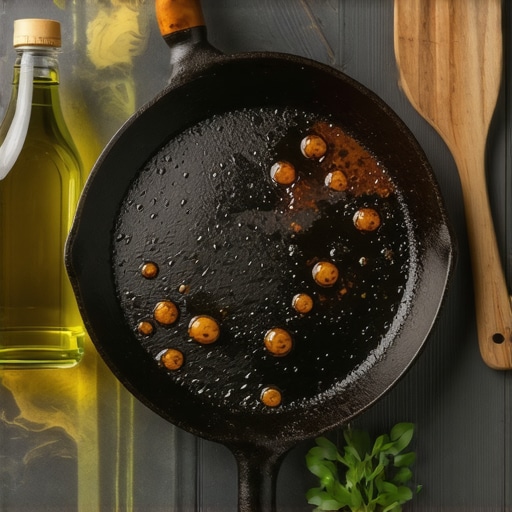
Why You Should Never Use Olive Oil to Season Your Skillet
Using extra virgin olive oil to season a high-end cast iron or carbon steel skillet is a technical error that ruins the cooking surface before the first steak even touches the metal. After managing luxury kitchen inventory for over fifteen years, I have seen thousands of dollars in premium cookware degraded by this specific mistake. The goal of seasoning is not lubrication; it is polymerization. You are attempting to transform liquid fat into a hard, glass-like plastic through controlled heat. Olive oil fails this transition because its molecular structure is built for flavor, not for the high-temperature chemical bonding required to create a non-stick patina. The result? A sticky, brownish varnish that flakes off into your food. Total failure.
The Molecular Failure of Low Smoke Points
The engineering reality involves the smoke point and the fatty acid profile of the lipid. Extra virgin olive oil has a smoke point hovering around 350°F to 375°F. To achieve true polymerization, the metal surface must reach temperatures significantly higher than the oil’s smoke point to break the carbon-carbon double bonds and allow them to cross-link with oxygen. When you heat olive oil to these requisite levels, it doesn’t polymerize uniformly. It carbonizes. It burns. This creates a brittle, uneven layer that lacks the structural integrity to bond with the iron lattice. If you are noticing that your cast iron pan keeps peeling after seasoning, the culprit is almost certainly the choice of fat. You need a drying oil with a high polyunsaturated fat content, such as grapeseed or flaxseed oil, to build a resilient surface.
The Stickiness Trap and Cross-Linking Issues
Monounsaturated fats—the primary component of olive oil—do not cross-link effectively. Think of the seasoning process like building a web. Polyunsaturated fats have multiple points where the molecules can snap together, creating a dense, protective shield. Olive oil is like trying to build that web with broken threads. It remains soft. It stays tacky. When you slide a spatula across a pan seasoned with olive oil, the friction often tears the weak film, exposing the raw metal underneath. This is often the reason your non-stick pan is sticking even with oil; the foundation itself is structurally unsound. I’ve stood in professional kitchens where line cooks tried to ‘save time’ by wiping down their pans with whatever oil was on the station. The smell of scorched chlorophyll is unmistakable. It’s the smell of a ruined shift.
[IMAGE_PLACEHOLDER]
Implementation Risks and the Goo Factor
The sensory reality of failed seasoning is visceral. It’s the weight of the industrial grade steel feeling greasy rather than smooth. It’s the sight of a brownish, mottled mess instead of a deep, obsidian black finish. In my early years, I once oversaw a luxury kitchen upgrade where the staff used olive oil on twenty new carbon steel pans. Within a week, the pans were ‘weeping’—the oil that hadn’t fully polymerized was leaching out during pre-heating. We had to strip every single pan using lye and start over. That is an expensive lesson in chemistry. According to the American Chemical Society, the iodine value of an oil is a primary indicator of its seasoning potential. Olive oil ranks low on this scale, making it a poor candidate for anything other than low-heat finishing.
Market Shifts and Premium Cookware Maintenance
Looking ahead to 2025, we see a move away from ‘disposable’ non-stick towards legacy pieces. People want premium cookware for 2025 that lasts decades. This shift requires a higher level of user education. Manufacturers are now experimenting with pre-seasoning techniques involving vacuum-sealed high-heat chambers, but the home maintenance remains the same. If you use the wrong lipids, you are fighting physics. The local market is seeing a surge in ‘restoration’ services because consumers are tired of the ‘goo’ caused by improper olive oil application. They want that factory finish back.
The Executive Verdict
Stop using olive oil for maintenance. It is a waste of a high-quality ingredient and a recipe for pan degradation. My recommendation is clear: Buy a high-smoke-point oil like grapeseed or avocado oil for the initial three layers of seasoning. Save the olive oil for the vinaigrette. If your pan is already sticky, you must strip it. Use a specialized scrub or, in extreme cases, a controlled heat cycle to burn off the failed layer. If you have a stubborn mess, check the only way to clean a burnt bottom on an enameled pot for similar heavy-duty cleaning tactics. Maintain the iron, and it will maintain your reputation as a cook.
FAQ
Can I use light olive oil instead of extra virgin?
While light olive oil has a higher smoke point, it still lacks the polyunsaturated structure needed for a durable polymer. Stick to grapeseed.
What is the best temperature for seasoning?
Aim for 450°F to 500°F for one hour. This ensures the oil reaches its flash point and begins the chemical transition to a solid state.
How do I know if my seasoning has failed?
If the pan feels sticky after cooling or if black flakes appear in your food, the bond is broken. You must re-season.