
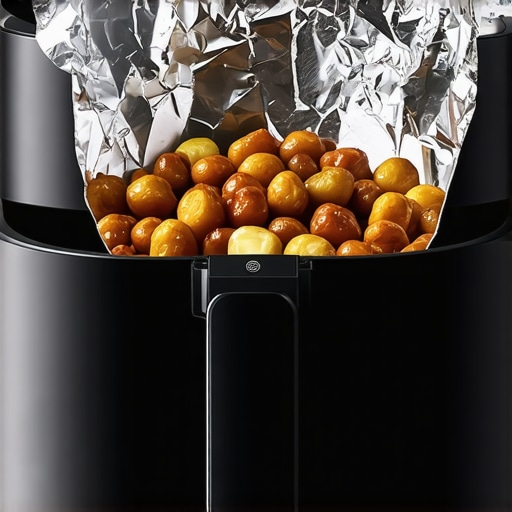
The Foil Trick for Better Air Fryer Heat Distribution
Aluminum foil is often the enemy of the air fryer. Most users treat it as a cleaning shortcut, but they are actually suffocating the convective currents that define the appliance performance. After fifteen years in the premium kitchenware industry, I’ve seen thousands of dollars in machinery ruined by poor airflow management. The stake is clear: uneven cooking and mechanical stress. Using foil correctly requires an understanding of fluid dynamics, not just a desire to avoid scrubbing a basket.
The Engineering Reality of Convection
Air fryers function as high-velocity convection ovens. They rely on the Bernoulli principle to move hot air through tight spaces at high speeds. When you line the entire basket floor with foil, you create a dead zone. The air cannot return through the perforations, forcing the fan motor to work against backpressure. This is why soggy fries are so common; the bottom of the food remains trapped in a pocket of steam while the top burns. A technical truth most miss: foil has high reflectivity but low emissivity. If used as a small, centered shield, it can protect delicate proteins like crispy skin salmon from the direct radiant heat of the overhead coil while the surrounding air continues its circuit. The result? Perfection through physics.
The Operational Risk of Blocked Airflow
Implementation failure is loud. I’ve heard the sharp, metallic flapping of loose foil being sucked into a 3,000 RPM fan. It’s a sound that precedes a motor burnout. According to the Journal of Food Engineering, the efficiency of heat transfer in forced convection is directly proportional to the velocity of the air over the food surface. Obstructing more than 30% of your basket surface area creates thermal bridging where the basket metal gets dangerously hot while the food stays raw in the center. I remember a client with a top-tier unit who insisted on using full-sheet liners; the trapped heat actually melted the internal plastic housing of the fan assembly. It was an expensive lesson in thermodynamics. Furthermore, the National Fire Protection Association (NFPA) warns that obstructing airflow in heating appliances is a leading cause of localized overheating and potential fire hazards. Never let the foil touch the heating element. The smell of burning aluminum is a scent no kitchen should ever experience.
Market Corrections and Smart Airflow
The industry is moving toward smart sensors. In the next 12 to 24 months, we expect high-end air fryer models to include airflow obstruction alerts. This regulatory shift toward safer, more efficient appliances will make manual foil adjustments less necessary. Until then, you must be the sensor. Modern manufacturers are already tightening the CFM (cubic feet per minute) tolerances to meet energy efficiency standards, meaning any obstruction has a more significant impact now than it did five years ago.
The Executive Verdict
My recommendation is clear: Buy heavy-gauge foil, use it sparingly, and never cover the edges. If you are cooking light items that might blow around, secure the foil under the food weight or use a stainless steel rack to pin it down. This is particularly central when you remember that air fryer preheating is not optional; a preheated chamber with a foil shield prevents the initial heat spike from scorching your meal. If you want easy cleanup, buy a better basket; don’t compromise the engineering of your machine with poorly placed foil.
Technical FAQ
Does foil increase the cooking time?
If you cover the entire basket, yes, by as much as 40% because you’ve killed the air circulation. If used as a small shield, it has no negative impact on timing.
Is it safe to use foil in every air fryer?
Technically yes, provided you leave the intake and exhaust vents clear. The danger is movement; foil must be weighted so it doesn’t hit the heating coil.
Can I use parchment paper instead?
Parchment paper is worse for airflow unless it is highly perforated. Foil is superior for heat redirection but requires more precision in placement.